luxury cars-images This blog contains various forms of cars and at a glance most of the new information, present and future, this blog will always feature luxury cars, and sports cars, and provide information about the content, Toyota, Ford, Honda, BMW, Rolls-Royce, Tesla, Mitsubishi, Mazda, Chevrolet, SUV, Automotive, Pick-up, Sports Cars
  • LAMBORGHINI MODEL

    The most visionary models, these unique specimens are set to define the highest limits of technology and design. Unveiled at the most prestigious international Motor Shows, they offer an exclusive look at the most innovative solutions that Lamborghini may adopt in its future series-production models.

  • RAV4 Interior

    Premium materials and a focus on comfort raise RAV4 Hybrid’s level of refinement. Whether appreciating the views through the available panoramic glass roof or finding inspiration from RAV4 Hybrid’s attention to detail, you’ll enjoy a ride that’s ready to go the distance. Explore Interior

  • Ford F-150 Raptor

    The Ford F-150 Raptor pumps out so much fun and such oversize thrills, you'd assume that it had been outlawed years ago

  • Ford Mustang GT500

    Ford Mustang Shelby GT500 makes this car the most powerful car ever made by the American manufacturer. This is because the Ford Mustang Shelby GT500 is equipped with an engine capable of 760 horsepower

  • Tesla Roadster Fastest Electric Car

    Tesla claims the Roadster to be the fastest production car ever made! The second-generation Tesla Roadster can go from 0 to 60 miles per hour in under 1.9 seconds, and this is just for the base model.

Showing posts with label Ferrari. Show all posts

The 2024 Ferrari Challenge race series has introduced its ninth-generation machine, based on the 296 GTB

The final of the 2023 Ferrari Challenge one-make series has now concluded at the Mugello Circuit, marking the end of the Ferrari 488 Challenge driver line-up. Originally launched in 2017 before the Evo's 2020 overhaul, the model has now reached the end of its life, and the new successor to the Ferrari 296 Challenge is set to debut in the 2024 season, as the ninth model in the series' history.

Although based on the 296 GTB road car, it shared several elements with its highly successful sibling, the GT3 race car, making it a promising replacement for the 488 Challenge car.


After making its public debut on the eve of this year's Finali Mondiali event, the 296 Challenge ditches the road car's hybrid assistance for a less complicated pure combustion approach. Unlike the 3.9-liter V8 of its predecessor, it has the same 3-liter 120-degree turbocharged V6 as the GTB road car (and the 296 GT3, for that matter), sending 681bhp and 546 lb-ft to the rear wheels – although that's 20bhp more than the 488 Challenge Evo, torque down 14 lb-ft.

Bearing in mind that the GT3 is limited to 592bhp by regulations, the 296 Challenge's pure combustion output of 681bhp is the most of any F163 V6 version – torque remains at 546 lb-ft. The road car is capable of producing 654bhp (although that adds 165bhp from hybrid boost for a total of 819bhp). To achieve these new power figures, Ferrari has increased boost, changed calibration, and reduced exhaust backpressure by 30 percent on the road car thanks to the removal of the Gas Particulate Filter and Tubi Style exhaust.


Ferrari says the model was designed with performance and consistency in mind, implementing similar solutions to those found on the 296 GT3 launched last year – considering the car's incredible success at the Nürburgring 24 Hours, this is no bad thing. Although it does not use a hybrid system in its road cars, the brand also applies the latest technology from its road cars, including the EVO Track ABS to improve braking performance in racing conditions.

The overall design isn't as extreme as the high-downforce, dramatically built GT3, but the Challenge still features plenty of track-specific upgrades to the exterior. A pair of canards, a more aggressive splitter, rear wing, side skirts, and diffuser all contribute to a peak downforce figure of 870kg at 155mph, the highest of any Ferrari Challenge car so far. Unique front and rear bumpers, a ventilated hood, and a mesh rear bumper similar to those found on the 296 GT3 are also present for cooling.


The Ferrari 296 Review
Chassis changes haven't been revealed, but a complete geometry overhaul is evident, with Rotiform wheels tucked further into their arches and significant negative camber relief. Each car will also be equipped with a set of new 19-inch Pirelli tires developed specifically for the Challenge model. In addition to the ABS EVO Track system, the new CCM-R PLUS disc brakes are also said to improve braking performance and consistency for long stints on the track.

With standard glass, unnecessary interior gubbins, and the hybrid system removed, the weight now stands at 1,330kg (dry), 140kg less than the road car. Not only that, Ferrari also had to add more cooling solutions and a 12V starter motor to the pure combustion Challenge.

The new Ferrari 296 Challenge will hit the track next year in the European and North American series and will cost each driver €318k plus VAT and racing fees.
The Ferrari 296 Exterior
The Ferrari 296 Back
The Ferrari 296 Wheel
The Ferrari 296 Side view
Share:

2024 Ferrari "296 GTB"


2024 Ferrari 296 GTB Review
The 296 is ferociously fast and fiendishly clever but Enright asks if the supercar still has a place in today’s world. Ferrari’s incredible 296 GTB offers an opportunity to consider how far the supercar has come and whether the genre still retains its Lustre.

A pickle inspired this story. More accurately, a slice of pickle. It arced through the air from the passenger window of a Hilux just as the filter light turned green, hitting the windscreen of the yellow Ferrari with a fat splat. I watched it start to slide down the glass before the coefficient of friction arrested it, waiting for me to figure out which of the steering wheel controls operated the wiper. For a moment I was captivated by that pickle. Not for what it was, or for the fact that whoever threw it would have to negotiate his burger without it, but more for what it represented. It was as much a slice of resentment as a slice of dill. The car I was driving had provoked such a visceral reaction that, in that moment, I couldn’t quite decide whether that was a good or bad thing. You certainly don’t buy a supercar to be ignored.

The Ferrari 296 GTB isn’t readily overlooked. At the moment it’s the supercar du jour. With 820bhp/610kW of electrically-boosted power at its elbow, its acceleration to 200km/h is to a McLaren F1 what a McLaren F1 is to a Porsche 718 Cayman GT4 RS: of a wholly different dimension. It’s worth reminding ourselves that this is the baby, an entry-level mid-engined Ferrari, powered in this instance by a dinky 3.0-litre V6. It wields that power judiciously. Mat the throttle hard and there’s none of that tarmactearing rambunctiousness of a McLaren 720S, at least not away from a standing start. It’s quick but not Plaid-style concussive.

Ferrari has been limiting torque in the lower gears since the introduction of the 3.9-litre F154 turbo V8 in the California T. Whereas that had been quite a subtle way of introducing the Cali’s 755Nm to the rear treads, it’s now far more pronounced, with a surprisingly civil launch process before, battery condition and drive modes allowing, the 296 looses off the full avalanche of Newton metres in third gear.
2024 Ferrari 296 GTB Back side
When I was a kid, the Ferrari Testarossa was for a while, my personal pin-up. I devoured any magazine road test on it, goggling at the outlandish performance figures, trying to process what 18.1 seconds to 200km/h might feel like. The 296 GTB? Try 7.1 seconds. It’ll accelerate to 200km/h and be back to a standstill before the old stager had lumbered up to 160. By the time the Testarossa was at 200km/h the 296 would be well north of 300.

But here’s the supercar’s current dilemma. While it was once an ultimate, a genre that represented the very extreme of what car manufacturers could envision, that’s no longer the case. The performance of a modern hypercar like a Rimac Nevera would demolish a 296 GTB and by a frankly astonishing margin. The Croatian EV will get to 200km/h in 4.4 seconds. It’ll accelerate to the imperial double-ton of 200mph in 10.86 seconds; fully 17 seconds quicker than a McLaren F1. Anyway, enough of the numbers. What matters is that the supercar is, by today’s standards, a creature of compromise.

How it became so perhaps merits a little consideration and I lay the blame for that squarely at the feet of the Porsche 959. Prior to the point that the 959 appeared at the 1985 Frankfurt show, there had been a certain predictable linearity in the development of the supercar. Plot a line through the 1954 Mercedes-Benz 300 SL Gullwing W198, the 1962 Ferrari 250 GTO, the 1966 Lamborghini Miura and the extended Countach lifespan and you arrive at that mid-’80s inflection point.

Porsche showed its hand with the 959, Enzo’s knee jerked and the F40 appeared. The Ferrari, despite the company’s promises of limited numbers, was very much a development of the supercar species. It was like everything that had come before, only more so. The Porsche was different. It was a performance car the like of which we’d never seen. With all-wheel drive that featured dynamic torque splitting, composite body and chassis, active aerodynamics and computerised active suspension, it diverged from the path of the supercar, yet at the time few appreciated that significance.

While the supercar line then ascended in steps from the F40 to Lamborghini’s Murcielago and Aventador, via McLaren 720S to arrive with this Ferrari 296 GTB, the nascent hypercars adopted the technological focus of the 959. Five years after the 959 was unveiled, the astonishing Bugatti EB110 followed, with its 60-valve V12 fed by four turbochargers and driving four wheels. The McLaren F1 was an analogue outlier before the Bugatti Veyron’s engineering brutality eclipsed it. Beyond that, electrification elevated performance onto an ever higher plane with the hybrid hypercar holy trinity of LaFerrari, Porsche 918 Spyder and McLaren P1, the Koenigsegg Regera and the Rimac Nevera nudging our notion of performance superlatives ever higher.

2024 Ferrari 296 GTB Back View
Flinging the 296 GTB at a corner somewhere high above Lake Eildon, it’s hard to think of why you’d ever need more power. But then it’s equally possible to find yourself in something like a current Civic Type R on a challenging road and wonder if you ever needed a quicker car. In the 296, you challenge yourself to keep the throttle pinned for as long as you need to. It has the brakes and the composure to scrub off huge speeds and dive towards an apex and is hugely exciting but at the same time it retains an edge. Forget the false modesty of road testers who claim that it slides with the ease of a big MX-5. Drive it hard and the 296 gives you small reminders of big consequence.

The steering lacks the reassuring heft and granular feedback of some of the most rewarding sporting cars. It’s not neurotically geared at 1.8 turns lock to lock and offers a pleasant neutrality, but isn’t the most communicative. The brake-by-wire system is brilliantly calibrated between regen and friction braking although the latter can feel heartstoppingly approximate on the first application on a cold morning. The brakes rapidly come to life thereafter. While the 296 feels all of a piece at typical fast road speeds, and it’d doubtless feel incredible when wrung out at tentenths on track, there’s a point between these two levels of commitment where the 296 can feel nervy; unexpectedly up on its toes. A colleague described it as a “glassy moment” and it’s not always predictable when you’ll step into it due to one notable characteristic of the 296. A given throttle input doesn’t necessarily result in a consistent output. The amount of meaningful torque delivered to the rear wheels depends on a number of variables including battery condition and not always knowing exactly what you’re going to get can set your mouth a little dry.

It could be something that you’d grow accustomed to. The 296 is so laden with idiosyncrasy that it’s an immersive thing just to interact with on an everyday basis. Whether it’s the details of the drive modes, the complexity of its Side Slip Control system, the quirkiness of its ergonomics or the whims of the algorithm controlling the active aero, there’s always something going on.

Even the shape is incredibly intricate. From some angles that extended rear deck and coda tronca give it an almost three-box shape. Dip down and those 250LM-style rear haunches gently interrupt its profile. Every time you approach the car your eye settles on another line, detail or play of light and shade. Even in Giallo Modena, which some may described as lacking a certain subtlety, the 296’s design delivers.
2024 Ferrari 296 GTB Interior
Ferrari should also be commended for building in a genuine sense of fun. Challenge, too. How long have we complained about sanitised supercars? Here’s one that’s anything but, which will test you while cryptically peeling back the layers of its ability. How absorbing would it be to really get to know this car, to feel as if you’d mastered it? I’m nowhere close. Instead, I feel I’m merely prodding at its envelope. One thing’s for sure. It’s lively. That’s due to the combination of feral torque infill, sharp steering and a short wheelbase. At 2600mm, the 296’s wheelbase is fully 50mm shorter than the outgoing F8 and is shorter than both a Huracán or an Artura.

It sounds great too. The equally spaced firing order and pure third-order harmonics mean that the sound signature of the engine is more like a V12 than a V8, with a clean build from low to high frequencies, erasing the high-frequency die-off between 4000 and 6500rpm that afflicted Maranello’s turbocharged V8s. Ferrari refers to the engine as the ‘piccolo V12’ and with good reason. A hot tube with a timbre-adjusted membrane pipes engine sound directly into the cabin. No speakers or amps here. It pays to stay above 4000rpm and at 5000 the engine note harden noticeably, introducing an operatic melismatic flutter at 6000. From there it careens to the redline, so quickly that you’re grabbing for the shifter. Alternatively, you can leave it in drive and let the software do the work for you.

Running the 296 GTB to the redline can be a tiring experience. It juices your adrenal glands and it’s instructive to note how rarely you execute full, foot-to-the-boards throttle commitment. Stay planted up through second and grab third just as you get the full rainbow of shift lights across the top of the carbon wheel and the thump into full torque deployment is absolutely eye-widening. You’ll believe the midrange acceleration stats that claim that it’s as quick as a Veyron. Possibly the biggest compliment that you can pay the new 120-degree V6 is that at no point do you muse how much better the 296 would be with a V8. It’s just never crosses your mind. Despite the hybrid assistance and turbocharging, it does its best work with plenty of revs on board, peak power arriving just 500rpm shy of the 8500rpm redline, while the full measure of 740Nm is attained at 6250rpm.
2024 Ferrari 296 GTB Pictures

Due to the hot-vee configuration of the contra-rotating turbochargers, it’s a significantly narrower engine than the F8’s and is also 30kg lighter. It’s dropped right down into the guts of the car, so when you pop the engine compartment and peer past all the Inconel exhaust plumbing, it looks as if its sump will be skimming the bitumen.

The 296 poses a number of challenging questions. Do you ever need a large-capacity engine when a 2992cc V6 can perform and sound like this? After some introspection, the answer has to be probably not. It hangs another question in the air. Is this the first Ferrari that is helped rather than hindered by hybrid tech?

Almost certainly. I got a kick out of sliding the 296 silently from my garage on an early start, but the stealth effect was somewhat ruined when the car sounded the horn three times because I’d got out of it with the key to retrieve the rubber ramps I needed to allow the front splitter to clear my drive. There is a nose lift system but no front camera, so you’ll need to be a little bit careful that the nose doesn’t drop onto kerbs.

The 7.45kWh battery will propel the Ferrari for around 25km on electrons alone, which is better than mere novelty. We managed 33km on a largely downhill route out of Eildon, enveloped in a Hans Zimmer-style futuristic soundscape. Switch the manettino into Performance mode and it will harvest power to replenish the battery surprisingly quickly. The 296 defaults to starting silently in Hybrid mode. It can also be forced to run in eDrive electric mode or will rinse everything its got in Qualifying mode. In order to get the full power/torque, the car needs to be in Quali mode with a full battery.

As good as a Michelin Pilot Sport 4S tyre is on a Porsche 718 or a BMW M3, it at first seems a little underspecified for a 610kW supercar. Look a little closer and there’s a K1 signifier on the sidewall that denotes that this is a tyre specially homologated for the 296. The 20-inch rubber measures 245/35 up front and 305/35 at the back, with a modified tread compound that delivers better performance in all five of Ferrari’s test criteria (grip, weight, rolling resistance, aquaplane resistance and wet traction) than the Pilot Super Sport fitted to the F8 Tributo. Of course, there will be some who see no other choice than the Michelin Pilot Sport Cup 2 R option tyre, reasoning that they probably won’t take their 296 out if it looks like rain.

I’d take it out every day of the week. The powertrain is civilised enough, the ride, whether in bumpy road mode or not, is sufficiently supple and the hybrid drivetrain means that it needn’t be obnoxiously loud at all times. There’s even a reasonable amount of storage space, both in the frunk and behind the seats. Aside from rear three-quarter visibility (which is hideous), the 296 isn’t too difficult to see out of either. One word to the wise – if you’re speccing one, avoid any pale-coloured trim or contrast stitching on the dash top as it’ll reflect crazily in the windscreen. Likewise, the glass rear deck can also beam retina-searing low sun into the rear-view mirror. Another ergonomic glitch is that a larger smartphone won’t fit into the wireless charger but will fit with such millimetric perfection into the centre cubby that you’ll need something to prise it out with.

These issues do little to detract from Ferrari’s achievement. It has built a fun and fiercely capable car that rides well, looks fantastic and is beautifully engineered. At a stroke, the 296 GTB’s class rivals trail like specks in the rear-view. Best of all, it has curtailed that trend where the 488 and F8 each seemed a more powerful but less pure incarnation of the 458 Italia. The 296 is very much its own thing and is all the better for it. Conceptually, the supercar has never been in a tougher spot. It’s become a compromise. Blanket online coverage has made it less of an occasion. It can appear out of step with social mores. But the cars themselves are better than ever.

More popular too. Ferrari sold more 296s in 2022 alone than in the entire 11 year lifespan of its first mid-engined supercar, the BB. The company acknowledges in its annual report that there is a demand for its vehicles to be used more often and in urban settings, and Maranello is keenly aware of changing tastes. Aware too of shareholder pressure to raise prices and build more cars. In artfully fusing what we traditionally expect of a supercar with a blend of qualities that are new to the genre, the 296 GTB is a triumphant transition to a new era. The supercar will never be the sort of social chameleon that fits into every occasion. Pickle boy will attest to that. Such a choice may appear gauche in an economic climate that seems to be transforming a greater share of society than ever before into have-nots, the supercar emblematic of that wealth division. You need a thick hide to carry one off. But developing one has never carried a bigger payback. If you just want to luxuriate in how magnificent, capable and, yes, joyful the sensory experience of the car can be in this first quarter of the 21st century, conjur up a way to drive a Ferrari 296 GTB. It’s the perfect jaded palate cleanser.
TECHNICAL DATA
Model 2024 Ferrari 296 GTB
Engine 2992cc V6, dohc, 32v, twin turbo, PHEV
Max power 820bhp/610kW @ 8000rpm
Max torque 740Nm @ 6250rpm
Transmission 8-speed dual-clutch
Weight 1470kg
Economy 6.4L/100km (WLTP)
Acceleration 0-62mph/0-100km/h 2.9sec (claimed)
Price $568,300
On sale Now
Enright tries to order his thoughts after having them throughly scrambled by the small matter of 610kW

Pop the engine cover and peer past the Inconel exhaust plumbing and the V6 is buried deep in the guts of the car

Forza Frikadelli

We’d goggled over the pics of the stunning Ferrari 296 GT3 and its first major victory was this year’s 24 Hours of Nürburgring, which it won for the first time in the marque’s history. This broke a trot of 21 years of German-built winners (Zakspeed Viper GTS-R was the prior, trivia freaks). To make matters even more special, the car was run by Frikadelli Racing, co-founded in 2005 by the late and much-missed Sabine Schmitz. Between them, Earl Bamber, Nicky Catsburg, David Pittard and the magnificently-monikered Felipe Fernandez Laser completed 162 laps; an event record.

296 GTB features combustion pressures 10 percent higher than the SF90 and 14 percent higher than F8 Tributo. Charging the tiny battery on 11kW AC takes a mere hour and a half.

The 296’s acceleration to 200km/h is to a McLaren F1 what a McLaren F1 is to a Porsche 718 Cayman GT4 RS. There are some days when you just can’t keep up the professional game face. We managed 33km on battery alone, albeit with some downhill.


Share:

2024 Ferrari SF90 Stradale " $844,000 "

2024 Ferrari SF90 Stradale Review
2024 Ferrari SF90 XX Stradale First Look Review: Double The X Factor

Ferrari's XX program has already brought us a selection of extreme track-only supercars like the FXX-K Evo and the 599XX, sitting above even the Italian manufacturer's Special Series models. Now, we have the new SF90 XX Stradale, the first street-legal XX model alongside the SF90 XX Spider. Based on the SF90 Stradale, this XX version of Ferrari's hybrid supercar now delivers 1,016 horsepower from the combination of a V8 engine and three electric motors - even more power than the V12 Lamborghini Revuelto which has its own trio of electric motors. It has a fixed rear spoiler that forms part of thoroughly revised aerodynamic measures to deliver astonishing downforce at high speeds, and it looks even more extreme than the regular SF90 Stradale. All 799 examples of the SF90 XX Stradale have already been accounted for, and new lap records are sure to follow in the months to come.

The release date for the Ferrari SF90 XX Stradale is scheduled for the second quarter of next year in Europe, and it should be coming out in the USA shortly after this. Only 799 examples will be manufactured, and all have already been sold out. 
2024 Ferrari SF90 Stradale Back

2024 Ferrari SF90 XX Stradale Price And Competition

The price of the 2024 Ferrari SF90 XX Stradale is that of a true exotic, not that it stopped the car from selling out quickly. At €770,000 in Europe, its MSRP translates to roughly $840,000 at current rates.

Cars of this stature are hard to compare to anything else, and hybrid rivals for the SF90 XX Stradale are pretty much non-existent. At a cost of around $780,000, the BMW 3.0 CSL is even more exclusive and has not been homologated for the USA, but it's one of the few exotics that exist in a similar price range. The upcoming Lamborghini Revuelto could be considered a closer competitor, as it is also a hybrid mid-engined supercar that makes over 1,000 hp combined - just like the new SF90 XX.
2024 Ferrari SF90 Stradale View Back

New Ferrari SF90 XX Stradale Exterior And Colors

Whereas the standard SF90 Stradale is utterly beautiful, the exterior design of the Ferrari SF90 XX Stradale takes on a more hardcore demeanor, and the visual changes underline its credibility as a track car. Air intakes and vents were not concealed, as these form an important part of the enhanced aerodynamics of the XX.

The front and rear wings feature signature louvers and recall those on the F12tdf. There is a lower upper profile for the headlights, along with two external vertical wing profiles and a front fascia that is more geometric overall. Lower wings on the air intakes contribute to the impression that the XX Stradale is glued to the road. Wheels measure 20 inches in size both front and rear, and these have a bespoke star-burst finish with bold aerodynamic profiles.

2024 Ferrari SF90 Stradale Exterior
One of the main changes to the exterior is the fitment of a fixed rear wing that works in tandem with a redeveloped shut-off Gurney. The latter balances downforce and drag as required, with LD (Low Drag) and HD (High Downforce) modes. At 155 mph, the SF90 XX Stradale generates 694 pounds of rear downforce. Instead of the regular Stradale's twin-taillight concept, the XX has a wraparound light bar.

But the rear wing is just one facet of a car that has the most efficient aerodynamic performance of any previous road-going Ferrari - and which is only comparable to the LaFerrari in this respect. The SF90 XX also has a new underbody layout, redesigned side louvers that further reduce backpressure, a larger front splitter, and a wider front diffuser that further boosts downforce. Compared to the SF90 Stradale, the dual S-Ducts have increased front downforce by 20%. At the back, the diffuser was also refined.

Delving into the configurator reveals the expected wide variety of exterior colors for the Ferrari SF90 XX Stradale. Customers can choose from Solid, Metallic, Historical, and Special palettes. Familiar options like Rosso Corsa, Rosso Scuderia, and Giallo Modena are contrasted by more unusual shades such as Blu Corsa and Rosso Le Mans 2023 Opaco. Various whites, grays, and blacks are also available, and there are a couple of painted liveries to further customize the car's appearance. A carbon racing stripe, four wheel designs, and multiple brake caliper colors will ensure that no two of these Ferraris will be identical.
2024 Ferrari SF90 Stradale View

Ferrari SF90 XX Stradale Dimensions

Although its wheelbase length is shared with the normal SF90, the dimensions of the new Ferrari SF90 XX Stradale supercar have increased in other aspects, owing to the even more aerodynamic body. At 190.9 inches in length, the longtail Fezza is over five inches longer than the regular SF90, and the 79.3-inch width represents an increase as well. The SF90 XX measures 48.2 inches in height, making it a bit taller than the car it's based on.

Specific racing seats, as well as the removal of the secondary air system, have helped to lower the car's mass, with the SF90 XX Stradale having a maximum dry weight of 3,439 lbs - 22 lbs less than the normal SF90.
2024 Ferrari SF90 Stradale Exterior side view

Ferrari SF90 XX Stradale Engine And Performance

The 3.99-liter twin-turbocharged V8 engine in the Ferrari SF90 XX Stradale is a masterpiece on its own, but it's boosted here by three electric motors to make an eye-watering 1,016 hp combined - or 30 hp more than the normal SF90. On its own, the V8 pushes out specs of 786 hp at 7,900 rpm and 593 lb-ft of torque at 6,250 rpm, and its maximum speed is 8,000 rpm. A further 229 hp is delivered via the trio of electric motors.

Ferrari made several changes to the V8 mill for this application, including a higher compression ratio, new pistons, and unique machining of the combustion chamber. A new hot tube system was designed to create a richer engine note, and this system is said to transmit combustion pulsations into the passenger compartment. The resonator is now positioned closer to the V8, also increasing the intensity of the soundtrack.

As in the SF90 Stradale, the XX's one electric motor is sited between the V8 and gearbox, while the other two are found on the front axle. These motors power the front wheels and can do so on their own in eDrive mode when the V8 is switched off. In full attack mode, this is an all-wheel-drive car.

The same eight-speed dual-clutch automatic gearbox that appeared on the normal Stradale has been implemented here, but its gear-shift logic has been altered to more closely match the Daytona SP3. In Qualifying mode, the difference is huge. More on that momentarily.
2024 Ferrari SF90 Stradale Interior
Less weight and more power is a solid recipe for improving performance, and the 0-62 mph time is now down to just 2.3 seconds, shaving two-tenths off the time attained by the standard SF90 Stradale. That advantage is retained up to 124 mph, a mark that the SF90 XX hits in only 6.5 seconds. The XX's top speed, meanwhile, is a fraction shy of 199 mph, so you can probably hit 200 mph for short spurts with the wind at your back.

It's no coincidence that Ferrari revealed this car at the Fiorano circuit, where the standard SF90 Stradale already set a blistering time of one minute and 19 seconds, even quicker than the LaFerrari. We'll have to wait for later in 2023 for Ferrari to confirm the SF90 XX Stradale's lap time, but we expect great things: the automaker said that this car's greater grip and downforce will yield "a palpably faster lap time at Fiorano."

The XX also has some new tricks up its sleeve, such as the ABS EVO controller from the 296 GTB. Its 6W-CDS sensor can optimize high-performance braking when conditions are dry and is linked to the chosen Manettino drive mode selector. This car debuts extra boost control logic, which allows for short bursts of increased power in Qualifying mode as the car exits a bend, a feature that cuts the Fiorano lap time by 0.25 seconds on its own. A reduced roll rate, new front brake discs, and the electronic Side Slip Control 1.0 system all work together to deliver incomparable performance on the track. 
2024 Ferrari SF90 Stradale Ferformance

Gas Mileage

According to the EPA, the regular SF90 Stradale manages 51 MPGe and 18 mpg combined, and has a total range of 330 miles. As the XX weighs about the same and has an 18-gallon gas tank, it shouldn't be too far off these numbers.

Ferrari claims that the XX can cover around 15 miles on electric power alone, but based on the EPA's rating of the normal SF90, this figure will likely be closer to eight miles, especially as the new car has the same 7.9-kilowatt-hour capacity for its lithium-ion battery. No claims have been made about how long this battery takes to charge.

2024 Ferrari SF90 Stradale Seat

Ferrari SF90 XX Stradale Interior And Cargo

Although sharing its basic cockpit design with the car it's based on, the interior of the Ferrari SF90 XX Stradale comes with quite a few unique touches. The shapes of the door panels, tunnel, and mats have all been simplified, while many functional areas are now finished in carbon fiber. Other interior materials have been inspired by the racing world, from the Alcantara that covers the top of the dashboard to the technical fabric used lower down.

The middle zone's triple louvers are a clever visual link to the air vents on the wheel arches, and as always, the entire cabin can be tailored to suit each customer's tastes. The seats inside the Ferrari SF90 XX Stradale are racing items with a visible carbon-fiber tubular structure and cushion supports. It may look like a single-piece seat, but the backrest can still be adjusted, and the carbon-fiber structure saves weight. Daytona racing seats are available, while the predominantly black color scheme can be contrasted by hues like Giallo Modena (yellow), Flash Orange, Alcantara Rosso FX (red), and Alcantara Charcoal.

A lightweight, pared-back central tunnel is fitted, and the gear shift gate is now centrally positioned and placed further forward on the tunnel when compared to the regular SF90. As with that car, there is one main digital display ahead of the driver, which should measure around 16 inches.


Cargo space in the Ferrari SF90 XX Stradale won't rank highly. The 2.6 cubic feet of the regular SF90 will be impossible to replicate, thanks to those new S-ducts. There is absolutely no trunk here. This is no practical GT, but it was never intended to be, and we doubt any owners will be using the limited-edition supercar for road trips.


Share:

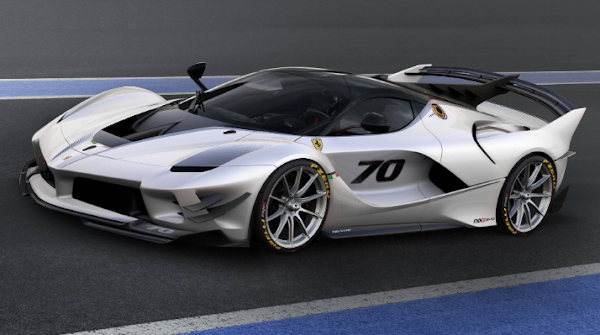
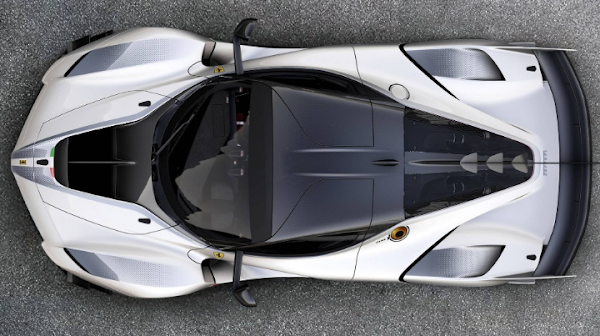
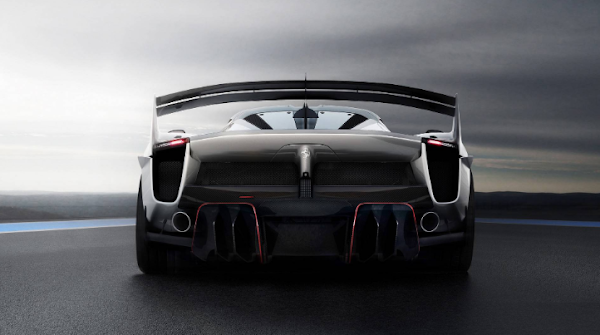
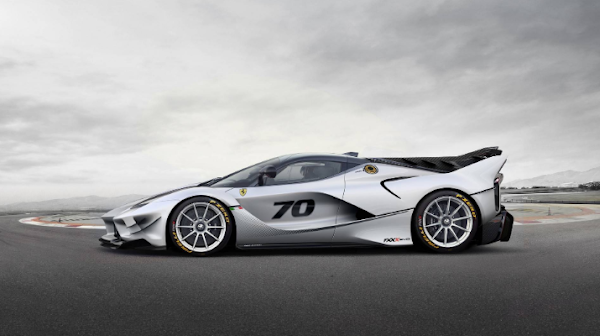
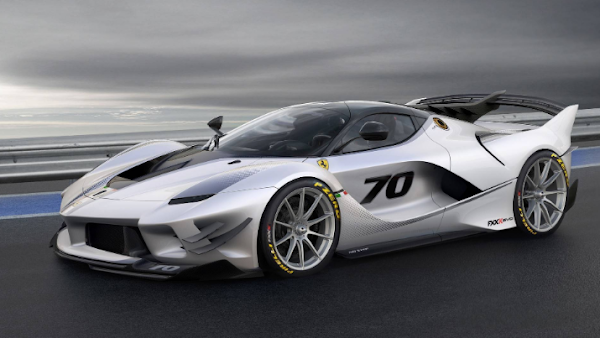
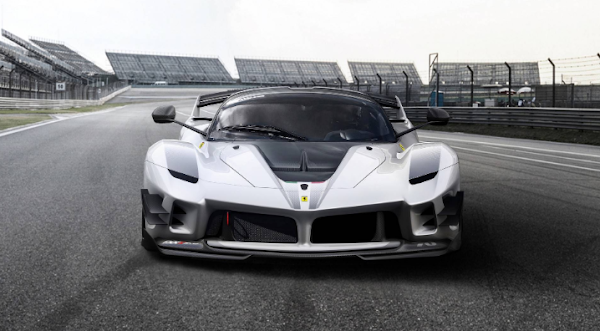
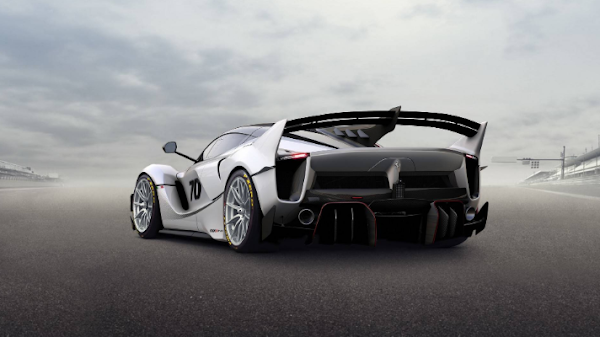
Ferrari "FXX-K Evo"

Ferrari "FXX-K Evo"
For those who don't know, the Ferrari FXX K Evo is a very rare vehicle and is unlikely to be seen on public roads.

The reason is twofold: it's not street legal, and the handful of examples in existence spent most of their time in Ferrari's care - only available to their owners at track events.

Therefore, finding one of these in action on the asphalt is an extraordinary coincidence, as you can see in MattyB727's video via YouTube.

The FXX K Evo was caught on camera taking part in one of Ferrari's Racing Days, almost a year ago at the Mugello Circuit.
We've embedded the video at the top of this page for you to enjoy.


Ferrari "FXX-K Evo"
Ferrari "FXX-K Evo"
However, we recommend wearing the best headphones because the car produces a brutal sound that is a treat for the ears, screaming up to 9,200 rpm on the Italian track.

The LaFerrari-based supercar was introduced in 2017 as an aerodynamic package for 40 standard 2014 Ferrari FXX K units or as a very limited stand-alone model.

Ferrari, however, did not reveal how many units it would make.

The sample seen at Mugello earlier wore the number 59 and was driven by Danish racer Peter Christensen.
Ferrari "FXX-K Evo"
Ferrari "FXX-K Evo"
Ferrari "FXX-K Evo"
Ferrari "FXX-K Evo"
Ferrari "FXX-K Evo"

Share:

Ferrari 488 "Challenge"

If you want to get into racing, Ferrari has you covered. We don’t just mean with fast cars—though it has plenty of those—but with actual race cars, the latest of which is the 2020 488 Challenge Evo.

At Ferrari Finali Mondiali event in Mugello, Italy, last weekend, the storied automaker unveiled its latest consumer race car. Meant for use in the brand’s Ferrari-only racing series, the aptly named Ferrari Challenge, the speedster’s design and performance have been refined to make it an even more competitive and capable car than before.

Where the 488 Challenge Evo differs most from its three-year-old predecessor, itself a replacement for the track-only 458 Challenge, is its aerodynamics. The front of the car has been completely redesigned with larger intakes, including a u-shaped center intake that helps cool the vehicle’s carbon-ceramic brakes, along with a new splitter and canards. The changes give the car a more intimidating look but also improve its aerodynamic efficiency by 30 percent, according to the company.
Ferrari didn’t spend all its time and effort fine-tuning the vehicle’s front fascia. In back, a new bumper features vents behind the wheel arches and engine bay to further increase cooling. With the car’s massive rear wing remains untouched, a new rear diffuser helps increase the vehicle’s downforce by 50-percent.

But the 488 Challenge Evo’s upgrades aren’t limited just to what you can see. The car’s electronic differential, anti-lock brakes, and traction control system have all been upgraded. In addition to the previously mentioned carbon-ceramic brakes, the car has also been outfitted with new Pirelli racing slicks. And inside the vehicle, there’s a more comfortable steering wheel with an integrated paddle shift and a new rearview camera.

The 488 Challenge Evo starts at $370,050, which isn’t that bad when one considers the cost of a street-legal Ferrari. There is some good news for owners of the car’s predecessor, though. Ferrari has announced that all the updates will be available as a single $49,000 upgrade kit.


Share:

Ferrari 488 "GT3"

Ferrari 488 GT3 Review
Ferrari has unveiled the latest version of the 488 GT3 race car, the GT3 Evoluzione (or Evo). FIA rules state that manufacturers are allowed to produce either an all-new car or an Evo kit during each three-year homologation cycle, so it's unlikely Ferrari will debut a GT3 racer based on the F8 Tributo soon.

As an Evo, the latest Ferrari 488 GT3 racer represents a number of iterative changes to improve aerodynamics, handling, ergonomics, safety, and reliability. While it isn't an all-new car, Ferrari says more than 18,000 hours of computational fluid dynamics simulation were performed, with two results being a redesigned front bumper that creates a smaller front end and provides better stability at speed. Additional aero improvements include completely redesigned vents on the rear wing, as well as larger vents atop the front fenders. The front portion of the doors were also reshaped to allow for better airflow down the body sides.
Ferrari 488 GT3 Review view
Ferrari 488 GT3 Inteior
The wheelbase of the Evo is now the same as in the 488 GTE to optimize tire wear and to make the conversion from GT3 to GTE easier. Engineers have reduced the weight of the car itself, but increased the weight of the ballast to lower the car's center of gravity while still complying with the FIA's Balance of Performance regulations. The car's ABS, traction-control, and engine-management systems have all been overhauled, as well. Optional equipment includes sensors for coolant level and refueling completion with warning lights, and Le Mans-spec, 4,500 lumen (read: extremely bright) LED main headlights.

Inside the cabin, little has changed aside from lighter harnesses and a new seat Ferrari developed with Sabelt. Even though pricing info hasn't been released, the Ferrari 488 GT3 Evo will be available to customers next year. All the parts will also be made available as an upgrade kit for existing 488 GT3s.
Ferrari 488 GT3 Exteior
Ferrari 488 GT3 Exterior view
Ferrari 488 GT3 Review Side
Ferrari 488 GT3 Wheel


Share:

Ferrari "488" GTE

Ferrari 488 GTE Review
The latest in Ferrari’s illustrious line of rear-engine V8 GT cars, the 488 GTE made its competition debut in the 2016 Daytona 24 Hours. With one car each from SMP Racing, Risi Competizione and Scuderia Corsa, it was Scuderia Corsa — with the sister car to that offered here — which defied expectations to take an excellent 10th place overall and 4th in class, behind established GT class grandees Corvette Racing and Porsche.

Scuderia Corsa purchased a second 488 — this car — for the Sebring 12 Hours in March. Against strong class opposition from Aston Martin Racing and the Alex Job Racing Porsches, the car ran faultlessly to win the GT Daytona class and finish 22nd overall.

The IMSA Championship culminated in a class victory in the end-of-season championship standings, which marked the first time a female driver, Christina Nielsen, won a major North American sports car championship. In 2017 the car was entered at Le Mans. The car crossed the line in 44th place and 14th in the GTE-Am class.
Ferrari 488 GTE Interior
With 5,000 km (3,106 miles) of driving time left on the engine and 6,000 km (3,728 miles) left on the gearbox, this 488 GTE is supplied with a 12-month powertrain warranty — should the purchaser wish Scuderia Corsa to continue to prepare the car on their behalf. Presented in its Le Mans livery, with impeccable history — and offered for sale directly from the original owner — chassis 4208 is still eligible for numerous GT series worldwide.

This car, Lot 130, sold for $713,711, including buyer’s premium, at RM Sotheby’s Ferrari — Leggenda e Passione auction on September 9, 2017.

There’s always something new. I’ve been writing these profiles for 14 years now, and I’ve watched the auction markets for a lot longer than that. I’ve written profiles about racing cars that are 100 years old and as recent as about 10 years old, but this is the first time I’ve seen a real, active, fresh-off-the-track-and-ready-for-the-next-race car show up at a major auction.

This car is two seasons old; you can buy a brand-new example of the identical car from Ferrari today. It’s clearly a different situation than an Austin Healey with a roll bar.

To start with, the 488 is Ferrari’s current mid-engined V8 sports car. It is an evolution of the earlier 458 and carries a twin-turbocharged 3.9-liter engine with a 7-speed dual-clutch automated transmission.

Real race cars

Ferrari’s current gentleman’s racing series, Ferrari Challenge, uses the 488 GTB as the spec car for racing. Ferrari also uses the 488 as the basis for its presence in the FIA World Endurance Championship, IMSA GTLM racing, and the Blancpain GT series with the various racing models designated GTE (World Endurance and IMSA) and GT3 (Blancpain).

Ferrari 488 GTE Exterior
These cars remain 488s, and retain the body shell, engine and transaxle packages of the production vehicles — but are otherwise completely bespoke cars.

While the Ferrari Challenge cars are basically production cars with roll bars and racing modifications, the GTE and GT3 are pretty much built from scratch as racers.

The factory ships the basic shells to Michelotto, who acts as Ferrari’s de facto sports car racing department, to turn those shells into pure racing cars for customers (the factory doesn’t have a team in sports cars).

The differences between GTE and GT3 are subtle but real. GTE cars are the higher-budget, FIA and IMSA GTLM pure racers. GT3 cars (IMSA GTD) tend to be lighter but with more restricted changes to keep costs down. It is entirely possible to convert cars from one specification to another. Indeed, our subject car appears to have raced in both configurations in its career.
Ferrari 488 GTE View

From Pro to Am

The racing series are further split into Pro and Am categories. The Pro is basically for the real championship: factory teams, professional drivers, the glory of winning and the agony of defeat.

Am is for the amateurs, and this is more the province of rent-a-rides with talented up-and-comers, competent yeomen participants and wealthy experience chasers.

The drivers are ranked Platinum, Gold, Silver or Bronze. In Am, there are limits on how much driving time the various grade drivers get in order to keep competition close. I’m told that Am requires cars to be at least one year old, so frequently a car will run Pro for its first season then move down to the less-demanding Am for later use.

It appears that this was how today’s subject got used.

Big bucks and professional help
In either category, this is the realm of what I call “real racing.”

Whether you are contesting for the championship or just enjoying being a racer, this is very different than amateur racing, be it SCCA or vintage. For example, you would not consider showing up with your racer on a trailer behind your car, your good friend as mechanic, and your wife as sandwich maker.

If you want to play in this league, you sign on with one of the professional support teams and let them take care of everything. Our subject car was maintained and supported by Scuderia Corsa, the racing component of a group of California Ferrari dealers. It can be dizzyingly expensive, but presumably if you are racing a Ferrari, you are going to be okay with that.

Turn-key racer, trinket or investment?
A very interesting point of conjecture here is the intent and motivation of whoever the buyer was (and I don’t know who bought it, so it is, in fact, conjecture). Was the intent of the purchase to buy an active and competitive opportunity to go racing, was it simply a “Veblen good” (an expensive trinket to impress your friends) or was it purchased as a savvy long-term investment?

A reasonable case can be made for each. Modern technology has made cars like this amazingly comfortable and easy to race — and immeasurably safer than vintage cars when something goes wrong. Auto racing used to be a blood sport, but in modern cars, racing incidents mostly impact checkbook balances. Your wife and kids can sleep well while you go play.

Ready-to-go racer

This 488 GTE has at least two years of eligibility in major international series plus many more at lower levels, and is ready and welcome should the owner want to enter.

Ferraris of this caliber are set with use limits, generally 10,000 km between rebuilds. This car has 5,000 km left on the engine and 6,000 km on the transaxle, so it is roughly half used up (the first half was clearly Le Mans 2017). Scuderia Corsa is willing to give a one-year drivetrain warranty if you stay with them (which for a racing car is amazing).

It’s worth noting that this car sold in Europe, where there are several active and competitive series for older GT3 and Le Mans cars, so there are plenty of venues where it could be used and enjoyed, particularly in Germany.

You could also just put it in your garage with fancy lighting and tell stories to anyone who will listen. In a world of private jets and $500,000 wristwatches, this is not an unreasonable approach.

Stashed away as a future collectible?

The third possibility is the most intriguing. We all know what happened to the racing Ferraris of the late 1950s and 1960s, but what will be the future value of today’s top racers?

What will high-stakes collectors be clamoring for in 20 years?

According to endurance-racing guru and author Janos Wimpffen, there are something like 50 Ferrari and about 300 total (all makes) GT3 and GTLM cars from the past eight to 10 years in the world, which is definitely a collectible number.

If tomorrow’s collectors will want to own the cars that were great when they were young (as most of today’s collectors do), then a 488 GTE with good racing history, as this one has, might in time be the headliner at an auction — and an excellent investment.

This car didn’t sell cheap. A brand-new one costs about $900,000, so this represents a $200,000 discount from new.

This is nothing like the “it’s used up; throw it away for what you can get” approach that my generation became used to seeing, but it is not an out-of date, old racer. It is still a viable and fun racing car — and maybe an excellent investment. I’d say fairly bought and sold.


Share:

Ferrari 488 "Pista"

Ferrari 488 Pista Review\
Ferrari launched the Pilotti Ferrari specifications at the Le Mans 24-hour race event.
This is the result of a personalized creation from an exclusive tailor-made program for the Ferrari 488 Pista model.
In its release, the Piloti Ferrari is dedicated to commemorating the FIA World Endurance Championship world title.
Deliberately designed as a reward for their clients who successfully competed in races with Ferrari cars.

a will make its debut on the eve of the legendary French endurance race at the Circuit de la Sarthe.

The Piloti Ferrari 488 Pista uses the latest version of the 3.9 liter turbocharged V8 engine which is capable of producing 720 hp.

In the 2018 International Engine of the Year Awards, the engine was chosen as the best in the world for three consecutive years.
Ferrari 488 Pista Back
On the exterior, the supercar features a new livery with stripes in the colors of the Italian flag, which harkens back to the racing version of the 488 GTE.

This supercar is the successor to Ferrari's special series with V8 engines, such as the 360 Challenge Stradale, 430 Scuderia, and 458 Speciale, which received much praise for their extraordinary performance and handling.

Ferrari 488 Pista Exterior
This means that Ferrari Jakarta has completed the latest Ferrari product range, starting from the Ferrari Portofino, 488 GTB, 488 Spider, GTC4 Lusso, and 812 Superfast. In its home country, the price of a Ferrari 488 Pista is US$ 350 thousand. However, this is not the selling price because it does not take into account vehicle tax and sales tax on luxury goods.
Compared to the 488 GTB, this new model is 90 kilograms lighter so the dry weight is 1,280 kilograms. The Ferrari V8 engine is the most powerful in Ferrari history, as well as an extreme evolution in terms of its turbo unit which won the International "Engine of the Year 2016 and 2017" award.

The engine produces 720 HP which is the largest power in its class (185 hp/liter) and is also the lightest, thanks to solutions adopted from the 488 Challenge, including an Inconel exhaust manifold and a lightweight crankshaft and flywheel. Apart from that, it is also thanks to additional features such as titanium con rods and carbon fiber intake plenum.

The torque is also higher than the 488 GTB at all engine speed levels, providing powerful but smooth acceleration with faster turbo response times despite the increase in power. The Ferrari 488 Pista tends to be lighter than other series. When compared with the 488 GTB, the new model is 90 kilograms lighter (1,280 kg dry weight).
Ferrari 488 Pista Eterior view
The dynamics and aerodynamic aspects of the Ferrari 488 Pista are inspired by the Ferrari racing cars: 488 GTE and 488 Challenge. The racing solutions adopted include the F1-inspired S-Duct and a front diffuser design with an optimized tilt angle for the 488 GTE to create strong suction to increase downforce.

In addition, Ferrari for the first time has Ferrari Dynamic Enhancer (FDE) with world-first features, such as using Ferrari software to adjust brake pressure on the calipers. This makes it easier to control the car, including when going through sharp turns.

Meanwhile, the choice of 20-inch carbon rims. Other parts that use carbon fiber are the engine hood, bumper, and rear spoiler.

This combination offers performance like a racing car, whether driven on the road, circuit, or by non-professional drivers. Vehicle dynamics have been designed to increase driving pleasure while achieving peak performance with ease and control.
Ferrari 488 Pista Interior
Ferrari 488 Pista Performance
Ferrari 488 Pista Race

 
Share:

Popular Posts

Followers