luxury cars-images This blog contains various forms of cars and at a glance most of the new information, present and future, this blog will always feature luxury cars, and sports cars, and provide information about the content, Toyota, Ford, Honda, BMW, Rolls-Royce, Tesla, Mitsubishi, Mazda, Chevrolet, SUV, Automotive, Pick-up, Sports Cars
  • LAMBORGHINI MODEL

    The most visionary models, these unique specimens are set to define the highest limits of technology and design. Unveiled at the most prestigious international Motor Shows, they offer an exclusive look at the most innovative solutions that Lamborghini may adopt in its future series-production models.

  • RAV4 Interior

    Premium materials and a focus on comfort raise RAV4 Hybrid’s level of refinement. Whether appreciating the views through the available panoramic glass roof or finding inspiration from RAV4 Hybrid’s attention to detail, you’ll enjoy a ride that’s ready to go the distance. Explore Interior

  • Ford F-150 Raptor

    The Ford F-150 Raptor pumps out so much fun and such oversize thrills, you'd assume that it had been outlawed years ago

  • Ford Mustang GT500

    Ford Mustang Shelby GT500 makes this car the most powerful car ever made by the American manufacturer. This is because the Ford Mustang Shelby GT500 is equipped with an engine capable of 760 horsepower

  • Tesla Roadster Fastest Electric Car

    Tesla claims the Roadster to be the fastest production car ever made! The second-generation Tesla Roadster can go from 0 to 60 miles per hour in under 1.9 seconds, and this is just for the base model.

Showing posts with label MotorSport. Show all posts

Harley-Davidson Sportster S

The 2021 Harley-Davidson Sportster S cruiser motorcycle represents a seismic overhaul of a long-lived bike family that dates back to the '50s.

The previous motorcycle – the Sportster 1200 – can trace its heritage back to the Model K, with the latest version continuing to receive updates since the introduction of the Evolution engine in 1986. But who cares? That is ancient history now.

Harley-Davidson is bringing us a new motorcycle, even a new concept, that throws everything but the Harley Sportster name in the dustbin. Following the Harley-Davidson Pan America, the Sportster S eschewed air conditioning, non-existent electronics, and 'feel over performance' in favor of modern engineering, less show, and more ride.

If this were a competing product, like the Honda Rebel 1100, I'd praise its ride while complaining about how it doesn't have that Harley-Davidson je ne sais quoi but the Sportster S doesn't. one.
Like the Pan America, the Harley Sportster's Revolution motor puts pressure on the chassis, helping to significantly reduce weight, which is felt on the road.

The Sportster S changes direction much better than the old machine but the rounded front tires offer little resistance. The first 20 degrees of incline or so is fine, but after that, you have to give the bar an excellent push to get it to go any further.

Mid-corner changes, especially if things get tighter, can be just as challenging. Fat Bob has the same problem, so all fingers point to that giant front tire. Ground clearance is also much better with the old skirt at every roundabout long forgotten. Elsewhere in the chassis is a new suspension which, unlike the old model, is fully adjustable, while Brembo now provides the brakes. 
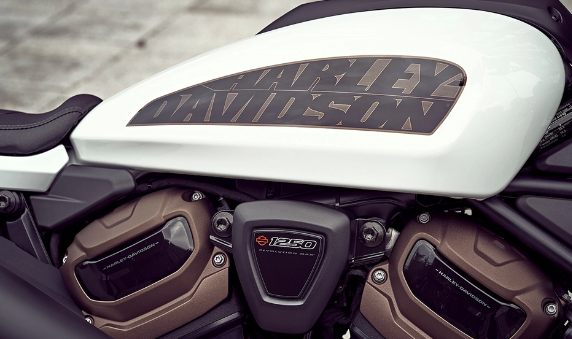
Both of them worked pretty well considering they were disabled from the start. The suspension for example is just 92mm at the front and 37mm at the rear – the ride is good, considering how little the Showa has to work with, but you feel another inch at either end would have done wonders. There's also a remote preload adjuster, with 40 clicks to use, located under the left side of the seat.

The same goes for the brakes – the Brembo four-pot up front is capable of stopping 228kg of metal plus who knows what the rider is doing, but another disc/caliper wouldn't hurt.
The Harley-Davidson Sportster S is powered by a 1,252cc V-twin engine nicknamed the Revolution Max 1250T. Just like the Revolution Max installed on the Pan America 1250, the engine is a 60-degree water-cooled V-twin with DOHC and VVT system but there are some changes.

The overall displacement, including bore and stroke, is the same, but there's a new top end with smaller valves, a different velocity stack, and a changed cam profile.

The result is less peak power and torque (claimed 120bhp versus 150bhp on the Pan and 92lb. ft instead of 95lb. ft) but an increase in torque elsewhere in the rev range with 10% more torque from 3000 to 6000rpm. The results on the road were very pleasing.

The Harley Sportster motor pulls straight from the bottom without shaking or vibrating, producing just usable torque. Unlike the old bike, which only shook violently from the midrange onwards, the Sportster S cruises smoothly to the redline, rewarding the rider with a decent amount of power right up top.

It's also well equipped with second gear delivering most city tasks and third gear comfortably ranging from the low 30s to 'How are you, officer?'.

The only complaint about the engine is that it doesn't have the drama you'd expect from a Harley – the bike doesn't shudder at the lights, it doesn't roar with the sound of induction. Harley also really needed a louder pipe, but this isn't Harley's fault - it's a Euro5 regulatory product that everyone has to comply with. Sure, there's a bit of pop on overrun but it doesn't feel like grunting 1,200cc American muscle. On the Pan America, where subtlety is the essence of the game, you won't notice it, but on the cruiser, where you want a certain air, it leaves you feeling a little flat.
The Sportster S may come from a long line of Harley Sportster models but this version is completely different from previous generations. The 1250T engine has just been released and it's too early to conclude long-term reliability - especially since we don't have any owner reviews at this time. The standard warranty is two years but can be extended by a further three years.

The fit and finish of the parts are generally good but we noticed some bare threads on the rusted frame.

Our Harley Sportster owner reviews don't reveal any concerns at this time. However, it's still early days, and Pan America doesn't seem to be doing well in this regard.
Harley launched the Sportster S as the 'top' of the model line, with cheaper options in the future. Joined in 2022 by the Harley-Davidson Nightster, which replaces the old entry-level Sportster 883.

But sticking with the flagship 1250, its position at the top of the range (and price) means it competes with everything from India's Scout Bobber to Italy's muscular Ducati Diavel V4 and everything in between.

As a replacement for the Harley Sportster, it's so different it's almost incomparable. Rather than attracting owners of previous Sportster models, this is more likely to tempt BMW R nine T drivers to buy into the brand. It's also worth considering the Sportster S if you're in the market for an Indian FTR although Harley may struggle to live up to the road handling of the sportier 17" wheel FTRs in the range.
Like other motorcycles, the Harley Sportster's electronics have also seen major improvements over the old model with three riding modes (Road, Sport, and Rain) plus two custom modes as well as cornering ABS and tilt-sensitive traction control. which this tester found worked very well in one of the particularly slippery corners.

All of this is controlled via a 4” round TFT display, which also houses other functions of the Harley-Davidson app such as navigation.

Along with the new dashboard, there are many other new features including LED lighting, cruise control, new multi-function switchgear plus the obligatory styling complete with a high-level flat track-inspired exhaust.

Like every Harley, there are plenty of options including center-mounted footpegs if you feel the front end is a bit wide. We tried them out and found them to be a bit narrow and they also made the sidestand more difficult to deploy. Unless you hate the look of strikers, at over £600 a set (plus fitting) we'd give them a miss.

You can also install a pillion seat, pegs, and backrest, which comes with a rear fender extender to protect the back of your passenger.

Specification

Engine size 1252cc
Revolution Max 1250T engine-type water-cooled 60-degree V-twin with DOHC and VVT
Frame type High strength low alloy steel trellis frame with pressure members; stamped, cast, and forged joints; MIG welded; aluminum forged center structure
Fuel capacity 11.8 liters
Seat height 753mm
Bike weight 228kg
Front suspension 43 mm inverted fork with compression, rebound, and spring preload adjustment
Linkage-mounted piggyback Monoshock rear suspension with compression, rebound, and hydraulic spring preload adjustment
Front brake Single caliper 4 piston monobloc mounted radially 320 mm
Rear brake 260mm floating single-piston caliper
Front tire size 160/70x17
Rear tire size 180/70x16
Mpg, costs & insurance
Average fuel consumption is 49mpg
Annual road tax £111
Annual service fee -
New price £13,995
Used price £10,500 - £14,000
Share:

Honda CBR1000RR-R Fireblade SP

CBR1000RR-R Fireblade SP or called CBR1000RR-R Fireblade SP 30th Anniversary for big bike fans in Indonesia. As is known, the CBR1000RR-R Fireblade SP is one of Honda's high-performance motorbike icons, which is present as the epicenter of the Total Control philosophy. Still inspired by the Honda RC213V MotoGP and RC213V-S, the CBR1000RR-R Fireblade SP carries various attractions.

These include overhauling the intake system to increase engine performance at medium revs, as well as adding rear sprocket teeth to improve acceleration and increase handling rigidity. As a result, the wheelbase, which was previously 1,455 mm, is now longer, namely 1,460 mm. This is because 3 teeth have been added to the rear sprocket (from 40 to 43), to increase acceleration when needed at medium revs. Meanwhile, the 999.9 cc DOHC 4-cylinder inline engine has experienced many improvements compared to the previous generation.


  This engine configuration is the same as the RC213V (bore x stroke: 81 mm x 48.5 mm). The maximum power is recorded at 160 kW (215 tk) at 14,500 rpm, and the maximum torque reaches 112 Nm at 12,500 rpm. Meanwhile, the identity celebrating the presence of Fireblade since 1992 is obtained from the appearance of various sectors. The basic body color is white, with blue graphic accents on the front and rear fenders. Then, there is a red-blue combination on the tank, side, and front body, as well as the fairing. All of this was done to get the Honda Tricolor identity that has existed since the Fireblade was first born.
  When turning the ignition key before starting the engine, the driver will be greeted with special 30-year edition writing on the panel display.


Share:

2016 Yamaha YZR-M1

BARCELONA - Movistar Yamaha shows the 2016 Yamaha YZR-M1. This motorbike is the racing motorbike that will be used by Jorge Lorenzo and Valentino Rossi in the 2016 MotoGP arena.

Indeed, there are only a few changes to the 2016 Yamaha YZR-M1. However, Movistar Yamaha boss Lin Jarvis said that the changes are here to maintain their dominance in the MotoGP arena.

The changes that are definitely on this motorbike are in the software and Michelin tires, which are already MotoGP regulations.

“With Jorge and Valentino as riders, there are no changes to the Yamaha Motor Racing team crew, and with the amazing YZR-M1 motorbike we are confident we will have everything we need to win and defend our triple title,” said Lin Jarvis.

“We know our competitors will be out for revenge, and we can never underestimate the lengths they will go to to try to dethrone us.”

Another fact is the fact that Lorenzo will not use the number #1 as the 2015 MotoGP world champion, but will still use his regular number, #99. Valentino Rossi will also still be present with the number #46.

2016 Yamaha YZR-M1 Specifications

Engine Type: Liquid-cooled inline-four with cross-plane crankshaft
Displacement: 1000cc
Max Power (claimed): Over 240hp
Transmission: Six-speed cassette-type gearbox with alternative gear ratios available
ECU: FIM-regulated Magneti Marelli
Chassis: Aluminum twin-tube delta box frame with multi-adjustable steering geometry and aluminum swingarm
Suspension: Öhlins upside-down fork and rear shock, both with adjustable preload, compression, and rebound damping
Front Brakes: Twin 320mm or 340 mm carbon discs with four-piston calipers from Brembo
Rear Brakes: Single stainless steel disc with twin-piston caliper from Brembo
Wheels: 17-inch MFR forged magnesium wheels
Tires: Michelin 17-inch tires in slick, intermediate, and wet options
Weight: 346 pounds [Syu/Idr]
Share:

Suzuki GSX-S1000GT

Suzuki GSX-S1000GT Pictures
A new motorbike from Suzuki, the 2022 GSX-S1000GT, has just been released. This motorbike is claimed to offer a fiercer appearance with dual LED projectors.

Also, the aerodynamic fairing shape is believed to increase fuel efficiency and improve control. Dampers have been added to the handlebars and footrests to reduce engine vibration, making the rider more comfortable.

On the passenger side, Suzuki also provides a new handgrip and seat design which is claimed to be more comfortable. On the undercarriage, 43 mm USD front suspension and a rear mono-shock that can be adjusted for preload and rebound, bind to 17-inch multi-spoke model rims.
 
Suzuki GSX-S1000GT Review
For braking, the front dual-disc floating measures 310 mm with two-piston Brembo brake calipers, while the rear disc measures 240 mm with one piston.

The Suzuki GSX-S1000GT is equipped with a K5 inline four-cylinder engine with a capacity of 999 cc, producing 152 hp of power at 11,000 rpm and 106 Nm of torque at 9,250 rpm. This power is channeled through a 6-speed manual transmission.

Having wild performance, Suzuki has equipped the GSX-S1000GT with the Suzuki Intelligent Ride System (SIRS) feature which can adjust the driving character to road conditions via a 6.5-inch full-color TFT display screen.

Not only that, there are other features such as Cruise Control, Traction Control System (STCS), Suzuki Drive Mode Selector (SDMS), Quick Shifter, ABS, and others.
Suzuki GSX-S1000GT Side view
Share:

Kawasaki Ninja H2

Kawasaki Ninja H2 Review
The Ninja H2 showcases the power of Kawasaki's jaw-dropping supercharged hypersport engine. Equipped with a supercharged 998 cc In-Line Four engine, advanced electronics, and the latest Brembo brakes, the Ninja H2 delivers the best performance on the road.

SUPERIORITY:

998 cc, IN-LINE FOUR SUPERCHARGED ENGINE
LIGHTWEIGHT TRELLIS FRAME
ADVANCED ELECTRONICS
BREMBO STYLEMA BRAKE CALIPERS
TFT COLOR INSTRUMENTATION
SMARTPHONE CONNECTIVITY


ADDITIONAL FEATURES:

Street-legal hyper sport performance
KYB AOS-II front fork and Öhlins TTX36 rear shock
Kawasaki Quick Shifter (KQS)
Kawasaki Traction Control (KTRC–9 modes)
All-LED lighting


SUPERCHARGED POWER
PURE DOMINANCE

The Ninja H2 is a street bike with a 231 PS supercharged engine that is capable of creating unprecedented power and impressive acceleration. The sound of its roar will be unforgettable.


Kawasaki Ninja H2 Engine

IN-HOUSE DESIGNED

Chosen for its high-rpm performance, the supercharged Ninja H2 which is a centrifugal type is very efficient in compressing air (when atmospheric pressure is above 2.4x), and minimizes heat. Thanks to the efficiency of the supercharger, this motorbike no longer requires a wide and heavy intercooler. The supercharged is specifically designed for the Ninja H2 engine, providing more efficient handling in various road conditions, when compared to other ordinary supercharged.

PERFORMANCE
UNPARALLELED IN EVERY WAY

The massive power of a supercharged engine requires many high-performance components to ensure an effortless, yet powerful, unforgettable experience.

SMOOTH & PRECISE

The Öhlins TTX36 rear shock with remote preload adjuster is fully adjustable and offers precise damping for increased traction, comfort, and feedback to the rider. The KYB AOS-II (Air-Oil-Separate) low-friction cartridge fork offers great action; The initial stroke is smooth and compliant followed by progressive damping through the end of the stroke. The front fork is fully adjustable for compression and rebound damping, as well as preload.


Kawasaki Ninja H2 Exterior

ADVANCED ELECTRONICS
STATE-OF-THE-ART

The main key is bringing electronic management technology that has been proven in the Kawasaki Racing Team (KRT) WorldSBK championship to the Ninja H2 motorbike. This results in precise chassis orientation awareness that aids the rider's ability to adapt to a variety of conditions and typical riding scenarios.

PREDICTIVE & ADAPTIVE

The Bosch Inertial Measurement Unit (IMU) enables inertial monitoring along 6 Degrees of Freedom. This next-level system enables predictive and adaptive electronics for precise chassis orientation awareness.


Kawasaki Ninja H2 Side view

STYLING
INTUITIVE & INNOVATIVE

Designed by the KHI Aerospace Company, the fixed mirror has an airfoil cross-section with a Gurney flap that contributes to downforce generation. The chin spoiler on the upper cowl also functions to disguise the shape, which further contributes to downforce production.

STYLING
PREMIUM QUALITY

Kawasaki's original silver mirror paint was developed specifically for motorcycles. The highly reflective and shiny glass-like metallic appearance adds to the bike's stunning design. In the shade, the paint appears black, but once in the sun, its highly reflective surface looks like the surrounding landscape. A special top coat on all non-carbon bodywork parts allows certain types of scratches to repair themselves, allowing the paint to maintain a high-quality finish through normal wear*. Self-healing is achieved through microscopic soft and hard segments within the top layer that work like chemical springs, creating a trampoline effect that absorbs impact.
Kawasaki Ninja H2 Wallpaper
Kawasaki Ninja H2 Oictures
Kawasaki Ninja H2 Topspeed


Share:

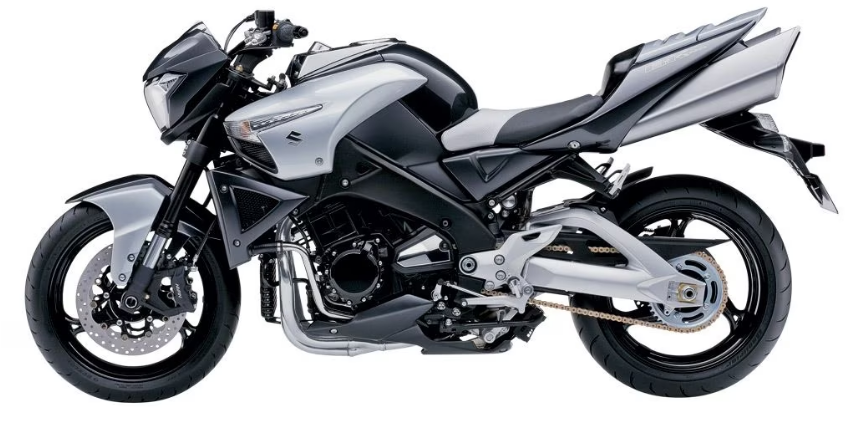
2023 Suzuki B-king 1340 Vrsc

2023 Suzuki B-king 1340 Vrsc Review
It was a time when standard-style bikes were considered plain vanilla machines for motorbikes. A sensible, non-glamorous, and versatile alternative to sportbikes and cruisers. But the standard category has seen a resurgence in recent years, branching out into sub-categories containing supermoto, adventure, retro and streetfighter bikes.

Then there is B-King.


One of our favorite large-capacity sports platforms of all time, the mighty Suzuki Hayabusa, provides the foundation on which the B-King is built. While the B-King faithfully delivers brutal power like the Busa, it is blessed with a relaxed, upright riding position and ease of handling. A day spent hunkering down to reach for the 'Foam's clip-on bars can take its toll on your back, while covering the same distance as sitting on a King's throne is a relatively royal treat.
2023 Suzuki B-king 1340 Vrsc Back side
A current motorcycle concept debuted at the Tokyo Motor Show in 2001, the strange name representing it was King B: Upgrade, Beauty, and Brains. While much of the original beauty has been incorporated into the production model, Suzuki says the Brains components (a super-advanced computer control system) require further thought and research before being rolled out to the buying public. Gone too are the Boosted components in the powertrain – Suzuki's liability lawyers no doubt take a dim view of the supercharger for the Hayabusa -spec 1340cc inline-four.

While his bold style may not be for everyone, King's high-quality finishes are something anyone can appreciate. For those in doubt, a single twist of the throttle in the 11,000 rpm range is all it takes to win loyalty. The balanced engine runs silky smooth at highway speeds and maintains an impressive level of vibration control at high revs. Smooth gear changes through the six-speed gearbox, small drivetrain clearance, well-mapped fuel injection, and super-linear power delivery create the ultimate propulsion. The incredible flexibility this engine offers was well illustrated in my drive along 15 miles of winding mountain roads while remaining in third gear the entire time. Strong acceleration in corners is always on hand, even when slowing to 40 mph at 3000 rpm.
2023 Suzuki B-king 1340 Vrsc engine
Curious to find out if the B-King replicated the power output of its 2008 Busa sibling', we strapped each to a rear-wheel dyno for back-to-back pulls. The power charts are very similar, with the Hayabusa enjoying a slight advantage at the top of the power curve – not surprising considering the differences in airbox and exhaust systems. The B-King doesn't have a ram-air intake, so it's worth noting that the dyno doesn't account for any additional power that a force-fed Busa would exert on the road at high speeds.

Another interesting thing revealed on our dyno was the method Suzuki uses to limit top speed. Although the fourth gear provides full pull to redline, the fifth and sixth gear each track the same full-power curve; however, the rev limiter cuts at 9300 rpm in the fifth and 8600 rpm in the sixth. Corporate lawyer intervention again?

At our high-desert test site, flat-out revs and the rev limiter in sixth registered 169 mph on the speedometer and 153 actual mph on our radar gun. Taking a fourth-gear blast paid off with a radar reading of 158 mph. In both cases, the motorcycle accelerates to its terminal speed with ferocity as 150 mph gusts of wind try to pry you away from the unfair machine. But if you find yourself embroiled in a heated battle for pink, it's best to go forth!
2023 Suzuki B-king 1340 Vrsc Exterior
Where the B-King reigns supreme among performance standards is at the dragstrip. Although leaving the line without starting the 200/50 series Dunlop radial took a few tries, I managed to run 9.93 seconds without dropping rear tire pressure, as more grip means more wheelie action in lower gears. If you like power wheelies, just step on the gas at low revs in first gear and hold on tight as the front tires fly off as the tachometer needle passes 7000 rpm. Fatigue from smoking? Let's just say this bike is King!

If this all sounds a bit unmanageable, there's the Suzuki Drive Mode Selector, which allows the rider to switch to reduced power mode. The B setting increases throttle response and power to more pedestrian levels, knocking 53 ponies and 37 foot-pounds off-peak output – in this case, B doesn't mean Boost! Unlike the stem-mounted tri-mode toggle switches on the 'Busa and GSX-R sportbikes, which allow on-the-fly adjustments, the B-King's dual-mode tank-top switches require the engine to be at idle and the gearbox to be in neutral for changes to be made. We suspect wet weather driving is the only reason owners chose to use the relaxed power mode.

The Sportbike-quality KYB fork and single rear shock offer adjustable spring preload, compression, and rebound damping to increase the bike's versatility. The factory settings provide a nice balance for freeway cruising and canyon carving with a 170-pound carcass in the saddle. Suspension compliance is A grade in absorbing plate joints, allowing for comfortable long highway operation. At normal speeds, wind protection is adequate, offering good coverage from the chest down while allowing uninterrupted flow at head and shoulder level. The limited fuel range of the 4.4-gallon tank may be the only element hampering the B-King's grand-touring potential. On one occasion, I sputtered in the repair shop after just 155 miles on the freeway.
2023 Suzuki B-king 1340 Vrsc Wallpaper
The chassis is easily up to the task of backroad burning, providing plenty of cornering clearance and fore-aft pitch control for a 582-pound machine on full fuel. Although leverage through the low-rise tubular handlebar provides a lighter steering feel than the stub-bar 'Busa, the B-King's size and weight are apparent, especially at low speeds. This is not a ballerina.

However, removing the non-adjustable steering damper on our test bike had a dramatic effect on overall feel and handling. It was as if the bike had lost 50 pounds. With the damper installed, the tires felt like they were underinflated when maneuvering at parking lot speeds; when removed, the bike takes on a sense of finesse. Proceed at your own risk, but we never experienced any stability issues over several hundred miles of varied riding including dragstrip and top-speed testing.

Nissin radially mounted four-piston front brake calipers clamping 310mm floating rotors offer strong, consistent stopping performance without overly aggressive initial bite. Like several models in Suzuki's current lineup, the B-King is also offered with an ABS option for $600.

The trunk-mounted switchgear is well laid out and has a smooth look and feel. The feature-rich instrument cluster also has a high-quality display and attractive blue backlit lighting at night.

There's not much not to like about B-King. There are slight disturbances, such as fuel splashes when filling the tank or rearview mirrors which are susceptible to vibrations, both from the road surface and small radiation from the engine. Like many other bikes that feature an under-seat exhaust, the B-King's storage space is almost nil, although there is a full complement of equipment tucked away behind a removable panel on the left side of the bike. Perhaps the Suzuki's biggest downside will apply to riders 6-foot-2 or taller, as the stylized fuel tank covers knee space.

However, now is a great time to be a B student. Spend time aboard a B-King and you'll understand its strange name, although you may have your interpretation. Ours will be the Big Bad Ballistic Bomber.
2023 Suzuki B-king 1340 Vrsc Wheel

SPECIFICATION
GENERAL

List Price $12,899
American importer Suzuki Motor Corp.
12-month/unlimited miles guarantee.

MACHINE

Liquid-cooled, inline-Four-stroke engine
Drill x step 81.0x65.0mm
Displacement 1340cc
Compression ratio 12.5:1
DOHC valve train, four valves per cylinder, shim adjustment
Valve adjustment interval 14,500 miles.
Fuel injection carburetion
Oil capacity 3.5 qt.
400w electric power
12v, 10ah battery

CHASSIS

Weight: Empty tank 554 pounds.
Weight: Full tank 582 pounds.
Fuel capacity is 4.4 gallons.
Wheelbase 60.0 in.
Sweep/trail 25.3°/4.2 inches.
Seat height is 31.6 inches.
Ground clearance is 4.8 inches.
GVWR 1010 lbs.
Payload capacity (full tank) 428 pounds.

SUSPENSION/TIRES

Front suspension:
KYB Manufacturer
Tube diameter 43mm
Claimed wheel travel is 4.7 inches.
Adjustment of compression and rebound damping, spring preload
Rear suspension:
KYB Manufacturer
Single shock type
The claimed wheel travel is 5.4 inches.
Adjustment of compression and rebound damping, spring preload
Dunlop Sportmax Qualification front tire 120/70ZR17
Dunlop Sportmax Qualification rear tire 200/50ZR17
SHOW
1/4 mile. 9.93 seconds. @ 141.63 miles/hour
0-30 mph 1.2 seconds.
0-60 mph 2.7 seconds.
0-90 mph 4.5 seconds.
0-100 mph 5.3 seconds.
Top gear speed time: 40-60 mph 3.4 seconds.
Top gear time to accelerate: 60-80 mph 3.2 seconds.
Top speed was measured at 158 mph
Engine speed at 60 mph 3284 rpm
fuel mileage
High/low/average. 42/35/37 mpg
Average range inc. Stores 163 miles.

BRAKE DISTANCE

from 30 mph 30 ft.
from 60 mph 130 ft.

SPEEDOMETER ERROR

Indicated 30 mph 28 miles per hour
60 mph indicated 56 mph

EDITOR'S NOTE

DON CANET, Road Test Editor When I saw Suzuki's latest silver-and-black blockbuster, I saw Jazz, the Pontiac Autobot in the Hollywood hit Transformers. When viewed from above, it's all there: mufflers for legs, a narrow waistline, body-shaped fuel tank with side pods serving as arms and shoulders. If only they turned inside out like one of my son's action figures. And if the shape of the headlight assembly isn't to your liking, you may need to use your imagination.

The Transformers theme doesn't end with B-King style either. This bike is a Transformer, a force of nature in disguise. What you have here is a gentleman's standard of decency and decency when you need it, and a powerful acceleration weapon to use.

Maybe some creative customizer should follow what Suzuki started, paint it yellow, and name it BumbleBee.

PAUL DEAN, Senior Editor I remember saying that I didn't care what a motorcycle looked like as long as it went fast, handled well, and was comfortable enough.

I lied.

Not on purpose, mind you, but that was before B-King. Yes, I know, this 'Busa-powered Suzuki accelerates like a laser beam, handles like a sports bike, and is quite comfortable (except for the footpegs, which are too high and rearward, reply-racer style), but I can't get over the cartoon look. Every time I ride it, I feel like I've been sketched into a scene from Who Framed Roger Rabbit and am bombing around Toontown on a fictional motorcycle.

It's true, I can have a lot of fun at B-King; how could anyone not ride a bike as fast and competently as this? But after the trip, when I parked it in the garage, I had to put it under a cover so I didn't have to look at it.

MARK HOYER, Executive Editor I must admit that I laughed at the introduction of the Hayabusa in 1999 when Suzuki representatives said that the bike created a new category called "Ultimate Sport." But I haven't ridden the bike yet. Once I did, I 100 percent agreed with the entire category that was created. This isn't just PR chat; the bike was a big step forward.

The B-King does the same for standard as the 'Busa does for sporty bikes.

The King is truly a leap forward – incredibly smooth, incredibly fast – and every revolution of its muscular bike exudes power and quality. I admit I wasn't happy with the dual cubist trombone exhaust or the aircraft carrier-wide fuel tank with a hole not big enough to support my knees. And I was annoyed with the throttle cable covering the gear position indicator.

But I don't think I need to know what gear the bike is in because the power means gear selection isn't much of an issue. As for knee cuts, I'm going to talk about shorter femurs. Because this is the Highest Standard.


Share:

Popular Posts

Followers