luxury cars-images This blog contains various forms of cars and at a glance most of the new information, present and future, this blog will always feature luxury cars, and sports cars, and provide information about the content, Toyota, Ford, Honda, BMW, Rolls-Royce, Tesla, Mitsubishi, Mazda, Chevrolet, SUV, Automotive, Pick-up, Sports Cars
  • LAMBORGHINI MODEL

    The most visionary models, these unique specimens are set to define the highest limits of technology and design. Unveiled at the most prestigious international Motor Shows, they offer an exclusive look at the most innovative solutions that Lamborghini may adopt in its future series-production models.

  • RAV4 Interior

    Premium materials and a focus on comfort raise RAV4 Hybrid’s level of refinement. Whether appreciating the views through the available panoramic glass roof or finding inspiration from RAV4 Hybrid’s attention to detail, you’ll enjoy a ride that’s ready to go the distance. Explore Interior

  • Ford F-150 Raptor

    The Ford F-150 Raptor pumps out so much fun and such oversize thrills, you'd assume that it had been outlawed years ago

  • Ford Mustang GT500

    Ford Mustang Shelby GT500 makes this car the most powerful car ever made by the American manufacturer. This is because the Ford Mustang Shelby GT500 is equipped with an engine capable of 760 horsepower

  • Tesla Roadster Fastest Electric Car

    Tesla claims the Roadster to be the fastest production car ever made! The second-generation Tesla Roadster can go from 0 to 60 miles per hour in under 1.9 seconds, and this is just for the base model.

Showing posts with label Honda. Show all posts

Honda CBR1000RR-R Fireblade SP

CBR1000RR-R Fireblade SP or called CBR1000RR-R Fireblade SP 30th Anniversary for big bike fans in Indonesia. As is known, the CBR1000RR-R Fireblade SP is one of Honda's high-performance motorbike icons, which is present as the epicenter of the Total Control philosophy. Still inspired by the Honda RC213V MotoGP and RC213V-S, the CBR1000RR-R Fireblade SP carries various attractions.

These include overhauling the intake system to increase engine performance at medium revs, as well as adding rear sprocket teeth to improve acceleration and increase handling rigidity. As a result, the wheelbase, which was previously 1,455 mm, is now longer, namely 1,460 mm. This is because 3 teeth have been added to the rear sprocket (from 40 to 43), to increase acceleration when needed at medium revs. Meanwhile, the 999.9 cc DOHC 4-cylinder inline engine has experienced many improvements compared to the previous generation.


  This engine configuration is the same as the RC213V (bore x stroke: 81 mm x 48.5 mm). The maximum power is recorded at 160 kW (215 tk) at 14,500 rpm, and the maximum torque reaches 112 Nm at 12,500 rpm. Meanwhile, the identity celebrating the presence of Fireblade since 1992 is obtained from the appearance of various sectors. The basic body color is white, with blue graphic accents on the front and rear fenders. Then, there is a red-blue combination on the tank, side, and front body, as well as the fairing. All of this was done to get the Honda Tricolor identity that has existed since the Fireblade was first born.
  When turning the ignition key before starting the engine, the driver will be greeted with special 30-year edition writing on the panel display.


Share:

HONDA NSX

HONDA NSX Review
The job ultimately fell to a small team in Honda's US division, backed by engineers from Japan who had been involved with the original NSX.

This combination, backed by luxury vehicle manufacturer Acura's heavy investment in the US market, has produced the same result: a contemporary supercar intended to compete on price, performance, and usability with anything built in the Old World.

To do that, it's a hybrid in the McLaren P1 sense (there are three electric motors sprinkled throughout) and uses a newly developed 3.5-liter twin-turbo V6 engine amid an alloy spaceframe.

The car is intended to perform as well on the roads of Palm Springs as it does on circuits in England – which are very short distances as you can imagine – and is equipped with all-wheel drive.

It also costs £143,950 on the road, meaning you can get a McLaren 570S for around £500 less. Honda's ambitions, at least, are undiminished.
HONDA NSX Interior

RIDING & HANDLING


The original NSX set the bar incredibly high in this department, to this day being one of the most exciting and impeccably rated fast road cars you'll ever drive.

The new version is 400kg heavier. It needs a firmer suspension setup, wider tires, more power steering assist, and several other things to match its current rivals in terms of handling response, lateral grip, and body control.

The chances of achieving all that, and matching the car's legendary predecessor in terms of fluency and tactile sensation – even taking into account the low center of gravity afforded by the new NSX's low-set electric motor and engine dry sump – are always slimmer.

So, of course, the new NSX isn't as smooth to ride, soft to handle, or easy to place as the old one.

It's much more responsive to direction than its predecessor, with flatter handling, quicker steering, better balance, and better grip around corners – enough to make you feel as nimble, poised, and hunkered down as an Audi R8 or the Mercedes-AMG GT, even though it weighs almost 1.8 tonnes.

But the Honda is also more trustworthy and confidence-inspiring than its rivals, thanks to weighty, communicative steering and good throttle stability.

In Sport+ and Track modes, you'll feel the ride aggressively damped and suddenly encounter sharper intrusions. It's not enough to make it hit a B road traveling at a reasonable speed, but it will make you realize how hard the suspension has to work to keep the car's mass under control.

In SSports the dampers allow more vertical body movement, making the car quieter and more comfortable but a little too soft for our tastes. The result? That ideal highway driving compromise for a car like this isn't quite on offer here.

That's OK because what you get is very close to brilliant in any case: handling that's sharp but remains predictable and feels natural once you get used to it, a stance that's sometimes a bit rough but never tiring or disobedient, and plenty of relatability and award.

The wide front track and front electric motor with independent torque vectoring keep understeer in check, which only happens when the tires are asked to work their magic. The car's attitude can be adjusted well when cornering at the maximum limit and the steering remains undamaged, precise, and smoothly communicative.
Larger slip angles are not recommended; That rear axle is carrying more than a ton of weight, so it will wear out quickly when you take liberties.

The drive battery's condition is stronger than we've found in other performance hybrids. It charges very quickly and, after six rounds, it is still more than 50% charged.
HONDA NSX Engine

ENGINE & PERFORMANCE


If you've ever directly compared the Honda Insight and Vauxhall Ampera from behind the wheel, you can probably estimate how different the new Honda NSX's powertrain feels and operates compared to, say, a BMW i8 or a Porsche 918 Spyder.

It may be a super hybrid sports car, but it's not a plug-in hybrid. It doesn't start from cold temperatures on pure electric power and rarely runs with the combustion engine off for more than a few hundred yards at a time. That is, it doesn't have the duality of character or futuristic appeal of a space capsule like a BMW or Porsche.
Typically, Honda aims to integrate the influence of the car's electric motor more carefully into its motif repertoire – to produce a more up-to-date junior supercar driving experience, albeit supported and augmented by electrification.

And it turns out that this approach has the same benefits as other approaches.

A super-sports car capable of 3.3 seconds from rest to 60mph and a standing time of 11.4 seconds may not seem extraordinary by today's class standards, but in the case of the NSX, that's just a hint of the whole story.

The NSX's combined system output of 476 lb-ft looks, on paper, like it could easily be produced by any performance car with a healthy turbocharged V8 engine.

But what Honda's raw performance stats and spec sheet don't reveal is that the torque figure isn't particularly high, but rather a near-permanent provision of pulling power.

Floor the accelerator pedal with the car locked in manual mode and you can watch the car's 'Assist' meter rise and fall as the three electric motors 'load torque' through the lower and upper rev ranges.

Beyond 5000rpm, where you'd expect a car like this to be very quick, it is. But below 3500rpm in low gear, where many modern rivals will go all out before charging off into the distance, the NSX's instant, big grunt never fails to hit you hard.

The powertrain's character also has real depth, although it doesn't have the most seductive soundtrack you'll ever hear from a mid-engined exotic.

The NSX's V6 comes across as more raw and raw than soulful or rich while layering many of its dramatic solos with turbo sound.

But the more you try to connect with it, the greater the benefits this combined propulsion system provides. Honda's nine-speed paddle-shift gearbox is good in automatic mode and quite effective in manual mode, shifting so quickly it's almost seamless.

The brake pedal feel is excellent, allowing you to dive into braking zones with confidence. Meanwhile, the wide range of car potential, and the many variations of ways to make a car feel energetic and exciting, continue to tempt.

The launch control isn't as snappy as it could be, so the NSX takes 3.3 seconds to reach 60mph from rest, but it feels like it should be quicker — but it also feels like it could be launched from the drive every morning without ever showing the service light.
HONDA NSX Dashboard

Interiors


In a class where the McLaren 570S is our five-star car, experiencing conventional hinged doors like the NSX is almost a novelty.

The roofline is low, so you have to swing quite far, and once undercover, you realize that the cabin you're sitting in isn't from a European manufacturer.

It feels half American, half Japanese here, which isn't surprising but isn't necessarily the most reassuring feeling you'll have when approaching £150,000.

There's shiny black plastic and shiny silver plastic, both of which try to give the impression of higher quality and different materials than the original but never quite succeed.

However, most of our testers found the seats comfortable, and considering the main market is the US, this again isn't a big surprise. The BMW i8 seats are narrower and flatter, and the McLaren seats are sportier.

Therefore, the NSX's cabin is a pretty reasonable place to spend a lot of time. The seat adjustment is quite good and, although the steering wheel is rounder and can be pulled closer to the driver, it's easy enough to find a good driving position.

The instruments and main dials are clear. Swap between the various driving modes and the instrument cluster also reacts accordingly, but you'll always have the rev counter front and center, with a digital speedo alongside.

So as a place to do business, the essential things are right. These are just some of the neighborhoods that could be improved.

No Honda has a particularly good infotainment system, so we think it's a bit much to expect one of the manufacturer's lower-volume models to get a bespoke setup. As a result, the NSX struggles to impress. It has DAB but immerses you in the ensemble and takes a long time to update its station list so it might not be annoying.

Meanwhile, the navigation system appears to be from Garmin, only the interface is much easier to use than if you bought a stand-alone system for £70 and stuck it to a window. The big button at the bottom of the screen isn't the controller; rather it adjusts the driving mode. The infotainment is controlled by a touchscreen with annoying complexity.
HONDA NSX Back view

DESIGN & STYLE


Honda states that the NSX is a globally developed car – using teams in Japan and America – but it's no secret that its main market will be North America, where it will be branded as an Acura and should act as a halo model. for that brand.

As a result, the look is intended for the US, so the NSX wears shiny black plastic and a bit of chrome without any apologies.

It's also low and wide, with a body width of 1940mm (wider than the 570S), and an overall width of 2217mm, which is wider than most things on the road.

Beneath its beautiful body, which is part aluminum and part plastic, is a mixed-material space frame. Design-wise, the spaceframe is similar to the aluminum spaceframe under the Audi R8, but there are a few different materials used here and there: steel for the A-pillars, for example, so they can be narrower, and carbon fiber. floor.

Suspended at either end are aluminum subframes that hold the suspension and powertrain, which is more complex than the first NSX of years ago.

There are magnetorheological dampers on the double wishbone suspension, while power is distributed to all four wheels.

Behind the cabin is a low-slung 3.5-liter V6 petrol engine, with the turbocharger positioned outside the vee to keep the center of gravity low. The engine revs to 7500rpm and produces a peak of 500bhp and 406 lb-ft. The V6 engine is paired with a 47bhp electric motor, and behind it is a nine-speed dual-clutch automatic gearbox, all of which drive the rear wheels.

Meanwhile, upfront, there are two 36bhp electric motors, one driving each of the front wheels and giving the NSX a wide range of torque vectoring properties (and also meaning that, along with some of the NSX's 10 radiators, there's no luggage space underneath). hood).

The NSX is a hybrid, but you can't plug it in, and don't expect to get too far on electric power alone; The motor is there to improve performance and offer a slight increase in fuel economy. This is not an eco-friendly supercar.
HONDA NSX Wheel

MPG & ROAD COSTS


The NSX falls into a category where we consider 'buying' and 'owning' simply an addendum to 'owning' and 'driving', but it's worth reiterating here that sticker price has landed it.

As mentioned, the NSX competes closely with the McLaren 570S, meaning it's much cheaper than a Ferrari 488 in the mid-engined supercar category and much more expensive than a BMW i8 in the hybrid sports car equation.

Likewise, its CO2 emissions are far less than the Ferrari – around 32g/km – but almost five times more than Munich claims for the i8.

Falling somewhere in the middle of these two examples is probably where the NSX excels and how one should think about it in terms of efficiency.

For the record (sadly, not True MPG, but our tester's own experience), the Honda drains its super unleaded power at 7.2 mpg on the track – about the same as a Porsche 911 Turbo – and returns 31.7 mpg at constant speed, once again matching Porsche.

INDICTMENT


The last thing you'd expect from a cutting-edge hybrid super-sports car is a lasting sense of familiarity.

However, while a less cautious automaker might have used the NSX's pioneering powertrain to create tricks and gimmicks in the driving experience and force it to be the leader in its class, Honda has succeeded in implementing the world's first powertrain technology at an extremely lightweight. touch.

They have used unconventional means to improve, rather than reinvent, the conventional junior supercar.

As a result, he has produced a very rare kind of mid-engined exotic: one that doesn't overstate its potential or impose itself on your senses but is a very mature and complete driver's car that simply says: “I've covered the bases. Come on, enjoy yourself.”

Although it goes a different route, it does exactly what the last NSX did.

It could be better equipped, more comfortable to travel with, and a touch more engaging at times, but for its combination of blistering speed, innovative technology, dynamic sophistication, and natural, tactile driver appeal, the NSX gets the nod above all its competitors except one – and that's the powerful McLaren 570S.


Share:

Honda Civic "Wonder"

This time I will tell you a little about the Honda Civic Wonder. Yup, this sedan once stopped in the family's garage, so I understand a little about the ins and outs of this vehicle. The third series of Civic variants has various variants ranging from sedan, 3-door hatchback to 5-door (station wagon). The engine capacity also varies from 1300 cc, 1500 cc to 1600 cc. There were even 2 variants which were quite sophisticated in their time, namely the Civic Hatchback 5 door 4 WD & the Civic CRX coupe which already uses PGM-FI injection...!!! Via ATPM PT. Imora Motor (at that time before PT. Honda Prospect Motor), the Civic Wonder was present in the 1984 – 1987 range. There were 2 variants offered, namely sedan (1500 cc) & 3-door hatchback (1300 cc) & all had manual transmission. This is different from the previous generation Civic which came in 2 manual & automatic options.

 The Civic Wonder doesn't use Honda's typical double wishbone suspension but still uses torsion bar springs, aka torsion bars. For flow modification fans who are familiar with asphalt (flat) at that time, to adjust the height and low of the car, simply adjust the torsion bar...!!! Simple... The suspension is quite soft, unfortunately the steering wheel still has power steering, aka it doesn't have power steering yet. Civic Wonder petrol consumption if the engine is in good condition can reach 1 liter to travel 15 km. It's quite economical considering the number of valves is only 12 valves... To find out the difference between the Civic Wonder made from 1984 to 1987, the easiest way to identify it is through the rear/trunk lights & side signal lights. In 1984, the center of the trunk was black & the side turn signals were near the fender. In 1985, the center of the trunk was red & the side signal lights were near the fenders. In 1986, the center of the trunk was black & the side signal lights were integrated with the main lights. In 1987, the center of the trunk was red & the side signal lights were integrated with the main lights. Apart from that, the last variant is equipped with power windows. The market price in Jakarta is around IDR 30-35 million, while in the regions the price is definitely higher. Lastly, what about the picture below??? an ironed Civic Wonder (another name for a hatchback) belonging to my friend which has been modified by an engine swap. Equipped with a B16B 1600 cc DOHC VTEC engine with an output of more than 180 hp!!! The engine that is usually installed in the highest caste Civic Type R...!!! I had a chance to taste how crazy it is, boil...!!! Light weight plus a vicious engine, on the Jagorawi toll road which was quiet at that time, it succeeded in passing the latest sedans. The speedometer number which only read up to 180 km/h was successfully exceeded quite far. I don't know exactly how much...

Share:

Honda Civic "Genio"

Honda Civic Genio Review
The price of the Civic Genio is quite affordable, making this sedan still sought after by many people. The engine is not as sophisticated as the Civic Ferio which already uses VTEC, but the appearance of the Civic Genio's body is nicer to look at. For Carmudians who are interested in having it,
  In fact, Honda has been marketing the Civic in Indonesia since 1979.

Of the several generations that have been present, Genio has its own charm. This car was born as the fifth generation Civic in Indonesia, which was marketed from 1992 to 1995.

In fact, the manufacturer is marketing two fifth-generation Civic models. Apart from the Genio which has a 4-door sedan form, there is also the Estilo which comes as a 3-door hatchback.

The engine specifications and features of these two cars are almost the same. But this time the discussion only focuses on Genio because more units are circulating on the used car market.

That way, the opportunity for Carmudian to own it is also greater. Apart from that, the price of the Civic Genio on the used car market is more reasonable than the Estilo which has an exorbitant price tag.
Honda Civic Genio Exterior
Civic Genio Specifications and Prices
The Civic Genio brings quite striking changes in appearance when compared to its predecessor, the Grand Civic.

From its initial boxy appearance typical of the 1980s, the Civic Genio is actually rounded and exudes a sportier aura.

The tip of the engine hood is designed quite low and is decorated with a pair of narrow headlights. Meanwhile, the grille is integrated with the bumper.

In standard conditions, this sedan already looks "flat" from the front. Not without purpose, this kind of design is useful for improving the aerodynamic aspects of the vehicle.

During its lifetime, this car could be divided into two models, namely the early model (1992-1993) and the late model (1994-1995). There are several differences between the two models in terms of cosmetics or completeness of features.
Honda Civic Genio Side View
Honda Civic Genio Engine Specifications
Talking about specifications, the Civic Genio uses a 1,590 cc engine. This capacity is slightly smaller than its close rival, namely the Toyota Great Corolla which has a choice of 1,600 cc engines in addition to 1,300 cc.

One more unfortunate thing about the Civic Genio is that the engine is not equipped with VTEC variable valve technology. In Indonesia, this technology can only be found in the next-generation Civic, namely the Ferio.

However, that doesn't mean the Civic Genio doesn't have advantages. One of the plus points is in the legs sector.

The Civic Genio's braking system is supported by disc brakes for the front and rear wheels. For some people, this will increase their confidence regarding safety aspects.

Apart from that, the Civic Genio also uses independent double wishbone suspension on all four wheels. That way the vehicle becomes more comfortable to drive.

It was previously mentioned that the Civic Genio could be said to be divided into two models. Even though the engine capacity of both models is the same, the code is different.

The initial Civic Genio model uses an engine-coded NC16 while the second model is an F16
Honda Civic Genio Exterior
Engine type 4 cylinder inline SOHC 16 valves
PGM-FI Fuel Supply
Diameter x Step (mm) 75 x 90
Cylinder Content (cc) 1,590
Ratio Comparison 9.1:1
Maximum power 120 hp @ 6,300 rpm
Maximum Torque 140.2 nm @ 5,500 rpm
Transmission Automatic torque converter / manual 5-speed synchronized
Front Wheel Drive System
Steering System Power assist, rack and pinion
Disc Braking (front and rear)
4-wheel independent double wishbone suspension
Dimensions L x W x H (mm) 4,395 x 1,695 x 1,375
Wheelbase (mm) 2,620
Ground Clearance (mm) 160
Empty Weight (kg) 1,060 (manual), 1,140 (automatic)
Turning Radius (m) 5
Tire size 185/60 VR14
Tank Capacity (liters) 45
Seating Capacity 5

What is the Civic Genio's fuel consumption?
Civic Genio fuel consumption is around 10 km/liter for use in the city. Meanwhile, for use outside the city, it can reach 12 km/liter.

This figure was obtained from the experience of several owners who conveyed it in online discussion forums.

Don't compare fuel consumption with the efficiency level of the latest cars because the figures will definitely look very wasteful.

But for a car that is more than two decades old with its engine capacity, this level of consumption is still considered reasonable.
Honda Civic Genio Features
Then, if you look at the features, the final Civic Genio model has received several forms of improvements.

This model uses a two-ply radiator instead of the previous one only. The exterior also received changes to the turn signal mica to make it clear and transparent.

Other additions to the late model Civic Genio are fender turn signals, twilight lights inside the turn signals, rear seat belts, and a coin compartment.

For complete information regarding the Civic Genio features, you can see the table below.

Exterior
Tinted glass
Electric mirror
Aluminum rims
Door trim rubber
Exhaust cover
Interiors
Seat cover
Adjustable headrest
Magazine pocket
Front seat belt
Rear seat belt
The rear seat backrest can be folded
Coin holder
Front door pocket
Driver's footrest
Floor carpet
Ray protector
Power windows
Power door lock
Trunk and tank lid opener
Instrument
Steering wheel adjustment up and down
Automatic gear shift indicator
Top center vent
Ashtrays and cigarette lighters
O'clock
Front speakers
Rear speakers
Electrical System
Interior lights
Trunk light
Halogen headlights
Front wiper
Rear window heating
Gasoline indicator
Additional Equipment
Air conditioner
AM/FM cassette radio
Share:

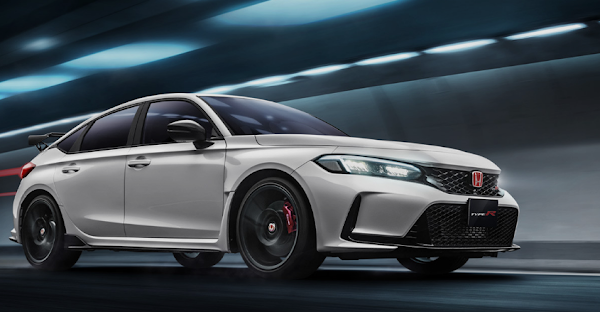
Look Stylish "Honda Civic" Type R

Honda Civic Type R Review
The previous-generation Honda Civic Type R was, so the saying goes, the Porsche 911 GT3 of hot hatchbacks; it was the deep choice among family-friendly sports buses. Now there’s a new variant, and similar is the rate of change in the auto business that it’s the only electrified Honda in the UK. But indeed though Honda is upping the number of its mongrel and electric buses, Type R significances will be confined to the “ hundreds, not thousands ”, according to Rebecca Adamson, Honda’s UK’s head of buses. 

 By 2024, 22 of all Hondas vended then must have zero tailpipe emigrations. One of the reasons, one suspects, is that Honda has decided it can charge 46,995 for this new auto. Zoinks. The new-generation Type R is grounded on the 11th-generation Civic, whose platform is an ‘ optimized ’ interpretation of that of the former auto. But the wheelbase is longer by 35 mm and the track widened by 15 mm because Honda wanted a wider and lower station. Weight is over nearly 30 kg to 1429 kg, substantially because it now needs a petrol particulate sludge. Body variations increase stationary torsional severity by 15, but that’s only half the story, says Honda. It has been used nearly four times as an important glue along the joints, which makes for much lesser original stiffness, although it’s hard to measure in chance terms. 

Honda Civic Type R Review

And, for a front-wheel-drive hatchback, it has quite the gaudy set of mechanicals. The machine is a 2.0-liter turbocharged unit grounded substantially on the former auto’s, although with a lighter flywheel, increased air input capacity, and a freer-flowing exhaust, among other effects.

It now makes 325bhp at 6500rpm and 310 lb-ft at just 2200rpm( preliminarily 316bhp and 295 lb-ft).

Power drives through a six-speed homemade gearbox, as ahead but with a redesigned gate to reduce the switch’s side flex when in gear and, in particular, to ease the alternate-to-first retardation; to make what was formerly veritably good more precise. There’s a mechanical limited-slip differential, too.

Putting 325bhp through the frontal bus alone is asking a lot, so the suspense retains its binary-axis strut to reduce the gap between the wheel center and headman so there’s a lower propensity to necklace steer. On the reverse is a multi-link set- and there are adaptive mutes. From those points of view, this remains an analog old- academy hot door, but it’s an academy whose last day of term is brewing. Time to bring games.

What the increase in body severity means, I suppose, is that the suspense is in the right place to do its job more frequently, in turn allowing Honda to offer an auto with further compliance. The former auto demanded to be stiff to return the perfection Honda wanted; then the essential severity should give utmost of that, which should allow for a softer set- up.
Honda Civic Type R Review

Although ‘ wimpiness ’ is relative

rather than being at the launch in person, the Type R’s principal mastermind Zoomed in via a press conference from the Suzuka circuit where he was contending a new Civic. So, as you can imagine, it’s still relatively deep.

Other significant mechanical changes involve the steering, an electrically supported system that had, Honda allowed, reached the limit of how stiff its torsion bar could be. But adding the resolution of a detector has allowed the bar to be strengthened by 60, said to increase steering proximity and perfection.

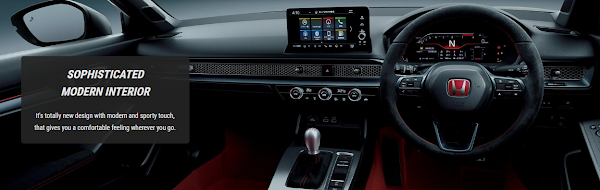
I like the standard 11th-generation Civic’s cabin, and this fast interpretation is simply a gently overpraised variant of it. Material quality is sound, if not for the situations of ultra-expensive German buses – which wouldn’t be a problem if this wasn’t nearly priced like them. But there are brilliantly probative yet comfortable seats, essence pedals, the trademark turned aluminum gearknob, and a wholly round steering wheel with Alcantara trim.

Honda’s touchscreen infotainment isn’t the last word in excellence but there are phone mirroring and separate climate controls, physical steering wheel buttons, and a sprinkling of other real clods and dials. And a factual hindrance wiper. Next to the gear switch is a switch for the drive modes.

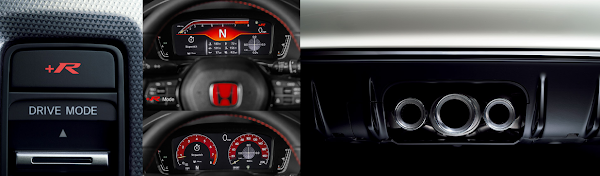
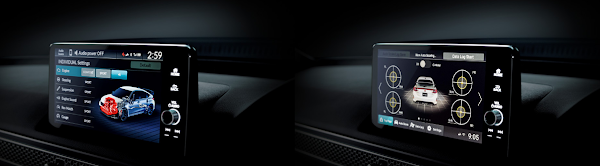
There are Comfort, Sport, and Angry R modes, plus for the first time an Individual setup that allows the motorist to tweak effects similar to the machine note, steering weight, mute stiffness, and other parameters.

Before I set off, a domestic Honda racing motorist tells me that, whatever mode I’m in, and despite the fact I’m on a strange circuit first thing in the morning, with cold tires and wet asphalt, it’s an easy auto to feel comfortable with.

Honda Civic Type R Review

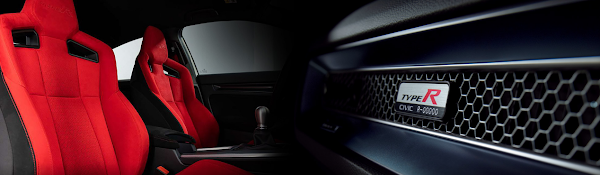
Luckily, this isn't as boring as it sounds, because Honda has also spruced up the interior with the Type R's signature red trim. And there's quite a lot of it – the seats which used to be red with black accents, are now all red. The carpet (under the floor mat) which was previously black, is now also completely red.

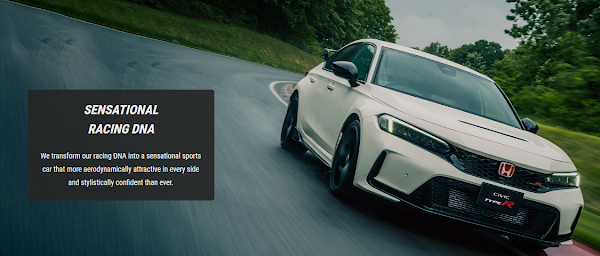
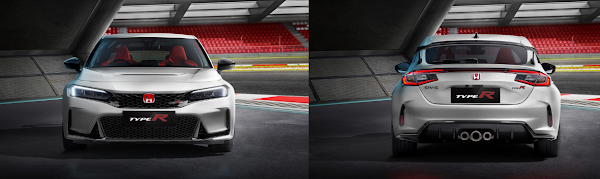
Honda says that all the new aerodynamic surfaces are functional too. A large grille at the bottom of the bumper works together with the hood to maximize airflow to the intercooler and engine block, while large ventilation holes behind the front wheels help cool the brakes and reduce air buffeting.

There's also a large rear diffuser at the rear, which is integrated directly into the floor, working together with the shorter but wider rear wing to increase the car's overall downforce, without adding too much air resistance. Meanwhile, at the rear, the All New Honda Civic Type R also gets the latest version of the triple-outlet exhaust which has now become an icon in the middle of the exclusive CTR bumper.

Honda Civic Type R Review

However, the interior updates aren't just for show. 

Honda says the driver's seat is now lower than before, and the red suede-effect seat also helps the driver stay attached to the lightweight racing seat during hard cornering.

Honda's LogR driving data logger has also been heavily updated on the latest generation Civic Type R, and now combines performance data collected by in-car sensors with a smartphone app, to help drivers monitor and log a variety of metrics in real time. , which will come in especially handy during high-octane hot laps on the track.

Key features of the new system include a stopwatch to record lap times, a 3D vehicle motion display, a “tire friction circle” that displays the maximum tire force the vehicle can achieve in each corner, and even a new scoring function intended to assist the driver. improving their skills on the track, improving lap times.
But even so, the Type R tells you exactly what the front end is doing, and despite releasing earlier than when dry, the rear end will still – on the circuit – loosen if you hit the brakes or lift the throttle. as the best 'old' hot hatchbacks – by which I mean Ford or Renault's RS models – do.

The brake feel is strong. Gear shifting is very good. All the things that made the outgoing Civic Type R still the best big hot hatch (the Toyota GR Yaris being the best small) are all retained here, even improved, just with the less accommodating bits also brought out.
And considering that old car was at the top of its class until it disappeared, and this one is even better, it's no surprise to learn that this is the best large hatchback out there. Even though it has a big price.

The interior of the All-New Civic Type R builds on the fantastic cabin of the 11th-generation Honda Civic, meaning general improvements in usability, comfort, and seating position are also carried over.
Honda Civic Type R Review
And he’s right. The Type R is particularly good at making its motorist feel at ease and doing so snappily. The first prints are that this is a more synthetic experience than preliminarily, in the same way, that the new Toyota GR86 is compared with its GT86 precursor. Not in the way it handles, but in, say, the cunningness of its steering, which weights over and responds in such a well-meliorated manner that necklace steer is largely wiped out, and the necklace feedback that does reach the hem is full of dispatches you do want, about how important traction is available and when it’s going to run out.
also, the machine plays some of its sounds through the speakers, synthetically.
But beneath both of those new angles, there's still a fantastically able auto that has added real breadth of usability to how it rolls down the road, especially on poor shells.


Honda Civic Type R Review

But this doesn't hinder its quick response or, therefore, its appeal as a driver's car, because, although it is a more mature experience, it is still â¨exciting and interesting.

Honda Civic Type R Review

Honda Civic Type R Review

As for performance

, the 2.0-liter turbocharged inline four-cylinder engine and six-speed manual transmission return, with additional updates including a revised turbocharger, exhaust system, and optimized shift gate pattern. Honda hasn't revealed any performance in our output figures, but says it will be “one of the most powerful per liter cars in its class”.

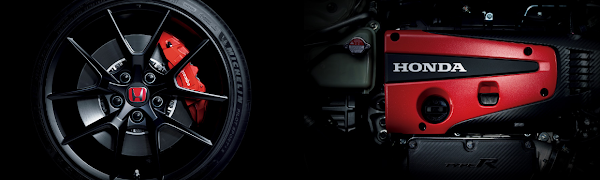
Despite Honda's secretive approach, the all-new CTR has proven its worth, recently setting a new front-wheel-drive lap record at Suzuka. The suspension and steering have also been tuned at the Nurburgring to be more responsive and precise, and the Brembo high-performance brakes have also been upgraded to improve feel and longevity. The Civic Type R also gets an exclusive +R driving mode, with everything dialed up to 11 for maximum performance. However, drivers who want more precise control can use the new ‘Individual Mode’ to further fine-tune engine settings, steering, suspension, and engine sound. The all-new Honda Civic Type R will go on sale next year, with first deliveries to customers in Europe starting in early 2023.


Share:

Honda "WR-V"

Honda WR-V
Honda WR-V Specifications: Dimensions, Features. Judging from the engine specifications, dimensions and price range of the Honda WR-V, this car will compete directly with the duo Toyota Raize and Daihatsu Rocky. Not only the two compact SUVs, the Nissan Magnite and Kia Sonet also automatically become the subject of comparison because they are in the same class. In terms of specifications, Honda can 'raise its head' a little with this WR-V. When cars in its class use a 1,000 cc turbo and 1,200 NA engine, the WR-V actually comes with a 1,500 cc engine which has superior performance.
Honda WR-V
The two tone in question is of course the choice of roof color which is made black, if it is single tone the roof color matches the body.
Honda WR-V dimensions
Length 4060 mm
Width 1,780 mm
Height 1,608 mm
Wheelbase 2,485 mm
Ground clearance 220 mm
Highlighting its true SUV character, this 5 passenger capacity car is also blessed with quite high ground clearance.

Honda also claims that this high ground clearance is even the best in its class.

As a comparison, the ground clearance of the Toyota Raize and Daihatsu Rocky is only 200 mm.
Honda WR-V
In our opinion, HPM seems to be playing 'safe' in designing the WR-V.

This can be seen from the exterior design which reminds us of several existing Honda models. Understandably, the manufacturer with the "H" logo admits that the WR-V uses the same platform as the All New BR-V.

This means that there are many similarities between the WR-V and the All New BR-V.

This can be seen from the use of headlights, mirrors, rear lights, dashboard, steering wheel and front passenger seat.
Honda WR-V
You could say that the Honda WR-V has quite complete feature specifications, especially in the RS variant because it is equipped with the Honda Sensing safety feature.
The E CVT variant is the lowest and can be seen from its external appearance; 16 inch rims wrapped in 215/60 tires.

The headlights still rely on halogen, unlike the two variants above which already use LED with DRL.

However, this variant is equipped with white LED fog lamps, rearview mirrors with turn signals, and a reverse camera (multi angle view).

The Honda WR-V type E CVT also has remote engine start, one push ignition system, hands-free telephone switch, audio steering switch, and charging socket in the second row.

16 inch rims with 215/60 tires
Halogen headlights
LED fog lamps
Rearview mirror with turn signal
Reversing camera (multi angle view)
Remote engine start
One push ignition system
Hands-free telephone switch
Audio steering switch
Second row charging socket
4 speakers
Fabric seat
Head unit 7 inch touch screen (radio, bluetooth, voice command switch, USB, smartphone connection, hands-free telephone)
Digital AC without auto
4 airbags at the front and side
G CON + ACE with side impact beam
Smart key + keyless
Auto lock system by speed
Immobilizer
Alarm system
Hill started assist
Vehicle stability assist
Emergency stop signal
Brake override system
ISOFIX & Tether
Pretensioner with load limiter seat belt
2 parking sensor points
Light fire extinguisher (APAR)


While on the toll road, we did not use the Adaptive Cruise Control feature. We try not to press the gas pedal too deeply and take advantage of the momentum when going uphill. Before starting the trip, we reset MID trip A and B to record the fuel consumption of the Honda WR-V type RS. From the Kukusan Toll Gate to South Sentul, MID shows fuel consumption of 1:25 km/liter. The condition of the toll road we were on was quite smooth and busy, so we could easily maintain speed in the slow lane. We rarely braked because the distance to the car in front of us was always quite far. Even though traveling on the toll road can sometimes be boring, this way of driving provides a real picture. Honda WR-V legs Even though there are differences in the rims and tires, the type of suspension on the Honda WR-V in each variant is the same. The WR-V's front suspension relies on MacPherson Strut and the rear uses an H-Shape torsion beam. The brakes on the front legs use discs equipped with ABS and Electronic Brake Distribution (EBD). Unfortunately, the rear brake still uses a drum in all three variants. Honda WR-V vs Competitors As mentioned several times above, the Honda WR-V plays in the compact or small SUV segment. This class is seen from the dimensions and adventure-style exterior appearance. That way, the Honda WR-V will automatically face the Toyota Raize, Daihatsu Rocky, Nissan Magnite, Kia Sonet
Share:

2019 Honda Accord is More Elegant

2019 Honda Accord is More Elegant
The prize is a new car that can be used by bosses for activities. This car is the 10th generation Honda Accord which was launched globally. So, what are the advantages of this car?

The Honda Accord is a luxury sedan that can provide comfort for its users. For this reason, the Honda Accord is still one of the most comfortable cars. The 10th generation Honda Accord comes with a new platform with a lower uni-body structure. The chassis embedded in this sedan is also lighter. 

In terms of big concept, this Honda Accord carries a concept nicknamed Absolute Confidence. There are 3 main characters who fall under this main concept. Starting from Dynamic, Captivating and Upscale. Dynamic means a car that has dynamic and charming performance. Captivating means sophisticated and attractive technology. Meanwhile, Upscale indicates high quality and class.
2019 Honda Accord is More Elegant
Exterior
The exterior of the 2019 Honda Accord looks more luxurious, elegant and of course futuristic. The shape of the latest generation Honda Accord is more fluid. In the past, this car made an impression on bosses or established men, this time it is more refined for young people. Er, I mean young boss.

At the front, this Accord has a giant piano black grille. This makes the car look more intimidating when viewed from the front. The large chrome trim also connects to the lights which reinforce Honda's characteristic solid wing face. The fog lamp housing is unique with original holes at the ends and a thin line connecting to the middle. This appearance makes the face of the 2019 Honda Accord look even more attractive and cool. Good job!

Turning to the side, the rear is made to look more similar to a fastback car than a sedan. With a sloping and automatic rear window, the rear of the roof dips sharply, aka it has a characteristic sloping roof line and gives the impression of a coupe sedan. The C pillar on this car also has a unique curve, and as usual, the distinctive luxury reinforcement is in the large chrome trim at the top of the window, the pillars are made piano black.
2019 Honda Accord is More Elegant
The back has chrome trim which is made to connect to the back. The curve of the tip of the trunk seems to make the Honda Accord look like it has a ducktail spoiler, while the light model that is carried like the letter C on the Civic also reinforces the impression of a contemporary Honda sedan which is very distinctive from behind. Plus it's combined with a dual muffler with chromed tips and by the way, inside it is a real exhaust.

Much More Luxurious Interior
The interior of the Honda Accord has also been overhauled, the dashboard design uses a T-style accent. But the cool thing is that the horizontal shape attached to the door trim is made continuous, so it looks like one continuous line. And the accents on the dashboard seem to surround the passengers sitting inside. Apart from the interior becoming much more luxurious, cabin space has also increased.

The Honda Accord's heelbase gets an additional 48 mm at the rear. Luggage space has also increased to 123 liters. This makes the Honda Accord use the Man Maximum, Machine Minimum philosophy implemented by Honda. Several parts that previously did not use soft touch are now equipped with soft touch. The driver's seat is equipped with a total of 12-way electrical adjustments including 4-way Lumbar support settings.

Regarding the materials used, don't hesitate. Because the Honda Accord is equipped with the best materials. The top of the dashboard is really high quality soft touch, as is the matte wood panel which gives a luxurious impression plus the combination of lots of metal trim materials in this car. The seats, which are upholstered in light colored leather, also give the impression of a spacious cabin. Meanwhile, the cabin lights used are still halogen, but there are lots of them. At the front there are two, in the middle there is one and at the back there are two.
2019 Honda Accord is More Elegant
Topnotch Features
This review of the 2019 Honda Accord (latest generation) is also filled with features. The first thing you see is remote engine start, so you can start the engine from outside the car. To cool the cabin first, this feature is clearly very functional. This is also one of the rarest features in Indonesia.

Furthermore, now there is a Wireless Charger feature too. For those whose cell phones support it, all you have to do is put your cell phone here and the battery will immediately be charged without cables. Furthermore, there are a total of 10 speakers in this Accord, so listening to songs while sitting in the back will feel just as good.

There is also passive keyless entry, walk away lock, auto up and down windows, auto brake hold, electric parking brake, automatic wipers, electrochromatic rearview mirror, electric seats, USB port and cruise control. Apart from that, this car is also equipped with voice command. But what's interesting is that the AC is equipped with dual zone auto climate control, aka the temperature of the driver and front passenger can be varied.

But the cool thing is, if we set it to cooler, there is a backlight behind the knob which will change to blue. If you set it hotter, the backlight will change to red. A cool touch of detail. The maximum temperature is 32 degrees Celsius, the coldest is 18 degrees, and of course there is a defroster and defogger. 

Honda Sensing, Makes It Even Cooler
Apart from the many features, when Carmudi reviewed the 2019 Honda Accord, the Honda Sensing feature was also found. The smart safety feature called Honda Sensing is brought back to this generation of Accord. So, relying on the many sensors in this car, one of which is the radar in the radiator grille, this new Accord is equipped with active safety features.

The first is adaptive cruise control. So apart from being able to control the speed from the cruise control, we can also adjust the distance to maintain a distance from the car in front of us. There is also auto high beam, lane keeping assist system, collision mitigation system, ABS, EBD, brake assist, stability control.

But Honda also reminds us that even though there is a Honda Sensing system, the driver's role is still number one and the most important in safe driving.


This latest generation Honda Accord also has hill start assist, emergency stop signal, tire pressure indicator, reversing camera with three different angle options, 4 parking sensors at the rear and 4 more at the front. There is also a rest reminder if it is detected that driving concentration is reduced, and there are 6 airbags, in front, front seat and curtain airbags. Wow, it's not wrong to buy this sedan.

2019 Honda Accord Review-Engine
Regarding the engine under the hood, Honda installed an engine coded L15B. This engine has a capacity of 1,498 cc, 4 cylinders, turbocharged, DOHC, V-Tec. This machine is capable of producing power up to 187 hp with a maximum torque of 260 Nm. The power produced by this engine is channeled to the front wheels via a CVT transmission. Regarding the trunk tank capacity, this car has a fairly large tank, 56 liters.

So even though this car uses a turbo engine, this Accord is claimed to be safe for consuming fuel with a minimum RON of 91. So, like Pertamax, Shell Super, and other fuels with 92 octane or even 95 and 98, it is definitely still very safe. Oh yeah, almost missed it. Behind the front tire is a wheel resonator. This wheel resonator reduces the sound produced by the tire touching the ground. Meanwhile, there is also active noise cancellation which is able to capture sounds entering the cabin.

That is a complete review of the 10th generation or latest generation Honda Accord in Indonesia. What about the well-established young generation, do they want to buy this car for their daily activities or not?
Share:

Honda City Hybrid 2023

The 2023 Honda City, which has undergone a light refresh or facelift, has been officially launched in Thailand. The changes that occur in this facelift version are part of consumer input, as well as innovations that continue to be carried out by the manufacturer with the upright H letter logo. What is interesting is that the 2023 Honda City is also offered with a hybrid engine option. Even though the Honda City can be called the entry level segment for sedans, overall when we talk about sedans, what we have in mind are luxury cars. Not to mention, sedan type cars have a stylish and timeless design. The luxurious part can also be seen from the exterior, such as Auto on-off highlights, chrome door handles, Electric Adjustable and Foldable Side Door Mirrors, Body color side door mirror cover and Body color shark fin antenna. Even though demand for sedans can be said to be small, this type of car is considered very comfortable to drive, both for the driver and passengers.
Even though the capacity is smaller, they really like sedans, compared to cars like MPVs or SUVs. Apart from that, medium cars are often quieter and the AC cools down quickly, compared to MPVs or SUVs. Sedan cars also have an aerodynamic design, with the front part made low so that it is easy to break the wind when driving forward. This also applies to the City 2023, which is 4,580 mm long, 1,748 mm wide and 1,467 mm high. This car also has a better center of gravity so that the sedan has minimal sway when maneuvering at high speed. One thing that is no less important, this center of gravity also helps the braking aspect be better and shorter. The car can be stable when we are required to brake suddenly, and is not prone to rolling over like an SUV with a high stance.
Even though it looks sporty, some parts of this car are still covered in chrome paint, such as the door handles. Apart from that, the hybrid type is equipped with LED Daytime Running Lights (DRL) and LED Tail Lights. The hybrid type legs use 16 inch two tone rims. Because the RS type also has a hybrid, it can be seen looking sporty thanks to the red color on the dashboard. For the Honda City 2023 with hybrid technology, the cabin looks elegant, because almost all parts of the car are covered in piano black, including the use of semi-leather seats, which are also given red accents on the stitching. Apart from that, the interior of this car is also sufficient because the TFT screen measures 7 inches, making it easier for drivers to read various information about the Honda City 2023.
City 2023, especially the hybrid type, is more contemporary. This can be seen from the presence of 2 USB ports on the front, and 2 Type-C ports on the back. With this plug, of course this can pamper consumers so that it is easy to charge their smartphones. This Honda City is also equipped with an 8-inch touch screen, and is connected via Apple CarPlay and Android Auto, and has Bluetooth. Because this is a hybrid type, there are also special features such as Honda Connect, Honda LaneWatch Multi Angle Rearview Camera, Electric Parking Brake, and Auto Brake Hold. Even though the Honda City is a car with smaller dimensions than other sedans, this car is equipped with various storage areas. Apart from the rear trunk, this car also has lots of storage compartments behind the driver and passenger seats. These various storage spaces will also make it easier for drivers and passengers to store bottles or glasses.
This car also provides convenience for the driver. This is because the Honda City steering wheel is equipped with various multi-function buttons, such as for adjusting audio and telephone connections. The steering wheel is also equipped with tilt & telescopic steering, and for the RS and RS hybrid types there is paddle shift. Honda City e:HEV is equipped with artificial intelligent technology, namely Honda Hensing, and various other advanced features. For Honda Sensing technology, this car has been applied through features such as Collision Mitigation Braking System (CMBS), Lane Keeping Assist System (LKAS), Road Departure Mitigation System with Lane Departure Warning (RDM with LDW), Auto High-Beam (AHB ), Adaptive Cruise Control (ACC) (V, SV, and RS variants) with Low-Speed Follow (LSF), and also Lead Car Departure Notification System (LCDN).
Apart from that, the newest City also has several other features such as Dual SRS Airbags, Side Airbags, Side Curtain airbags, Auto Door Lock by Speed, Walk Away Auto Lock, Remote Engine Start, and Front Passenger Seat Belt Reminder. It doesn't stop there, this car is also equipped with Anti Lock Braking System (ABS) and Electronic Brake Distribution (EBD), Protential Seatbelts with Load Limited, Front Seat Belt 3P ELR, Immobilizer and security alarm, Rear Seat Reminder, ISOFIX & Child Anchor, Vehicle Stability Assist (VSA), Hill Start Assist (HSA) and Emergency Stop Signal (ESS).
The 2023 Honda City is equipped with a 1.5-liter engine, Atkinson Cycle, DOHC, i-VTEC, 4-cylinder, 16-valve, and Electrical Continuously Variable Transmission (E-CVT) and is equipped with a lithium-ion battery, which can produce power up to 98 PS at 5,600-6,400 rpm and torque of 127 NM at 4,500-5,000 rpm. If you use an electric motor, the power can reach 109 PS at 3,500-8,000 rpm, and torque of 253 Nm at 0-3,000 rpm. This sophisticated hybrid car is also equipped with driving mode features, such as EV Drive Mode, Hybrid Drive Mode and Engine Drive Mode. On paper, this car can increase fuel efficiency up to 27.8 kilometers per liter and CO2 emission levels of only 80 grams per kilometer. If it is true that the 2023 Honda City is entering Indonesia, it is not impossible that the feature problem could increase or decrease.
Share:

Popular Posts

Followers