luxury cars-images This blog contains various forms of cars and at a glance most of the new information, present and future, this blog will always feature luxury cars, and sports cars, and provide information about the content, Toyota, Ford, Honda, BMW, Rolls-Royce, Tesla, Mitsubishi, Mazda, Chevrolet, SUV, Automotive, Pick-up, Sports Cars
  • LAMBORGHINI MODEL

    The most visionary models, these unique specimens are set to define the highest limits of technology and design. Unveiled at the most prestigious international Motor Shows, they offer an exclusive look at the most innovative solutions that Lamborghini may adopt in its future series-production models.

  • RAV4 Interior

    Premium materials and a focus on comfort raise RAV4 Hybrid’s level of refinement. Whether appreciating the views through the available panoramic glass roof or finding inspiration from RAV4 Hybrid’s attention to detail, you’ll enjoy a ride that’s ready to go the distance. Explore Interior

  • Ford F-150 Raptor

    The Ford F-150 Raptor pumps out so much fun and such oversize thrills, you'd assume that it had been outlawed years ago

  • Ford Mustang GT500

    Ford Mustang Shelby GT500 makes this car the most powerful car ever made by the American manufacturer. This is because the Ford Mustang Shelby GT500 is equipped with an engine capable of 760 horsepower

  • Tesla Roadster Fastest Electric Car

    Tesla claims the Roadster to be the fastest production car ever made! The second-generation Tesla Roadster can go from 0 to 60 miles per hour in under 1.9 seconds, and this is just for the base model.

Showing posts with label Hyundai. Show all posts

Hyundai Kona

Hyundai Kona Review
The new Hyundai Kona is a fantastic example of how a brand can listen to feedback and act upon it. Hyundai has grown its small SUV sensibly, delivering just enough additional practicality to satisfy those looking for their next family car. To go along with the extra space is a far more polished cabin compared to the original Kona. It's smart looking, logically laid out, and features an intuitive infotainment system.

Admittedly, the online, sci-fi-inspired styling might not be for everyone, and there are cheaper compact SUVs out there, but right now the Kona – and the Kona Electric in particular – looks extremely good value for such a mature, well equipped and well-rounded car. It's one of many reasons why we crowned the new Hyundai Kona as our Small SUV of the Year and overall Car of the Year for 2023.
Hyundai Kona Exterior
The first Hyundai Kona arrived in 2018 and proved to be a big hit. Its funky styling certainly helped it stand out in the sea of ​​small SUVs it was competing against, while the selection of petrol, hybrid and all-electric powertrains meant that there was a Kona to suit all tastes and almost every budget. There was even a fast version in the form of the Kona N. It has its flaws though, with the cramped rear cabin and relatively small boot being the things that irked us most.4

Next up is the Kona Hybrid. It uses a 1.6-litre Atkinson-cycle four-cylinder petrol engine and a six-speed automatic, assisted by a single electric motor and a modest 1.32kWh battery. As this is a full-hybrid, you don't have to plug it anywhere to charge, but fuel economy is improved over the regular petrol variants.
Hyundai Kona interior
Sitting pretty at the top of the range is the Kona Electric. There are two versions available: the standard-range model is powered by a 48.4kWh (useable) battery that's good for 234 miles on a single charge, while the long-range 65.4kWh (also useable) battery Kona Electric goes even further, with a claimed maximum range of 319 miles. Like the rest of the Kona line-up, the EVs are front-wheel drive.

Once you've picked the model you want, there's also the matter of trim levels; entry-level Advance (the only option for the standard-range 48kWh Kona Electric), sportier-looking N Line and N Line S, plus the range-topping Ultimate spec. Pricier trims add luxuries like leather upholstery, a sunroof and a Bose stereo, but even the base Kona is generously equipped with a 12.3-inch digital driver's display, large central touchscreen, Apple CarPlay, Android Auto, alloy wheels, keyless entry, parking sensors for the front and rear, plus a reversing camera.
Hyundai Kona Review
There are various option packs available too, such as the Comfort Pack for the entry-level Advance Kona Electric, which adds heated front and rear seats, and a wireless charging pad. Lux packs are offered on N Line S for petrol, hybrid and electric Konas, and on Ultimate versions of electric and Hybrid models. This pack adds 'Premium Relaxation' front seats, driver's seat memory settings, and remote smart park assist.

Prices for the regular petrol Hyundai Kona start from just under £26,000, rising to more than £33,500 if you get the top-of-the-range version with the more powerful 1.6-litre motor and seven-speed DCT auto. The Kona Hybrid has a starting price just north of £30,000, but can rise to over £34,000 if you want all the goodies that come with Ultimate trim.
Hyundai Kona Side backFinally, the standard-range Kona Electric currently starts at a fiver under £35,000. Upgrading to the long-range model, with its bigger batteries and extra range, adds £3,600 to the Kona Electric's price tag, bringing it to nearly £38,600. Top-of-the-range models are priced at over £43,000.
Share:

2025 Hyundai Ioniq 5 N Track

2025 Hyundai Ioniq 5 N Track Review
With everything we love about the Ioniq 5 as well as some of the things we miss about ICE cars, has Hyundai made the perfect EV?

we're very fond of the Hyundai Ioniq 5—so much so we named it our 2023 SUV of the Year, and our appreciation has only grown since then. Its attractive exterior styling, functional interior, and focus on good, honest EV dynamics all add up to make one heck of a package, and when you factor in its relatively attractive price point, it's hard to find a downside.

Word first got out Hyundai was planning a hot version of this SUV in 2023, and we saw its promise on our initial prototype drive. Then, later that year, we got to drive a production 5 N on the road. Now we've let loose in the 5 N WeatherTech Raceway Laguna Seca.

The Ioniq 5 N is by no means just a dual-motor Ioniq 5 Limited with a simple software remap. Revised exterior features include a new open grille with active shutters and air curtains. The hood is adorned with a Black H emblem and flat aluminum N badge that add wow factor for those watching one barrel down via their rearview mirror. The N is 2.0 inches wider than the standard 5, and it rides on 21-inch forged wheels.

Out back, an N-exclusive rear spoiler adds nearly 4 inches to the rear overhang, and a new rear bumper with diffuser is also fitted. The addition of a handsome surround strip on the lower trim, as well as a checkered-flag-inspired reflector and CHMSL all hint at what this car was designed to do: go fast on racetracks. In fact, Hyundai recently announced plans to race a single make series with the 5 N–based eN1 Cup car.
2025 Hyundai Ioniq 5 N Track View
Arrive and Drive
During a pre-brief before we hit the track, Hyundai stated the Ioniq 5 N is a car you can drive to the track, put in a good number of laps, and then take home, all in the same day. This isn't a rare claim for performance cars, but for an EV it presents some obvious issues, which Hyundai believes it has addressed.

Hyundai wants the Ioniq 5 N to be the benchmark performance EV, and to that end it sets an internal target that the car should be able to complete two full laps of the 15.7-mile version of the Nürburgring Nordschleife at full tilt without any loss in performance. A tall order considering many EVs begins to trail off after just a few minutes of hard use.

However, as I unwound the Ioniq's steering wheel, aimed the car down Laguna Seca's start/finish straight, and punched the accelerator—my 10th lap without any sort of recharging—I realized Hyundai had not only achieved its goal but was blown right by it.

Another thing struck me on that same straight, lifting off the accelerator, making the adjustment to revector the car prior to the blind crest that serves as Turn 1, was that I kept having to remind myself the Ioniq 5 N is an EV. That may sound silly, but two clever systems make it possible. For example, as the revs fell, the inertia of the car's weight transfer lightly pushed my head forward. Let me explain.
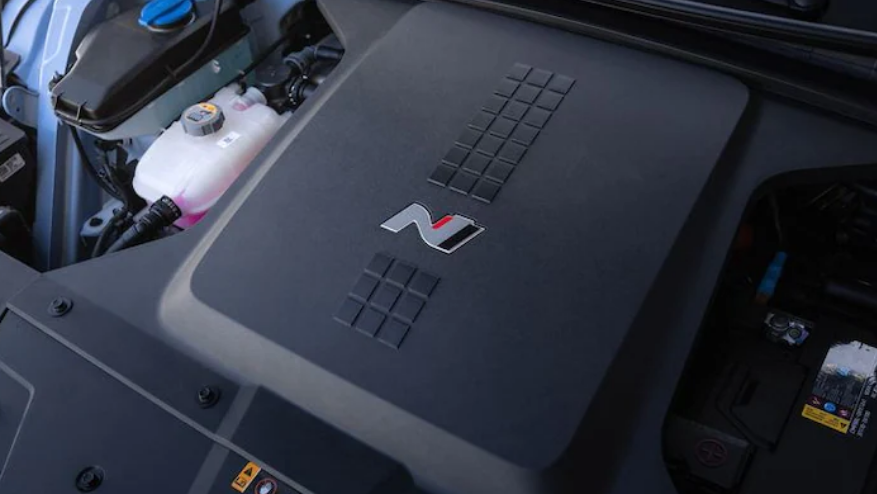
2025 Hyundai Ioniq 5 N Track Engine
N E-Shift and Active Sound+
First, the proprietary N e-shift system replicates the feeling of an eight-speed dual-clutch transmission, missed shifts, power interruptions, and all. (Of course, as we pointed out in our previous drive review, this negates the primary advantage of an EV when it comes to performance: bottomless, immediate, and uninterrupted torque. But it's damned convincing.) And what's the feeling of a combustion engine without a soundtrack to go with it? Enter Hyundai's N Active Sound+, which syncs the interior speakers with e-shift's efforts and provides an aural accompaniment.


2025 Hyundai Ioniq 5 N Track Interior
A flick of the right-side paddle (yes, this EV has paddles) behind the wheel switches the “automatic DCT” into manual mode, and with that, the final piece of the puzzle is revealed: You're driving a car that feels like a 641-hp 2.0-liter four-cylinder and dual-clutch transmission … which is actually a 4,900-pound electric SUV.
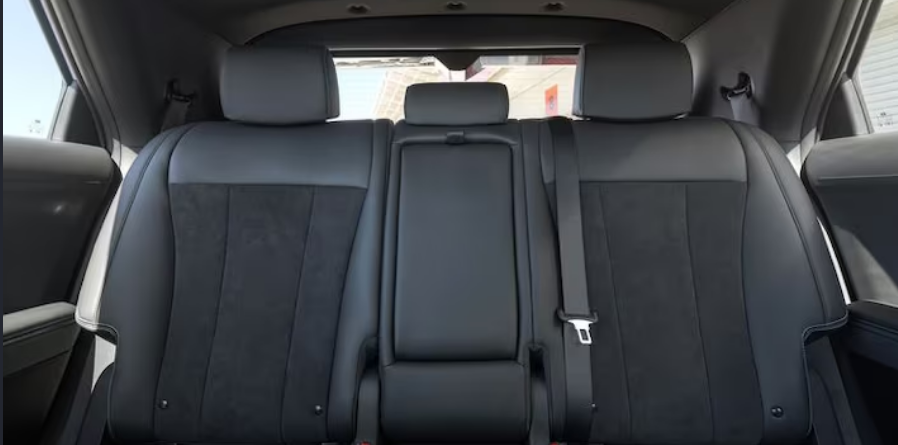
2025 Hyundai Ioniq 5 N Track Seat
Putting It All Together
On the track, the 5 N is tight as a drum—and often times as loud as one. There are three different audio profiles to choose from; I sampled all three and came back to the most authentic Ignition mode. That one draws inspiration from the 2.0-liter four-cylinder Hyundai engine, and it helps massively with pacing out a lap via familiar routines, sorting shift points, identifying braking zones, and understanding the car's behavior.

Dynamically, the Ioniq 5 N does a great job of hustling its mass around the track, masking its weight under braking and in the corners. Even with the traction control off and set to full Race mode, the car remains calm and composed, resulting in a settled chassis that's happy to receive midcorner inputs—and which rewards with a tail wag from time to time. Indeed, the 5 N does have a Drift mode, which we saw demonstrated to great effect. It throws most of the power to the rear wheels and electronically locks the mechanical rear diff, facilitating the shredding of a set of N-specific Pirelli P Zeros in roughly two minutes. When you're not torturing them, those P Zeros offer spectacular grip, and we didn't experience them falling off even as the track temperatures rose and pressures mounted.

2025 Hyundai Ioniq 5 N Track Side back

The Ioniq 5 N also uses its energy regeneration system to further simulate an ICE track car's weight transfer, ensuring the front end—which has the same suspension geometry as the standard Ioniq but with every single component re-engineered for N—tucked in nicely to every corner, no matter how hard it was pushed. The brakes stood up to the test, too, with no discernible degradation in their outstanding performance.

Last in its bag of tricks, the 5 N has a Grin Boost button. Located on the steering wheel, a press deploys the full 641 horsepower, 40 more than usual, for up to 10 seconds. It even has a different, high-revving audio track that replaces the Active Sound+ noises for added drama.
2025 Hyundai Ioniq 5 N Track Wheel

2025 Hyundai Ioniq 5 N Specifications


Base Price

$66,100

Layouts

Front- and rear-motor, AWD, 5-pass, 4-door SUV

Motors

223-hp/269 lb-ft (fr), 378-hp/300-lb-ft (rr); 641 hp/568 lb-ft (comb)* permanent-magnet electric

Transmission

1-speed automatic

Curb Weight

4,900 lb (mfr est)

Wheelbase

118.1 in

L x W x H

185.6 x 76.4 x 62.4 in

0-60 MPH

3.1 sec (MT est)

EPA City/Hwy/Comb Fuel Econ

Not yet rated

EPA Range, Combined

205 miles (MT est)
Share:

2023 Hyundai Palisade Elite

2023 Hyundai Palisade Elite Review
If you want something wide and spacious – but you can't stand the idea of a people mover – then the Palisade will be your new best friend.

What we like
Improved ride quality
Better security credentials
The inside is large, practical, and has complete specifications.

How much does a Hyundai Palisade cost in Australia?
As long as the long-maligned people-mover keeps attracting the attention of Australian buyers – even if it's currently doing very well – there'll be a big opportunity for the 2023 Hyundai Palisade to thrive.

This is Hyundai's largest SUV and offers space for up to eight people in three spacious rows. It's bigger than your average large SUV and can do so without a sliding door.

Why has the Palisade been refreshed, I hear you ask? Although the big Korean model first hit the Australian market in late 2020, it has been around since 2018. That is, it is a midlife refresh.

The basic recipe is still the same, but this updated Palisade does bring some important improvements and updates.

Firstly, it is now a five-star ANCAP car after receiving additional safety equipment and undergoing further testing. The interior is new with a larger infotainment display, more technology, and a fresher look.

The new range comes in just two variants: Elite and Highlander, both of which have a high level of standard equipment. both are available with diesel all-wheel-drive power or with a cheaper petrol front-wheel-drive setup.

In this case, we have the cheaper Elite spec coupled with the more expensive diesel powertrain priced at $69,900 before on-road costs.


2023 Hyundai Palisade Elite Cabine
2023 Hyundai Palisade important details
The price is $69,900 plus travel costs
Black Abyss test car color
Metallic Paint Options – $695
The price as tested was $70,685 plus on-road costs
Drive away price $76,572 (Sydney)
Kia Sorento Rival | Toyota Kluger | Mazda CX-9

How much space does the Hyundai Palisade have inside?
This is the main strength and calling card of the 2023 Palisade: space. This giant Hyundai is not only much larger than its Santa Fe sibling but is also available in eight-seat or seven-seat formats.

The difference between the two setups is the second row, which can be conventional seating with room for three, or with two captain's chairs and a narrow aisle between them.

There are definite benefits to a seven-seat setup. While having an extra seat in the middle row has its obvious appeal, the extra space in the middle can be an advantage if you plan on installing an infant seat more often than not.

Even with the large rear-facing capsule, someone could squeeze between the seats and get into the back. Not something easy to do with a conventional three-seat middle row.

Due to the size of the Palisade – and its square shape – the amount of space available is quite good. The sliding second row (with room to burn) allows adults to squeeze into the third row quite comfortably and with good amenities.


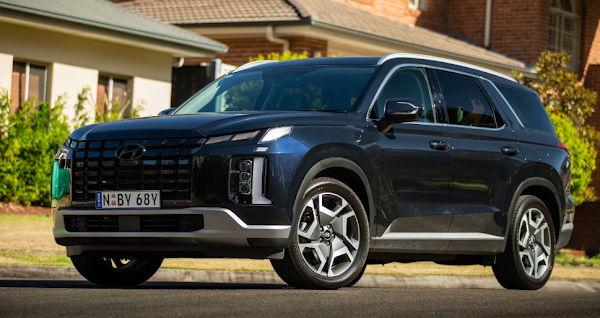
2023 Hyundai Palisade Elite Exterior
If you plan on carrying more than four full-sized adults in spacious comfort, then the Palisade delivers.

Warning: so do people movers... While this Hyundai Palisade competes with other large seven-seater SUVs like the Kia Sorento and Toyota Kluger, it also (in my opinion) competes with primo people movers like the Kia Carnival, Hyundai Staria, and Volkswagen Multivan.

The updates to the 2023 Hyundai Palisade are visible on the inside via a new dashboard design, updated infotainment display, and updated steering wheel.

It feels fresh and modern, especially with the full-length air vents, but still emphasizes practicality. There's good storage under the shifter, and the large storage bin on top (with fold-out cup holders) can also fit a lot of stuff.

There are plenty of power outlets scattered throughout the cabin, along with cup holders and bottle holders. The twin cupholders on the second-row doors make perfect sense and make me wonder why more cars like this don't have something like that.

You don't get Nappa leather seat trim in this Elite spec, but the leather seats (heated in the front) are still comfortable. They're wide and comfortable and perfect for a vehicle like this. They have 10 different directions of electric adjustment (including lumbar support), which is bested by the Highlander's 12 directions.

The Highlander also gets an eight-way power passenger seat and heating/ventilation for the front and rear outboard seats, while the Elite equips it with a basic four-way manual front passenger seat and heating for the front seats only.

The mix of materials and build quality all look very good in this case, and it's perfect for family use. Overall, this is a family vehicle that is – let's be honest – too big for most Australian families but perfect for those with supersized appetites.

2023 Hyundai Palisade
Seat Seven
Boot volume 311L to the third row
704L to second row
1297L to the first row
Length 4995mm
Width 1975mm
Height 1750mm
Wheelbase 2900mm

Does Hyundai Palisade have Apple CarPlay?
The 12.3-inch infotainment screen on this Palisade, up from 9.5 inches before the facelift, is a clear improvement. Proudly adorning the dashboard and finished in piano black, it allows the Palisade to keep pace with the competition – whose screens are expanding at an astonishing rate.

Apple CarPlay and Android Auto are available via a USB-A connection near the cupholder. You'll notice a mix of USB-A and USB-C outlets, which helps modernize the experience a bit. The infotainment display has native navigation and digital radio and is essentially unchanged from the more expensive Highlander variant.

Also unchanged is the 12.3-inch digital instrument cluster, which is seen in various other high-spec Hyundai vehicles. Most mimic analog gauges, with a large speedometer and tachometer dominating the pixels. There's some additional information worth digging into here, including tire pressure monitoring.

If so, what is the Elite missing? An adjustable head-up display is a highlight, as is a good-quality surround-view monitoring system. The Elite also lacks rain-sensing wipers and stainless steel speaker covers. That said, the sound system is the same Infinity-branded unit with 12 speakers and an external amplifier.


2023 Hyundai Palisade Elite Interior
Is Hyundai Palisade a safe car?
Hyundai used this update to improve the Palisade's previous four-star ANCAP safety rating to a full five-star score thanks to several important improvements. There are now eight airbags on board, including a new front-center airbag.

Autonomous emergency braking (AEB) includes cyclist and pedestrian detection and is now enhanced with an intersection turning function.

There's also driver attention alert, high beam assist, intelligent speed limit assist, lane keeping and lane following assist (which has been upgraded), rear cross-traffic alert, and adaptive cruise control.

The Palisade Elite hardly misses anything, but Hyundai has chosen to keep low-speed reverse autonomous braking – which works in parking lots and driveways, for example – reserved for the more expensive Highlander specification.

Traffic sign recognition – now a system that uses cameras to read traffic signs as you pass them – is more sophisticated than the old GPS-based setup. However, the execution is a bit lacking. I noted times when the system misread signs, missed them completely or got false information from the back of buses or school zones outside of business hours.

This isn't a deal breaker, but the system's constant reprimands and reprimands can be infuriating. The only way to stop the noise is to turn the system off completely. It would be better if someone just turned off the sound alerts.

2023 Hyundai Palisade
ANCAP rating Five stars (tested 2022)
Safety report Link to ANCAP report

How much does it cost to maintain a Hyundai Palisade?
After five years of servicing – using Hyundai's prepaid service plan – you'll need an average of $489 per year to get this Palisade notebook properly stamped. That's a decent value overall for a large all-wheel-drive SUV with diesel power, but you can find vehicles that are cheaper to service. Toyota's Kluger is a clear winner when it comes to low servicing costs over the first five years.

Service intervals are set at every 12 months or 15,000 km, meaning your prepaid service schedule will last up to 75,000 km.

Ensuring this Palisade Elite works out to $1795 for 12 months of comprehensive coverage. This is based on a comparison quote for a 35-year-old male driver living in Chatswood, NSW. Insurance estimates may vary based on your location, driving history, and personal circumstances.


2023 Hyundai Palisade Elite Back side
2023 Hyundai Palisade at a glance
Five-year guarantee, unlimited km
Service interval 12 months or 15,000km
Service fees
(prepaid) $1467 (3 years)
$2445 (5 years)
Is Hyundai Palisade fuel efficient?
At least the diesel-powered Palisade makes it through the fuel tanks at a relatively leisurely pace. It produces 8.4 liters per 100 kilometers of use, compared with Hyundai's official published claim of 7.3L/100km, in combined cycle testing. When we use cars, city, and highway driving is evenly split.

By comparison, the petrol-powered Palisade Elite uses a claimed 10.7L/100km on the combined cycle; a few liters more overall.

However, don't forget that this petrol engine costs $4000 less on first purchase – so, unless you're going all-in on all-wheel drive, the most cost-effective option here is the number of kilometers you cover. cover.


2023 Hyundai Palisade Elite Wheel
What is the Hyundai Palisade like to drive?
The most important aspect to note here is the suspension, which has been updated on this facelifted Palisade. New, more advanced shock absorbers have been used, along with new suspension adjustments.

While Hyundai Australia typically employs locally developed suspension systems in its vehicles, this is less of a focus this time around. But don't worry, because the new Palisade's ride quality feels excellent.

The new shock absorber effectively allows a wider operating range, with a soft, almost floaty ride quality around town, yet still maintains a decent level of control through bigger corners and bumps.

For a vehicle designed to take on speed bumps and potholes – with lots of family members on board – the suspension adjustments felt pretty spot on.

The overall steering feel and performance are also up to par. Unlike its new brothers and cousins (such as the Hyundai Santa Fe and Kia Sorento), the Hyundai Palisade still uses a torque converter automatic transmission. This is because the Palisade continues to use the old-generation platform underneath, while the newer bones have used a dual-clutch automatic transmission and an updated (but similar) powertrain.

Newer examples also have electrification and hybrid powertrain options; something this Palisade will have to live with until the model changes completely in about four years.

While a more efficient hybrid powertrain would never go amiss, this 2.2-litre four-cylinder turbo diesel with 147kW and 440Nm proved powerful and frugal enough to suit the application. The sound is quite muffled, except for the distinctive rumble of a four-cylinder diesel engine which is effectively suppressed. Even when you step on the gas and reach speeds above 3000rpm, the engine noise isn't too annoying.

While the dual-clutch automatic gearboxes used in other Hyundai and Kia vehicles are great, this eight-speed torque converter automatic is completely painless and predictable for the operator.

You really feel the size of this Palisade a little when driving. Overall visibility is good, but large vehicles don't tend to shrink around you as much as smaller SUVs. The Palisade is a bit longer and wider than most other large SUVs in its segment, and its big boxy shape doesn't feel as slippery as other SUVs.

This is by no means unbearable or even negative, and you're usually used to driving a big Palisade. However, you need to pay attention when driving in crowded cities.

There are a variety of driving modes to choose from on this Palisade, including a new Smart mode that responds to driver input (mostly throttle) to adjust parameters. The all-wheel-drive system now also takes various off-road driving modes, which helps adjust the traction control system to help with slippery road surfaces. Of course, this Palisade will never compete with regular off-roaders, but the added flexibility is useful.

2023 Hyundai Palisade important details
Engine 2.2-liter four-cylinder turbo diesel engine
Power 147kW @ 3800rpm
Torque 440Nm @ 1750–2750rpm
Drive Type wheel drive
Transmission Eight-speed torque converter automatic
Weight 1980kg
Spare tire type Full size
Tow rating 2200kg braked
750kg unbraked
Spinning circle 11.8m
Should I buy a Hyundai Palisade?
The main attraction of the Palisade is undoubtedly the space it offers. In addition to being a people mover, this Palisade also has a decent amount of space in all three rows and seven (or eight) seats. It's practical and well-proportioned, with enough cupholders and outlets to sink a boat.

The overall driving experience and execution are also good. The diesel powertrain is smooth, frugal, and powerful enough for traffic. And ride quality – refreshed by this facelift – is another highlight.
Share:

2024 Hyundai Kona Hybrid

2024 Hyundai Kona Hybrid Review
According to ancient mythology, Greece's greatest warrior was Achilles. The son of a goddess and a king raised and educated by centaurs, Achilles became invulnerable from being dipped in the River Styx. Not the ones in the NSW Northern Tablelands, by the way.

But there's a problem. Because his ankles were restrained when he was dipped into that underworld, he had a weakness that would ultimately be his undoing.

The 2024 Hyundai Kona may not be a hero of the past, but it does suffer from similar ailments.

While the new Hyundai Kona Hybrid impresses in many important ways – efficiency, comfort, practicality, and technology – there is one flaw that could bring it all down.

How much does a Hyundai Kona Hybrid cost in Australia?
Those looking at the Kona will have no shortage of options when it comes to making a decision. As well as the most expensive pure EV offering, there are two four-cylinder petrol engines to split: the base 2.0-litre naturally aspirated unit and the more powerful 1.6-litre turbocharged option.

However, we have perhaps the most appealing powertrain for most buyers. A so-called 'closed-loop' hybrid powertrain, which fuels like a regular old car but gets electric assistance to drastically reduce consumption.

It's a new addition to the Kona lineup, providing an alternative to hybrid SUVs in its class, such as the Toyota Corolla Cross and Kia Niro. The Kona hybrid combines a 1.6-liter non-turbo engine, with an electric motor and dual-clutch automatic.

Additionally, you can upgrade your Kona to the Premium trim level (which we have here) and opt for the sporty looks of the N-Line treatment (which we don't have).

Pragmatic and frugal, but with some fun. It sounds good.

Opting for the Premium model seems like a decent value at $7500, providing a variety of upgrades over the base offering. It gets low-speed reverse autonomous braking, a 360-degree camera system, extra front, and rear parking sensors, an upgraded Bose-branded eight-speaker sound system with the external amplifier, rain-sensing wipers, power-adjustable front seats with memory, front seat heating and ventilation, heated steering wheel, heated rear outboard seats and leather seat trim.

There's also customizable ambient interior lighting, a 12.3-inch digital instrument cluster for the driver, projector-style LED headlights, and full-width daytime running lights.

Important details of the 2024 Hyundai Kona Hybrid Premium
The price is $43,500 plus travel costs
The color of the Mirage Green test car
Options None
The price as tested was $43,500 plus on-road costs
Drive away price $47,554 (NSW)
Nissan Qashqai Rival | Mitsubishi ASX | Toyota Corolla Cross
2024 Hyundai Kona Hybrid Exterior
Inside the Kona, there's an excellent level of storage and amenities, especially on the Premium spec tester we had here.

The transmission controls have been moved to the steering column as a large, meaty stalk – column shifts seem to be popular in Korea – thus providing more space for storage. The cup holder in the main central storage area is reversible, but can also be stowed away for more raw material storage space.

There's a wireless charging pad, with space for house keys for example, at the front and some more storage under the center armrest at the back.

Add a useful shelf in front of the passenger, as well as a decent-sized glove box and space for bottles in the doors, and you've got an interior that's both practical and adept at absorbing all the stuff you tend to carry around daily. -Today.

The premium spec adds some nice touches in terms of materials and comfort, but ergonomics and comfort are all rated well here. We drove the Kona hybrid for approximately 500 kilometers during our time with the vehicle, with some tasks taking several hours, and never felt tired or sore.

The second row of the new Kona is where you get an idea of the increased size of this new generation model and the small SUV segment as a whole. It's a good size, and probably closer to the mid-sized SUVs of ten years ago.

Legroom is good, meaning the Kona is a good candidate for small and growing families. The headroom is good, but supplies are not abundant. Visibility and comfort are all good, and the air vents and twin USB-C outlets in the rear center console round out the offering nicely.

In addition to the two ISOFIX points, the Kona's second row has three top tether points, and I was able to fit three child seats for several days. Granted, there isn't much space left, but it's possible.

Another note for family use is the boot, which measures 407 liters and is large enough to easily fit the two baby seats mentioned above, so the length and width of the boot space are good. There's a space-saving spare wheel under the floor, and the floor can be set higher to provide a flat load lip, but with less overall storage height.

2024 Hyundai Kona Hybrid Premium
Seat Five
Seat 407L boot volume up,
1421L seats fold down
Length 4350mm
Width 1825mm
Height 1585mm
Wheelbase 2660mm
2024 Hyundai Kona Hybrid Interior
With the premium options selected, we get twin 12.3-inch screens in the Kona, which handle infotainment and driver instruments between the two. It's slightly curved and is a new set of interior technologies for Hyundai as it launches many new and incoming vehicles.

The infotainment system has all the features we'd expect, including Apple CarPlay and Android Auto. It only comes in the form of a wired connection, which is not a problem as it provides a superior and more stable connection over wireless.

There's also a digital radio, original navigation, and a completely overhauled operating system. While there is a lot of functionality to dig into, it is not an overly complex system to understand. And you may find yourself digging into the settings regularly, something I'll explain shortly.

Standard advanced safety technologies in the Kona Premium include autonomous emergency braking with pedestrian/cyclist/motorcycle detection and intersection support, lane keep assist, lane center assist, adaptive cruise control with stop-and-go, blind spot warning (with the ability to brake in the presence of obstacles), blind spot cameras, rear cross-traffic alert with braking, traffic sign recognition, and a driver monitoring system with a camera facing the driver.

There's also a rear-view camera, a 360-degree camera with a 3D view, front, side, and rear parking sensors, safe exit warning, tire pressure monitoring, Remote Smart Park Assist, automatic high beams, and seven airbags (including one between the front seats).

New for the latest Kona is a more advanced driver monitoring system designed to meet the requirements of the latest ANCAP safety tests, which places a small, driver-facing camera atop the steering column.

Under ideal conditions – in perfect lighting conditions, with the driver's eyes on the road – it works fine, but within 15 seconds of putting on the sunglasses, an error message appears.

The system sometimes felt too sharp to remind the driver to focus on the road, such as when looking at a navigation map or entering a new destination – with the driver's eyes and head at certain angles that tripped the system.

But the biggest problem is the beeping on the traffic sign recognition function – which is more annoying than helpful, especially considering it will also beep for speed signs off-ramps and outside of working hours – even in conditions that have two drawbacks. weekend in NSW when we had this car in the Drive garage.
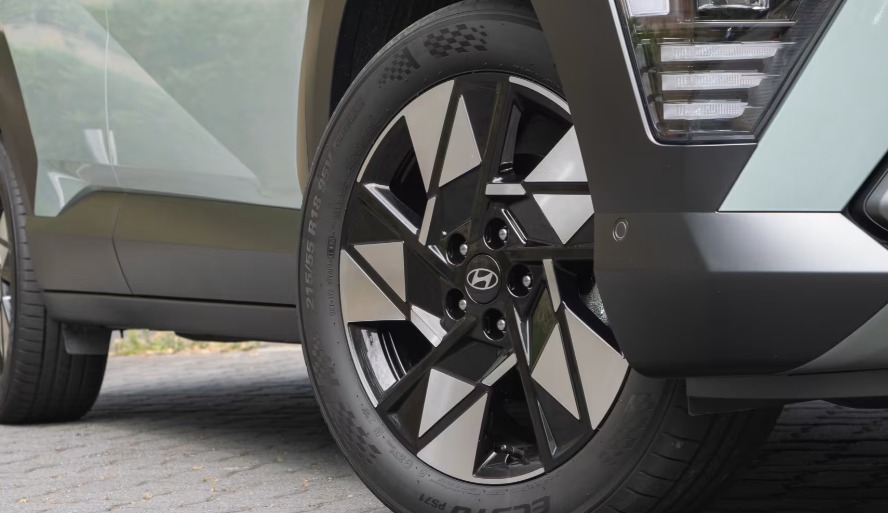
2024 Hyundai Kona Hybrid Wheel
In addition to reading speed signs and displaying a visual warning when you exceed the speed limit, Kona's traffic signal technology – which is also used in other new Hyundai and Kia models, including the Kia Seltos small SUV – will beep when you exceed a speed sign. the car has been detected.

This is a useful feature when the car reads the signs correctly. However, this is often not the case, due to detecting low speeds on the motorway, misreading (electronic) variable speed signs, or sticking to the 10km/h limit from the parking space when you return to the public road.

The system in the Kona is better tuned than any other recent Hyundai we tested. It seems to be able to detect school zone opening times – it reads the time on the sign and only shows the school zone speed limit of 40km/h if applicable – but it works intermittently.

Most other new cars with speed sign recognition only have visual warnings, and do not beep when you exceed the speed limit. Hyundai says this is its interpretation of the latest ANCAP safety requirements; we urged him to go back and read the rulebook again.

The system can be turned off, but it requires a few taps through a menu on the touchscreen to do so (though you can set a physical button shortcut that cuts the number of taps required from four to two). Turning off audio alerts also disables visual alerts, and the feature automatically turns back on the next time you start the car.

How much does it cost to maintain the Hyundai Kona Hybrid?
The most cost-effective way to service the Kona Hybrid is prepaid, which is $1197 for three years to $1995 for five years. This works out to $399 per year for the first five years or 75,000 kilometers, which is reasonable but not the cheapest in the segment.

Insurance for the Kona Hybrid premium is set at $1499. As usual, this is based on a comparison quote for a 35-year-old male driver, living in Chatswood, NSW. Insurance estimates may vary based on your location, driving history, and personal circumstances.

2024 Hyundai Kona Hybrid Premium at a Glance
Five-year guarantee, unlimited km
8-year battery guarantee, 160,000 km
Service interval 12 months or 15,000km
Service fee (prepaid) $1197 (3 years)
$1995 (5 years)
Is the Hyundai Kona Hybrid fuel efficient?
This is a major part of the Kona's appeal and the reason why the car is likely to appeal to urban users. Compared to an impressive claim of 3.9 liters per hundred kilometers, which comes out to just 4.0L/100km on the motorway cycle, we're looking at an overall average of 4.3L/100km.

To be clear here, using a heavier vehicle on the motorway causes that figure to rise to 4.6L/100km, while efficiency-focused driving around Sydney's western suburbs and using regenerative braking as much as possible, only returns 4.0L/100km.

Another detail that helps lower running costs is the fact that the 1.6-litre engine – which uses the efficiency-focused Atkinson cycle – happily accepts cheaper 91-RON unleaded fuel.

A peak power of 104kW tells us that this Kona hybrid won't deliver mind-blowing acceleration, but it also feels powerful enough for the job. We noticed that Eco driving mode does provide an accelerator pedal that is too soft to maximize efficiency, but this can sometimes hinder take-off.

The more important 265Nm of torque is healthier and allows the Kona to use both petrol and electric power sources for effortless acceleration.

The Kona hybrid uses a six-speed dual-clutch automatic transmission combined with a gasoline engine and electric motor, which is very different (mechanically) from the continuously variable transmission used in most Toyota hybrids.

This provides a slightly different feel, as the up and down revs are similar to a conventional petrol car with a conventional automatic gearbox. In comparison, the Toyota hybrid sometimes feels like a generator. But most importantly, this powertrain functions well in combining the two power sources smoothly and without interruption.

Combined, there's enough power on offer for everyday use without feeling sluggish or sluggish. When driving and cruising around town, there is a lot of engine stopping and regenerative braking to reduce fuel consumption.

For the tech geeks out there, here are some additional details about the Kona Hybrid, compared to the Corolla Cross Hybrid. The Kona has a 1.32 kWh lithium-ion battery, which operates at 240V. The electric motor on the Kona Hybrid produces 32kW and 170Nm, and the petrol engine produces 77kW and 144Nm.

And of course, the efficiency benefits are clear.

Regenerative braking can be controlled via paddle shifters, and you can hold down the left paddle for maximum braking, or adjust pre-set levels to your liking.

In terms of ride quality, handling, and steering, the Kona feels nice and solid without being overly impressive at all. Some of the sharper bumps over potholes can find their way into the cabin more smoothly, but most things are absorbed well by the suspension.

Refinement is also good, in terms of wind and overall road noise.

There's not a lot of extra weight carried in the Kona Hybrid, and the vehicle generally feels quite light on its feet and responsive when cornering. Certainly nothing naughty, but good enough for the application.

2024 Hyundai Kona Hybrid important details
1.6-liter four-cylinder petrol Hybrid engine
Power 77kW @ 5700rpm petrol
32kW electricity
104kW combined
Torque 144Nm @ 4000rpm petrol
170Nm electric
combined 265Nm
Drive Type Front wheel drive
Transmission Dual-clutch 6-speed automatic
Power to weight ratio 68.2kW/t
Weight (curb) 1525kg
Spare tire type Space saver
Tow rating 1300kg braked
600kg unbraked
Spins a 10.6m circle

Just like our favorite Greek warrior, the new Kona hybrid is impressive in many ways. Spacious, comfortable, has good specifications, practical, and very efficient.

Plus, it looks a bit interesting, both inside and out. If you compare the interior and exterior aesthetics of the Corolla Cross, it is certainly the more attractive of the two.

But the annoying traffic sign recognition system is a major obstacle to livability. Driver assistance systems should do just that – assist, and not hinder the driver's efforts. The many unnecessary warnings and warnings triggered by Hyundai's unhelpful systems will diminish any benefit.

And while Hyundai Australia can't provide any concrete comment on what they're doing to fix what's a problem, we're seeing signs of improvement starting to happen in Australia. The new-generation Santa Fe we recently drove in Korea has gentler calibration, making it more user-friendly, as well as the ability to mute the system if needed.
Share:

2023 Hyundai Elantra N

2023 Hyundai Elantra N Review
The 2023 Hyundai Elantra N is a fun, feature-packed, and spirited sedan that delivers great performance with a surprising amount of versatility. If you're willing to overlook its few downsides, this perky little Hyundai will reward you with an entertaining and engaging driving experience.

Excess

Powerful turbo four-engine
Athletic handling
Decent fuel economy
Straightforward infotainment system

The 2023 Hyundai Elantra N's #2 ranking is based on its score in the Compact Sports Car category. Currently, the Hyundai Elantra N has a score of 8.4 out of 10 based on our assessment of 9 pieces of research and data elements using various sources.

The 2023 Elantra N is a very nice car. It comes with a nimble and well-tuned turbo-four engine and has athletic handling, lots of standard features, and a fairly spacious and comfortable cabin. It also offers decent fuel economy estimates. However, cargo space is decent, and some of the cabin's building materials look and feel cheap. Ride quality is quite firm, though not overly uncomfortable.

The Elantra N is a well-rounded small-performance car that's sure to please drivers with its nimble handling, powerful four-turbo engine, and four-door versatility. It's also very good value, with plenty of standard performance, technology, and comfort. If you want a nicer interior, more horsepower, and more cargo space, a performance hatchback like the Toyota GR Corolla or Honda Civic Type R is worth checking out. Please note that this vehicle is more expensive than the Hyundai. The Subaru WRX has a similarly powerful engine, and like the GR Corolla, it comes standard with all-wheel drive, but its infotainment system isn't as intuitive as the Hyundai's, and its gas mileage is worse.
2023 Hyundai Elantra N Interior
The 2023 Elantra N starts at $32,900. It is equipped with a 276-horsepower turbo-four engine, a six-speed manual transmission (automatic is available), and front-wheel drive. Trim-exclusive amenities include performance components such as a limited-slip front differential, rear strut brace, and adaptive suspension. It also comes with technology, comfort, and driver assistance features such as leather and synthetic suede seats, a 10.25-inch touchscreen infotainment system, navigation, a Bose audio system, forward collision warning, blind spot monitoring, and more.

The cost of insuring a Hyundai Elantra N will depend on a variety of factors, including your deductible, the level of coverage you want, and the type of insurance you choose. Your age, gender, location, credit score, and driving record can also impact your insurance rates. Check out our car insurance guide to find the best policy for you.
2023 Hyundai Elantra N Exterior

Hyundai Elantra N vs. Honda Civic Type R

The Honda Civic Type R lives up to its reputation as a tough hot hatch thanks to its precise handling, powerful engine, and racy, solid cabin. The Elantra N beats the Elantra N in terms of engine output, cargo capacity, and cabin quality, but both cars offer nimble handling and a wide range of standard technology, comfort, and driver assistance features. The Type R is a fantastic car overall and outperforms the Elantra N in some ways, but you'll pay a premium to drive it home: The Honda's base MSRP is about $10,000 more than the Hyundai's starting price.

Hyundai Elantra N vs. Toyota GR Corolla

The Toyota GR Corolla is a strong competitor in the small performance car segment. The Toyota hatchback has a slightly higher starting MSRP than the Elantra N — and can top $50,000 on higher trims — but the higher price tag may be worth it for many buyers. Compared to the Elantra N, the GR Corolla has a more powerful engine, a nicer interior, a comparable list of standard features, and standard all-wheel drive (the Elantra N is front-wheel drive only). Among some of Toyota's weaknesses are the lack of an automatic transmission option and limited availability. Still, it's a must-try if you're looking for a fresh and practical hot hatch.
2023 Hyundai Elantra N View

2023 Elantra N Engine

The 2023 Elantra N comes with a turbocharged 2.0-liter four-cylinder engine that produces 276 horsepower and 289 pound-feet of torque. A six-speed manual transmission is standard, and an eight-speed dual-clutch automatic is also available. Front-wheel drive is standard on all models.

The Elantra N's big turbo-four propels this little Hyundai off the line quickly, and speed delivery remains strong and linear once you reach highway speeds. You can even select a launch control mode that provides a 10-horsepower boost for a short time. The manual transmission works well, but some critics say it could be a little smoother and quicker. The slick dual-clutch automatic gets most of the good marks and delivers the vehicle's fastest zero-to-60 times.

2023 Elantra N Fuel Mileage

The 2023 Elantra N offers above-average fuel economy for a small-performance car. When equipped with the manual transmission, EPA estimates reach 22 mpg in the city and 31 mpg on the highway. Models with the automatic get 20/30 mpg city/highway.
2023 Hyundai Elantra N Dashboard

2023 Elantra N Ride and Handling

The Elantra N provides drivers with an enjoyable driving experience, thanks in large part to the Elantra's balanced, communicative steering and excellent road feel. Carving corners is a thing of excellence in this peppy sports sedan, and its nimble handling provides plenty of opportunity to attack mountain corners or twisty forest roads with gusto. The Elantra N has a firm ride quality, but it's not overly taxing on long trips. The performance brakes are easy to modulate and quickly bring this Hyundai to a stop.

How Fast is the 2023 Elantra N?

Hyundai hasn't provided an official zero-to-60 time for the 2023 Elantra N, but independent outlets report a time of around 6 seconds on models with a manual transmission. Models with automatic transmissions are even faster, capable of reaching 60 mph in about 5 seconds. The Elantra N has a top speed of 155 mph.

Elantra N Interior: Soup Style
2023 Elantra N Interior Quality

The 2023 Elantra N's interior is a mixed bag. The seats look good, the infotainment suite is sleek, and the aesthetic is attractive and sporty. On the other hand, the abundance of hard plastic makes the car feel a little cheap. Fit and finish are mostly good, but some critics report creaking interior panels.

2023 Elantra N Infotainment, Bluetooth, and Navigation
The Elantra N has a feature-packed infotainment system that looks great and works well. The touchscreen is responsive and displays sharp graphics, as well as an easy-to-navigate menu interface. There are also plenty of physical knobs and buttons for quick audio and climate adjustments.

Standard infotainment features: 10.25-inch touchscreen, Apple CarPlay, Android Auto, navigation, wireless device charging, Wi-Fi hot spot, satellite radio, HD Radio, voice recognition, Bluetooth, eight-speaker Bose audio system and two USB ports
Additional standard features: 10.25-inch digital gauge cluster, dual-zone automatic climate control, proximity keyless entry, push-button start, remote start, Hyundai Digital Key, and ambient LED interior lighting
Another available feature: sunroof
2023 Hyundai Elantra N Pictures

2023 Elantra N Cargo Space

The Elantra N has an average amount of cargo space for a compact car. The trunk offers up to 14.2 cubic feet of space, which is enough to accommodate two people's luggage on a weekend. However, the trunk has a small opening, and the rear strut supports are located at the rear of the trunk. The clamp makes it difficult for long items to pass when the rear seats are folded.

How Many People Can Sit in a 2023 Elantra N?

The Elantra N can accommodate five people. The front sports seats are comfortable and supportive, and the sides hug passengers without feeling too snug. There's also plenty of head and legroom up front, and visibility is good. The rear seats are comfortable enough, and legroom is ample, but taller adults may feel cramped due to the Elantra's sloping roofline.

2023 Elantra N and Child Car Seats

There are two complete sets of LATCH connectors for the rear outboard seats and a tether anchor for the rear center seat. The Insurance Institute for Highway Safety gave this LATCH system the second-highest rating of Acceptable due to its ease of use because the lower anchor sits too deep in the seat.
2023 Hyundai Elantra N Back

2023 Elantra N Crash Test Results

Neither the Insurance Institute for Highway Safety nor the National Highway Traffic Safety Administration has fully tested the 2023 Elantra N, but the NHTSA gave the Audi five out of five stars in its rollover test.

2023 Elantra N Safety Features
Standard driver assistance features:


Rear camera
Forward collision warning
Automatic emergency braking on the front
Pedestrian detection
Lane departure warning
Lane-keeping assistance
Blind-spot monitoring
Rear cross-traffic alert
Driver attention monitoring
High-range automatic headlights
Rear parking sensors
Vehicle exit warning (exit warning passengers to vehicles approaching from behind)

2023 Hyundai Elantra N Models and Trims
The 2023 Hyundai Elantra N comes in one trim and body style (sedan) and is priced from $32,900. It comes with a 276-horsepower turbocharged four-cylinder engine, front-wheel drive, 19-inch alloy wheels, adaptive suspension, limited-slip front differential, launch control, performance brakes, rear chassis brace, and rear wing. A six-speed manual transmission is standard, and an eight-speed dual-clutch automatic is available for $1,500.

Standard features include synthetic leather and suede upholstery, heated front sport seats, 10.25-inch digital gauge cluster, 10.25-inch touchscreen, Apple CarPlay and Android Auto, navigation, wireless device charging, Wi-Fi hot spot, satellite radio, HD Radio, voice recognition, Bluetooth, eight-speaker Bose audio system, two USB ports, dual-zone automatic climate control, proximity keyless entry, push-button start, remote start, Hyundai Digital Key and ambient LED interior lighting.

Standard driver assistance features include a rearview camera, forward collision warning, forward automatic emergency braking, pedestrian detection, lane departure warning, lane keep assist, blind spot monitoring, rear cross-traffic alert, driver attention monitoring, high-speed auto monitoring headlights, rear parking sensors, and vehicle exit warning.

The only notable option is a sunroof, which is included if you opt for the $1,500 dual-clutch automatic transmission.

U.S. News & World Report has ranked the best cars, trucks, and SUVs since 2007, and our staff has more than 75 years of combined experience in the automotive industry.

This 2023 Elantra N review combines nine professional reviews with concrete data like performance specs, fuel economy estimates, and safety ratings, and incorporates research that can be applied to all models in this generation, launching in 2022. See excerpts from some of the reviews featured to drive our rankings and analysis.
Share:

2023 Hyundai Kona

2023 Hyundai Kona Review

Summary

Whether you call it a low-riding SUV or a tall hatchback, the tiny 2023 Hyundai Kona is a vehicle that's both practical and fun to drive, making it one of our favorites. The entry-level engine is a 2.0-liter four-cylinder that makes just 147 horsepower, but the optional turbocharged engine provides a spicy kick that better matches the Kona's nimble handling. Like other Hyundai models, the Kona comes with plenty of standard features—including driver assistance and infotainment technology—at a reasonable price. More than reasonable, actually. Considering competitors like the Kia Seltos and Volkswagen Taos cost thousands more to start, you might find it easy to justify spending the money on a higher-trim Kona model even if you're on a tight budget. The Kona may not have as much passenger or cargo space as some of its larger competitors, but when it comes to driving pleasure, it's a handsome, funky bundle of joy—no matter whether you think it's a car or an SUV.

The Kona gets more standard driver assistance features in 2023, including blind-spot monitoring, rear cross-traffic alert, and Hyundai's safe exit warning system, which watches for approaching cars or bikes to warn the driver and passengers when exiting the vehicle. The N-Line model's optional Technology Package has been removed and its contents have been made standard or no longer available on that trim. For example, the N-Line now gets a sunroof and a larger 10.3-inch infotainment as standard, but the Harman/Kardon stereo and adaptive cruise control are now exclusive to the top-spec Limited trim.

If it were our money, we'd go with the nearly loaded Limited model, as it offers nearly all of the most sought-after equipment without being too expensive. Standard equipment includes a sunroof, automatic climate control, fog lights, leather upholstery, and a power-adjustable driver's seat. Going with the Limited also gives us the same burly turbocharged four-cylinder engine that the N-Line trim has.
2023 Hyundai Kona Engine

Engine, Transmission, and Performance

Two powertrains are available with the Kona: SE and SEL models come with a 147-hp four-cylinder and a six-speed automatic transmission. This setup could use a large cup of caffeine; in our testing, the all-wheel-drive SEL model needed 9.2 seconds to reach 60 mph. Limited and N-Line models are powered by a much more powerful 195 hp turbocharged four-cylinder engine paired with a seven-speed dual-clutch automatic that hit 60 mph in 7.3 seconds in our testing. The seven-speed dual-clutch automatic shifts quickly and smoothly once you're moving, but it stumbles at low speeds in parking lots and bumper-to-bumper traffic, engaging and disengaging first gear hesitantly until the driver provides more throttle input. The Kona delivers nimble handling and surprising fun. This doesn't mean a tough ride on a bumpy road; in fact, the suspension offers just the opposite, absorbing bumps and providing passengers with a cabin that is well isolated from road surface imperfections. The steering is perhaps the Kona's biggest dynamic weakness: It's uncommunicative, although it feels heavy, requiring frequent corrections when cruising on the highway.

In this class of fuel-efficient mini-SUVs, Kona's EPA ratings are good but only average among its competitors. Nonetheless, the Kona impressed us during real-world testing, outperforming most of its competitors. The most efficient version is the base model with front-wheel drive, which is rated at 30 mpg in the city and 35 mpg on the highway. Turbocharged models are rated up to 29 mpg in the city and 35 mpg on the highway with front-wheel drive; Add all-wheel drive and those numbers drop to 27 mpg city and 32 mpg highway. In our testing, the turbo all-wheel-drive model returned 32 mpg in a 75-mph highway fuel economy test; We also managed 33 mpg with the base four-cylinder. For more information on the Kona's fuel economy, visit the EPA website.
2023 Hyundai Kona Interior

Interior, Comfort, and Cargo

Hyundai designers succeeded in carrying out the difficult task of bringing the charm of the Kona's exterior design into the cabin while maintaining comfort and convenience. Quality materials, good ergonomics, and comfortable seats feel grown-up and refined but don't lose out on the Kona's funkadelic exterior. The steering wheel is wrapped in fine-grain leather with contrast stitching and offers integrated controls for cruise control and audio settings. Those upgrading from a hatchback or compact sedan will find the Kona's cargo space perfectly acceptable, but buyers downsizing from a larger SUV will likely find it to be a struggle. The Kona narrowly beat the Mazda CX-3 in our test to see how much carry-on luggage it can hold. The Kona managed to accommodate 14 of our carry-on suitcases—two more than the CX-3 but eight fewer than the Honda HR-V.
2023 Hyundai Kona Pictures

Infotainment and Connectivity

Perched atop the Kona's dash is a touchscreen infotainment system flanked by simple shortcut buttons that let you switch between common menus with ease. We found the system to be intuitive in operation yet relaxed in response to input. An 8.0-inch touchscreen is standard, but buyers who want a larger screen can upgrade to a 10.3-inch unit. Driving directions can be projected onto an optional head-up display that emerges from the dashboard and also shows vehicle speed and other information. Apple CarPlay and Android Auto capabilities are standard, with wireless connectivity for those features available as an option.

Buyers looking for popular driver assistance features will find them in the Kona, which offers automatic emergency braking, lane-keeping assist, and a driver attention monitor as standard equipment. Other advanced features are still optional. For more information about the Kona's crash test results, visit the National Highway Traffic Safety Administration (NHTSA) and Insurance Institute for Highway Safety (IIHS) websites. Key safety features include:

Standard automatic emergency braking
Standard lane departure warning
Adaptive cruise control is available
Share:

Popular Posts

Followers