luxury cars-images This blog contains various forms of cars and at a glance most of the new information, present and future, this blog will always feature luxury cars, and sports cars, and provide information about the content, Toyota, Ford, Honda, BMW, Rolls-Royce, Tesla, Mitsubishi, Mazda, Chevrolet, SUV, Automotive, Pick-up, Sports Cars
  • LAMBORGHINI MODEL

    The most visionary models, these unique specimens are set to define the highest limits of technology and design. Unveiled at the most prestigious international Motor Shows, they offer an exclusive look at the most innovative solutions that Lamborghini may adopt in its future series-production models.

  • RAV4 Interior

    Premium materials and a focus on comfort raise RAV4 Hybrid’s level of refinement. Whether appreciating the views through the available panoramic glass roof or finding inspiration from RAV4 Hybrid’s attention to detail, you’ll enjoy a ride that’s ready to go the distance. Explore Interior

  • Ford F-150 Raptor

    The Ford F-150 Raptor pumps out so much fun and such oversize thrills, you'd assume that it had been outlawed years ago

  • Ford Mustang GT500

    Ford Mustang Shelby GT500 makes this car the most powerful car ever made by the American manufacturer. This is because the Ford Mustang Shelby GT500 is equipped with an engine capable of 760 horsepower

  • Tesla Roadster Fastest Electric Car

    Tesla claims the Roadster to be the fastest production car ever made! The second-generation Tesla Roadster can go from 0 to 60 miles per hour in under 1.9 seconds, and this is just for the base model.

Showing posts with label Mitsubishi. Show all posts

2024 Mitsubishi Triton GLS

The new-generation Mitsubishi Triton brings an array of new technology and features missing from the old model. For all its strengths, Mitsubishi still has some work to do, particularly around refinement and driver-assist features. Likes TickIcon Vast improvements in infotainment and tech TickIcon New engine has plenty of mid-range oomph TickIcon Comfortable seats and spacious cabin Key Specs Power / Torque: 150kW / 470Nm Payload: 1075kg Warranty: 5 years 2024 Mitsubishi Triton GLS One of the latest brands- new model to hit Australia's booming dual-cab ute market is the 2024 Mitsubishi Triton. Loved for its value for money, uncompromising off-road prowess, and sharp styling, the Mitsubishi Triton has carved out its own subset of local fans with previous generations. But, the all-new version boasts a swathe of new technology to renew what was one of the oldest utes in its segment. It's also been gifted a healthy bump in the power and torque stakes, plus a refreshed new interior. Put simply, the new-generation car is basically unrecognizable put side by side against its predecessor. That's a good thing because it was looking tired up against rivals such as the Ford Ranger and Isuzu D-Max. With the new-generation car, a lot of attention centers around the flagship variant, the Triton GSR. But for this review, we've got a mid-spec Triton GLS to see whether there's better value further down the range walk.
The new Mitsubishi Triton dual-cab range now begins more expensive than ever before, up to $7600 more, depending on variant. Unfortunately, the car we'll focus on is the Triton GLS 4x4 dual-cab, which is the one that's $7600 more expensive than its predecessor at $59,090 plus on-road costs. But it's still priced in contention with its competition. You can also get into a similarly specified Ford Ranger XLT for $63,640 plus on-road costs or an Isuzu D-Max LS-U for $62,500 before ORCs. The new Mitsubishi is only available with a dual-cab ute body at the moment. Single- and extra-cab versions in run-out phase before the new-generation arrives at a later date, but you do get a choice of 4x2 or 4x4 drivelines. Each is powered by a 2.4-litre twin-turbo four-cylinder diesel engine that outputs 150kW and 470Nm through a six-speed automatic transmission. The GLS specification is the second-to-top model grade in the Triton line-up. It's distinguished by Mitsubishi's special Super Select II four-wheel-drive system that can be driven on sealed surfaces, a tray-liner for its tub, terrain select driving modes, wireless phone charging, 18-inch gray alloy wheels, and LED lights all around. All that kit sits on top of standard fare, such as the tech system that incorporates a 9.0-inch touchscreen with Apple CarPlay and Android Auto, and the 7.0-inch digital cluster. There is only one additional option – a $1500 Deluxe pack that brings leather seat upholstery with silver stitching, a power-adjustable driver's seat, and heated front seats. Our car doesn't specify that, so it makes do with cloth upholstery and manual seat adjustments.
Key details 2024 Mitsubishi Triton GLS Price $59,090 plus on-road costs Color of test car Blade Silver Options Premium paint – $740 Price as tested $59,830 plus on-road costs Drive-away price $61,730 (Melbourne) Ford Ranger Rivals | Isuzu D-Max | Mazda BT-50 Just like its exterior, the Mitsubishi Triton's cabin has had a major overhaul with the changeover between generations. Externally, it's a bigger car than before, which has been translated to extra interior space. The driver's seat is big and broad for taller drivers, while the space around the footwell and to the center console is generous. There's a new steering wheel with simple buttons to change tracks or radio stations, while the 7.0-inch digital cluster also has varying settings to swipe through. Storage nooks and crannies include dual cupholders in the center console, a spot underneath the center stack with a wireless smartphone charger, and big, wide door bins for large bottles. I also love the two-tier glovebox. The materials used inside the Triton GLS are a bit nicer than you'd find in sub-specs; the dash is soft-touch and I like the silver stitching for the door panels. The cloth fabric seats feel sturdy under hand and are plush enough to be comfortable on longer journeys. I'd expect to see electric seat adjustments for the driver at the more expensive end of the Triton range, but manual seat adjustments remain. Unfortunately, the front passenger seat gets no seat height adjustment whatsoever and there is no seat heating. Both seats get a rock-hard headrest, but the plush seat base is comfortable and supportive. I like how the air controls are still tweaked using physical buttons instead of those adjustments being placed within the infotainment system. A USB-C, USB-A, and 12-volt port are mounted just beneath the air-conditioning controls. In the second row, there's good space for tall passengers. I'm 194cm tall and I had great head room underneath the headlining, plus my legs were barely touching the seat in front. Second-row amenities include another set of 12V, USB-A and USB-C power ports (the same as the front), while Mitsubishi has stuck with the roof-mounted air vents of its predecessor. For the tub, the Triton GLS specification gets a plastic liner to protect the tray, plus tie-down points for securing loads. Our car specifies a roll-up vinyl tonneau cover from the Mitsubishi Genuine Accessories range that costs $900. Annoyingly, the central remote locking for the car does not extend to the tailgate. You'll have to go and manually lock yourself with a physical key. 2024 Mitsubishi Triton GLS Seats Five Tray dimensions 1555mm length 1545mm width 525mm height Length 5320mm Width 1865mm Height 1795mm Wheelbase 3130mm
It's nice to see Mitsubishi's 9.0-inch infotainment system make its way to the Triton. It's been ripped straight from the Mitsubishi Outlander, but that's no bad thing as the system works well and contains many of the features new-car buyers require. Cycling between menus and settings is made easy through the physical keys below the display, while the home screen is configurable with varying tiles too. I used wireless Apple CarPlay during my week, but provisions for digital radio and Bluetooth audio streaming are there too. It also gets a native satellite navigation system. Unfortunately, Android users must connect their phones with a physical USB cable for Android Auto. Despite being released later than the Ford Ranger, the Triton's main display (9.0 inches) is smaller than the Ranger's (12 inches). The Triton also misses out on a fully-digital instrument cluster. Instead, there's a smaller 7.0-inch display between two dials. This is the same sort of set-up you'll notice in rivals like the Isuzu D-Max. There's also no ability to connect a specific Triton to a smartphone companion app, at least for Australian examples. The Triton's six-speaker sound system is overly bassy as standard, but you can tweak it to your liking using the equalizer settings. The 2024 Mitsubishi Triton is rated a full five stars by ANCAP. This rating includes all variants. It achieved individual scores in the following categories: the vehicle was rated 86 per cent for adult occupant protection, 89 per cent for child occupant protection, 74 per cent for vulnerable road user protection and 70 per cent for safety assist. 2024 Mitsubishi Triton GLS ANCAP rating Five stars (tested 2024) Safety report Link to ANCAP report This new Triton has made vast improvements in the vehicle safety stakes compared to its predecessor. A suite of active safety measures is available across all model grades too.
However, there are some odd omissions that I would have expected on a brand-new car in 2024. It has adaptive cruise control, but it's not the type that'll queue in traffic by coming to a stop and then setting off again. Additionally, the adaptive cruise-control system is not accompanied by lane-centring. Combined with a heavy-feeling steering system, this Triton can be tiresome to drive on the freeway as you don't have the car's lane-centring to pick up on the steering slack. Since its launch, the Triton has attracted criticism for its overzealous driver attention monitoring system, which could often interpret a driver wearing sunglasses incorrectly. As a result, Mitsubishi says it has introduced updates to make it less sensitive. While I wasn't able to test the versions back-to-back, I don't think the driver attention warning function ruins the experience. It does alert you whenever you yawn or turn your head sideways, which can be intrusive, but it isn't the end of the world, for me at least. Autonomous Emergency Braking (AEB) Yes Includes cyclist and pedestrian detection, junction assist Adaptive Cruise Control Yes Does not include traffic jam assist Blind Spot Alert Yes Alert only Rear Cross-Traffic Alert Yes Alert and assist functions Lane Assistance Yes Lane-departure warning, lane-keep assist, lane-centring assist Road Sign Recognition Yes Includes intelligent speed limiter Driver Attention Warning Yes Camera-based attention monitor and fatigue alert Cameras & Sensors Yes Front and rear sensors, 360-degree camera How much does the Mitsubishi Triton cost to run? Mitsubishi's models have been a go-to for buyers chasing consistency and reliability. This is because the brand will warrant its products for a decade so long as you service them at a Mitsubishi dealer each time. These visits are required every 12 months or 15,000km. Through Mitsubishi, maintenance costs $1467 (three years), $2445 (five years), or $6690 (10 years). Servicing elsewhere might help you on the hip pocket, but it shortens the warranty to five years/100,000km instead of 10 years/200,000km. Insurance-wise, the Triton GLS 4x4 dual-cab ute is quoted at $1578 to insure annually. This is based on a comparative quote for a 35-year-old male driver living in Chatswood, NSW. Insurance estimates may vary based on your location, driving history, and personal circumstances. For reference, expect to pay roughly $1679 for the Toyota HiLux SR5 and $2233 for the top-spec Isuzu D-Max X-Terrain. At a glance 2024 Mitsubishi Triton GLS Warranty Five years, unlimited km Service intervals 12 months or 15,000km Servicing costs $1467 (3 years) $2445 (5 years) $6690 (10 years) Is the Mitsubishi Triton fuel-efficient? Four-wheel-drive versions of the Mitsubishi Triton are claimed to consume 7.7 liters per 100 kilometers of diesel. This is dead accurate with what I experienced in my time with the car. It's also fairly efficient on the spectrum of dual-cab utes. The Triton has a 75-litre fuel tank that theoretically allows for a 974km total driving range on a single tank of diesel.
Share:

2024 Mitsubishi Triton GLX

After nine years of the previous-generation model, the introduction of the new Triton is a big deal for Mitsubishi – being the second-highest seller for the Japanese brand in Australia behind the Outlander SUV. Unveiled in mid-2023, Mitsubishi's sixth-generation Triton ute immediately divided opinion with its somewhat unconventional looks. But now we've had time to get used to it, there's a lot to like about the all-new model – and it's more than skin deep. For decades now, the Triton has enjoyed being one of the better value utes from a Japanese car maker, while still holding its own against those on offer from Toyota, Nissan, Isuzu, and Mazda – as well as Australia's current best-selling vehicle, the Ford Ranger. Many of which are considerably more expensive than the Mitsubishi. But new competition from Chinese manufacturers means buyers now have far more options when it comes to dual-cab utes for less money. We spent some time in the all-new 2024 Mitsubishi Triton GLX 4x4 – the entry-level variant in the range – to see if the ute still has a stake to claim in the increasingly competitive segment.
The 2024 Mitsubishi Triton range kicks off with the GLX, but those not needing off-road capability can pick up a rear-wheel-drive variant for $43,990 drive-away at the time of writing. Today, though, we're in the four-wheel-drive Triton GLX, which is priced from $50,990 drive-away, which gets Easy Select 4WD (read: buttons for selecting two-wheel drive or four-wheel drive), all-terrain tyres, a 9.0-inch infotainment touchscreen with 360-degree cameras, a tyre-pressure monitoring system, adaptive cruise control, front and rear parking sensors, auto headlights, auto wipers, and heavy-duty rear suspension. The Triton GLX 4x4 is available in white, silver or grey. For $52,990 drive-away, buyers can get the Triton GLX+, which adds a rear differential lock, a 7.0-inch digital instrument screen, side steps, alloy wheels, highway terrain tyres, and the addition of red, blue or black paint options. A recent addition to the line-up is the Triton GLX-R, which adds black 18-inch alloy wheels from the GSR on highway tyres, a black sports bar, leather steering wheel, and Super Select II four-wheel-drive, but loses the side steps. Pricing for the GLX-R wasn't available at the time of writing, but is expected to slot in under the Triton GLS.

Step up to the Triton GLS – available for $60,990 drive-away – and you're getting Mitsubishi's trick Super Select 4WD-II system with different off-road modes, a wireless phone charger, chrome trim, and 18-inch alloy wheels with all-terrain tyres. At the pointy end of the line-up is the Triton GSR, which gets a body-coloured grille, black exterior trim, black wheel arches, a sail-plane for the tub, leather interior, heated front seats, black 18-inch alloy wheels, and the addition of a striking orange paint job – all from $65,990 drive-away. All variants of the Mitsubishi Triton are powered by a 2.4-litre twin-turbo four-cylinder diesel engine developing 150kW and 470Nm mated to a six-speed automatic transmission. A manual gearbox is expected to be introduced on some models in the future. As mentioned, there is no shortage of ute options at the price point of the Triton GLX we're reviewing here – the $50,000–$55,000 range. For less than $50,000, there are now a handful of Chinese utes tempting buyers with a long list of standard features – and not to forget the KGM SsangYong Musso from South Korea, which won the Best Dual-Cab Ute under $50K category in the 2024 Drive Car of the Year awards. However, while some are willing to try out new brands, in this instance we believe many potential Triton buyers would be cross-shopping other Thai-built utes from established brands – specifically the Ford Ranger, Toyota HiLux, and the Nissan Navara. Looking at dual-cab models with four-wheel drive, the Ford Ranger XL is priced from $50,880, the Toyota HiLux Workmate from $50,420, and the Nissan Navara SL from $47,850 – all before on-road costs. While this isn't a proper comparison between the three models, it's worth noting they all have their strengths and weaknesses. The Triton is the newest ute on the market at the time of writing, with the Ranger not far behind it – and the HiLux and Navara both nearing the end of their life cycles, with new-generation models just over the horizon.
The 2024 Mitsubishi Triton GLX is 5320mm long, 1865mm wide, and 1795mm high, with a wheelbase of 3130mm and ground clearance of 228mm. With a kerb weight of 2117kg and a gross vehicle mass (GVM) of 3200kg, this gives the Triton a healthy payload capacity of 1083kg. The tub itself is 1555mm long, 1545mm wide, and 525mm high, with 1135mm of flat space between the rear wheel arches. But the numbers only tell one part of the story. The tub is deep and secure, but still accessible from the rear and sides – with the action of the tailgate making it easy to open or close. The interior of the new Triton is a big step up over the previous generation, with a nice amount of space inside and ergonomics allowing the driver to find their perfect position – a feeling of being enveloped by the dash, console, and door, without being cramped or compromising the view outside. It's easy to debate the objective pros and cons of each of its competitors, but subjectively, both the Ranger and HiLux have a lot of the niceties stripped out of the cabin at this price level – while the Navara feels a bit old in terms of design and in the way it drives.
Though none of those things are a consideration for a fleet buyer, the cabin of the Triton doesn't remind you that you bought the entry-level variant each time you step into it, whereas the others almost feel like you're being punished with the cheapness of their interiors. Which is another way of saying the Triton's interior is excellent, despite it being the entry-level GLX. The combination of materials and design makes it a very pleasant place to be – almost one you want to show off to passengers, instead of having a thin, underlying sense of shame whenever you're ferrying your friends or colleagues around. I'm a big fan of the steering wheel design and its button placement, but the perforations on the steering wheel did feel as if they would collect dirt and grime over time. I normally hate steering wheel covers, but it's something I'd seriously consider to ensure the wheel remains nice. Comfort is also a big tick for the Triton GLX. The seats are soft yet supportive, with the driver getting powered lumbar support to help with those longer journeys, while the rear seats provide enough space for adults to be comfortable. However, I suspect Mitsubishi doesn't have many engineers on its staff with the silhouette of Peter Griffin from Family Guy, given the concerning crack from the outside thigh bolster of the driver's seat every time I rolled myself out of the car. It could be nothing to worry about, but I did wonder whether that part of the seat would maintain its shape over the long term.

Share:

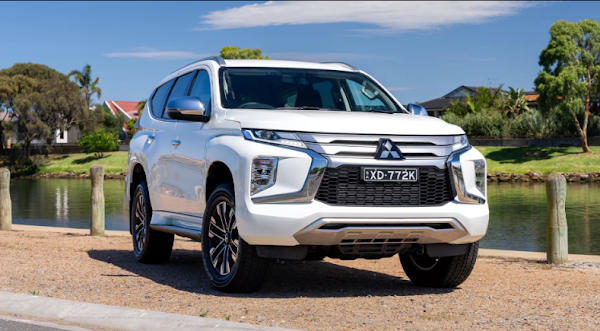
2024 Mitsubishi Pajero Sport GLS

Mitsubishi Pajero Review
The Mitsubishi Pajero Sport is a low-cost way to get into the rugged seven-seat family SUV market with comprehensive features and plenty of space. But it's starting to feel its age, and that pricing isn't as irresistibly sharp as it once appeared.

2024 Mitsubishi Pajero Sport GLS

The Mitsubishi Pajero Sport may seem like a relatively new option in the large SUV market with less than a decade in the Australian market. However, the model's bloodline actually started with the Challenger, which has been popular with local customers since the mid-1990s.

This current model was introduced in 2015, but was updated with a facelift and some tech enhancements in the middle of 2023. Its new 'dynamic shield' styling brought its looks into line with the rest of the family, while a few upgraded features were also introduced, but it's essentially the same Pajero Sport underneath that arrived nearly 10 years ago.

You can still have a very affordable entry GLX or the more premium Exceed and GSR, but here we're focusing on the middle-of-the-range GLS, which in many model lines often represents the value pick of a line-up.

How much is a Mitsubishi Pajero Sport?
The Mitsubishi Pajero Sport range opens with the bargain-basement GLX for $44,940, but it sacrifices significant kit to come in under $45K, including the third row of seating and four-wheel drive.

To hop into a more serious Pajero Sport costs $49,940, which gets the same level of specification but with seven seats and four-wheel drive. At the top of the pack the Exceed offers a flagship fit-out for $60,690, or the black-pack themed GSR will set you back $62,440 – all before on-road costs.

In the middle of the pack, however, the GLS is available with seven seats and rear-wheel drive for $50,190 (as tested here) or the four-wheel-drive GLS for $55,190, both prices not including on-road costs. On paper, either version would appear to offer a good balance of equipment and practicality without investing extra cash in some of the more aspirational trimmings if the budget is tight.

There's no shortage of options in the large SUV market, but the pickings become slimmer when you refine the offerings down to proper four-wheel-drives with seven seats. But if you don't necessarily need that go-anywhere capability, saving $5000 might make the rear-drive version quite attractive.

While the Pajero Sport used to be one of the most affordable, it's now being challenged for price and specification by some mainstream rivals.

For about the same cash, Ford's Everest can be had in the entry-level Ambiente in rear-wheel drive ($53,990 +ORCs), Isuzu's mid-range MU-X is slightly higher-priced ($55,900 +ORCs) in the LS-U 4x2 , while Toyota's 4x4-only Fortuner is available from $53,775 +ORCs for the entry-level GX.

If price is paramount, there are also a couple of lower-priced options from challenger brands such as the GWM Tank 300, LDV D90, SsangYong Rexton or Mahindra Scorpio.

Key details 2024 Mitsubishi Pajero Sport GLS 7-seat 2WD
Price $50,190 plus on-road costs
Color of test car White
Options Tow bar kit – $1495
Electric brake controller – $689
Carpet mats – $236
Price as tested $52,610 plus on-road costs
Isuzu MU-X Rivals | Toyota Fortuner | Ford Everest
Mitsubishi Pajero New

How big is a Mitsubishi Pajero Sport?

Space is something the Pajero Sport offers in abundance. While its relatively chunky drivetrain robs a little around the footwells and center console at floor level, the cabin is spacious and light.

There's lots of space for occupants in both the front and second rows, with plenty of room in the rafters for taller passengers. Head room in the front row is up to 1022mm, while it's still generous in the second row measuring 957mm but getting a little tight in the back with 917mm.

The door pockets are a little skinnier than some rivals, and the storage cubby ahead of the gear shifter could be a bit more accommodating. But there's a very useful and versatile space below the console, along with two useable cupholders and a decent central storage bin toward the back.

Mitsubishi is refreshingly honest and descriptive with its claimed boot and load area volume.

You can have up to a 673-litre boot if the five-seat is chosen, but as this is the seven-seater its boot shrinks to 502L, which is on the small side for a large SUV. With the third row of seating in place there's still 131L of space left, which is about average.

Volume with the second row stocked is, again, about average at 1488L. With the maximum load bay freed up, items measuring up to 1575mm in length can be accommodated and there's up to 1370mm of width to play with, or 1000mm if loading between the wheel arch intrusions.

Those storage capacities are worthy of merit given the Pajero Sport's exterior, and while large, it is not the biggest in class with an overall length of 4825mm and a width that measures 1815mm. Height comes in at 1835mm.

Having the third row as a seating option is handy, but commissioning the rearmost seats is not the smoothest process, while stowing is a bit fiddly too. In addition, there's a relatively small gap for entry and exit between the second-row seats and door aperture, which makes the process of loading a full car of people a bit tricky.

Standard comfort and convenience equipment is well represented with two USB sockets and a 12-volt power socket in the second row. There's another 12-volt socket in the boot and one for the front row as well, along with a 220-volt powerpoint.

About the cabin you'll find six cupholders, four bottle holders, a decent center storage bin with tray in front, keyless entry and start button, reasonable quality fabric upholstery, leather for the steering wheel, and backrest adjustment for second and third row seating but no slide adjustment. The latter is a notable omission.

As it's the GLS, the tailgate is power-operated, there's privacy glass for the rear windows, while the second-row occupants are offered their own climate-zone controls.

2024 Mitsubishi Pajero Sport GLS 7-seat 2WD
Seats Seven
Boot volume 131L to third row
502L to second row
1488L to first row
Length 4825mm
Width 1815mm
Height 1835mm
Wheelbase 2800mm
Mitsubishi Pajero engine
Does the Mitsubishi Pajero Sport have Apple CarPlay and Android Auto?
While the Pajero Sport offers a good level of technology for the price, most of it starts to feel a little dated. The 8.0-inch central touchscreen is relatively small by today's standards, and there's no digital driver's instrument cluster to complement it unless you go for the Exceed or GSR.

And while there is a small color screen between conventional gauges, there is no option for a digital speedometer reading among its display content.

Thankfully, Android Auto and Apple CarPlay are both supported in all grades, which partly redeems the aging graphics. If you don't want to plug in a device, the GLS has its own navigation. Wireless connection is not supported.

Nice chunky climate-control dials and buttons are appreciated over HVAC functions buried in virtual menus, even if the display looks a little 1990s digital.

Only the Exceed and GSR grades of Pajero Sport get the option to use Mitsubishi's Remote Control Smartphone App, which allows the user to operate the tailgate remotely and car finder function, for example.

Standard tech for the GLS includes a six-speaker sound system, digital radio, a pair of USB points for the front seats, and an HDMI input.

Is the Mitsubishi Pajero Sport a safe car?
Mitsubishi Pajero Sports built prior to January 1, 2023 were awarded full five-star ANCAP safety ratings. Those built after that date are officially unrated, for now. ANCAP's assessment criteria mean ratings six years or older 'expire', and without a retest, old ratings cannot be published as current.

The expired five-star score was achieved thanks to the Mitsubishi Triton on which the Pajero Sport is based. It's not certain the Pajero Sport would achieve the same score today with much stricter protocols.

Seven airbags include one for the driver's knees as well as curtain bags that protect occupants in all rows of seating, including the third row.

2024 Mitsubishi Pajero Sport GLS 7-seat 2WD

What safety technology does the Mitsubishi Pajero Sport have?
Despite the Pajero Sport's relative age, Mitsubishi has been able to continuously update its safety technology, including the critical driver assistance systems that will soon become mandatory.

All versions offer active safety equipment from a low level in the range, with standard items including autonomous emergency braking, hill start assist, speed limiter, and trailer stability assist.

Models higher up the range, such as the GSR variant, score lane-change assist, tire pressure monitoring, adaptive cruise control, blind-spot warning, rear cross-traffic alert, and something Mitsubishi calls ultrasonic misacceleration mitigation that's designed to prevent accidental acceleration at parking speeds.

How much does the Mitsubishi Pajero Sport cost to run?
Mitsubishi offers one of the longest new vehicle warranties in the market with a class-leading 10-year deal or 200,000km, whichever comes first. Unlike most other brands' warranties that allow the customer to service their car wherever they like, the 10-year deal is only honored if the vehicle has been maintained exclusively within Mitsubishi's dealership network. If not, the warranty is reduced to five years, 100,000km.

Customers are offered a fixed-price maintenance deal that costs $1497 for the first three services and $2895 for five, up to 10 years of capped-price coverage, tallying $6890. Both 4x2 and 4x4 models follow the same pricing schedule.

Based on a comparative quote for a 35-year-old male driver living in Chatswood, NSW, insuring a 2024 Mitsubishi Pajero Sport GLS would cost $1680 per year. Insurance estimates will vary based on your location, driving history, and personal circumstances.

At a glance 2024 Mitsubishi Pajero Sport GLS 7-seat 2WD
Warranty Five years, 100,000km
Service intervals 12 months or 15,000km
Servicing costs $1497 (3 years)
$2895 (5 years)
Mitsubishi Pajero Exterior
Is the Mitsubishi Pajero Sport fuel efficient?
Mitsubishi claims the Pajero Sport to be particularly frugal for a large, seven-seat SUV with an official fuel consumption figure of just 8.0 liters per 100 kilometers.

However, in practice it uses a fair bit more with an indicated figure of 11.5L/100km. While our time with the Pajero Sport was spent in a wide range of driving scenarios, it wasn't under the worst conditions for fuel economy.

Only freeway cruising enabled a figure close to the average claim.

Fuel efficiency 2024 Mitsubishi Pajero Sport GLS 7-seat 2WD
Fuel cons. (claimed) 8.0L/100km
Fuel cons. (on test) 11.5L/100km
Fuel type Diesel
Fuel tank size 68L
How does the Mitsubishi Pajero Sport like to drive?
Driving a Pajero Sport is a visceral experience. In a world where modern cars are becoming perhaps a little homogeneous and benign, the Mitsubishi offers a mechanical and honest drive that's unfiltered.

We know from previous testing 4x4 variants have a great off-road reputation with a proper low-range transmission and a number of driving modes, underpinned by the traditional ladder chassis and heavy-duty suspension.

Despite the all-terrain focus, however, the Pajero Sport is not fundamentally compromised on the road, even in two-wheel drive guise.

In fact, there's a playful and involved nature to the way this Mitsubishi drives, especially on unsealed roads. There's a bit more chatter to the secondary ride than preferable, but the primary ride is excellent at absorbing big lumps and bumps.

And while the steering has a very low and slow ratio, it manages to be communicative – if you can spin the wheel fast enough.

A 2.4-litre turbo diesel is the only engine option regardless of the variant, and it does a reasonable job of providing 133kW and 430Nm, which is not show-stopping stuff but tractable and readily available.

It's bolted to an eight-speed automatic transmission that, once again, manages to be honest and dependable if a little agricultural, including some gearbox noises clunking and whirring through to the cabin.

But if you can get over the somewhat no-frills character, the Pajero Sport is a fundamentally likeable machine to pilot, with a sense of familiarity and intuitiveness that is reminiscent of hardcore 4x4s of the past.

There are other smaller details that are harder to get used to, such as the reverse sensors that produce warning beeps of such regularity and persistence they are all but useless, while the 'complementing' reverse camera image is too dark and poor resolution.

Steering wheel position is adjustable but limited and prevents the driver's position being spot on, but ergonomically the Mitsubishi is well laid out.

With a fair bit of diesel soundtrack making its way into the cabin, a choppy ride over finer imperfections and a cabin that's feeling a little dated, the Pajero Sport is far from premium in its offering for drivers and passengers alike.

However, the unpretentiousness and mechanical nature will appeal to many owners who want something that does exactly what it says on the tin. For those without the need for 4x4 traction, but still keen on a robust tow rig, or cross-country tourer, the two-wheel drive Pajero Sport delivers.

Key details 2024 Mitsubishi Pajero Sport GLS 7-seat 2WD
2.4-liter four-cylinder turbo diesel engine
Power 133kW @ 3500rpm
Torque 430Nm @ 2500rpm
Drive type Rear-wheel drive
Transmission Eight-speed torque converter automatic
Power-to-weight ratio 63.6kW/t
Weight (curb) 2091kg
Spare tire type Full-size
Payload 619kg
Tow rating 3000kg braked
750kg unbraked
Turning circle 11.0m
How much weight can a Mitsubishi Pajero Sport tow?
While the Pajero Sport might lack a few trimmings and polish, its proposition as a utilitarian hard worker cannot be ignored.

Not only will it haul up to 3000kg with a braked trailer, it also features a maximum payload of more than 600kg (specifically 619kg for the GLS seven-seater 2WD).
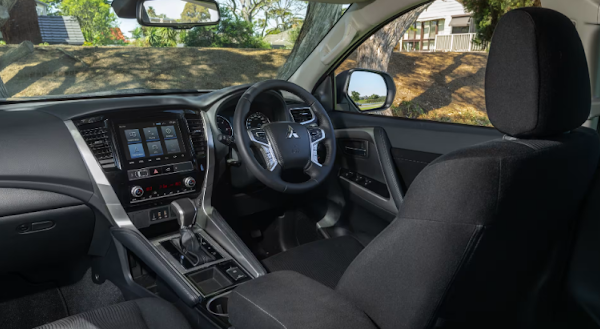
Mitsubishi Pajero Interior
owever, with a gross combination mass (GCM) of 5410kg and a curb weight of 2091kg, there's not a lot of capacity left for any load on board if the full towing capacity is exploited.

Mitsubishi has considered a life of towing for the Pajero Sport with potentially holiday-saving sway-mitigating Trailer Stability Assist, which uses the vehicle's stability system to prevent or stop the towed load from becoming unstable at speed.

We didn't get a chance to test the Pajero Sport's towing muscle, but its maximum torque of 430Nm is average at best in a segment where sophisticated twin-turbo and V6 diesel engines are dominating.

Should I buy a Mitsubishi Pajero Sport?
While the Pajero Sport was once a clear champion of the value large SUV realm, its turf is being encroached on by some compelling rivals such as the Isuzu MU-X and Ford Territory.

It's not enough to simply be an affordable option in this super-competitive segment as more brands are demonstrating that you can go semi-premium on a budget.

However, where the Pajero Sport still makes sense is in the hard-working field, and while age is starting to make the range look a little dated, time has proven that Mitsubishi offers a no-nonsense all-terrain wagon that can take on a challenge for the adventurous family or provide the basis for a mean modified rig.

Some practical compromises and a lack of refinement will steer many to look at fresher arrivals, but there are still plenty of adventure enthusiasts who appreciate an honest and unpretentious package like the Pajero Sport.
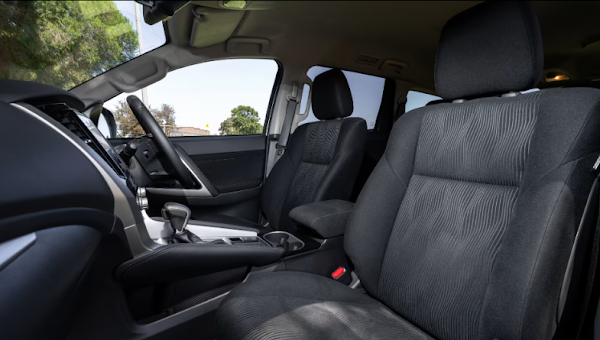
Mitsubishi Pajero View
How do I buy a Mitsubishi Pajero Sport? The next step.
While the higher-grade Pajero Sports offer more equipment, it's harder to justify the spend given they get exactly the same drivetrain and mechanics as the more affordable options.

Instead, we think the smart money is at the mid-level where you'll get a few value-adding features but nothing to detract from a more purposeful vehicle.

If you're interested in putting a Pajero Sport on your driveway or favorite camping spot, the good news is that stock and supply are healthy and there could be some decent model-year runout deals to be had if you contact your preferred dealer.

“We'd encourage interested parties to talk with their local dealers to understand what's available on the floor or in the future pipeline,” said Mitsubishi. "There has been adequate supply to support the recent MY runout campaign."

The next step on the purchase journey is to check the Mitsubishi website for stock of your preferred Pajero Sport variant. You can also find Mitsubishi models for sale at Drive.com.au/cars-for-sale.

We strongly recommend taking a test drive at a dealership before committing because personal needs and tastes can differ. Find your nearest Mitsubishi dealer here. We'd also recommend test-driving the Isuzu MU-X and Ford Everest as they both offer a lot of appropriate SUVs for the cash, just like the Mitsubishi.
Share:

2024 Mitsubishi Outlander PHEV Exceed Tourer

2024 Mitsubishi Outlander PHEV Exceed Tourer Review
2024 Mitsubishi Outlander PHEV Exceed Tourer
Plug-in hybrid electric vehicles are presented as the ‘best of both worlds’ solution to curbing fuel use and minimizing emissions output while maintaining ease of use for long-distance drives. Japanese manufacturer Mitsubishi has arguably done the most for the niche technology with its introduction of the Mitsubishi Outlander PHEV more than a decade ago.

While other car makers have stuck with the tried-and-true simplicity of regular 'closed-loop' hybrid powertrains, or gone full electric, Mitsubishi persists with the plug-in hybrid approach in the latest-generation (fourth) Outlander.

The Mitsubishi Outlander plug-in hybrid offers some pretty decent boasts that aren't always common in the medium-sized SUV segment. These include its electrified powertrain (which we got stuck on shortly), its seven seats, and also the strong 10-year warranty.

We've stepped back behind the wheel of an Outlander PHEV, in top-spec Exceed Tourer guise, to find out whether it continues to provide weight behind the idea that you can have your cake and eat it too.

How much is a Mitsubishi Outlander PHEV?
Buyers after fuel-saving plug-in hybrid technology can get themselves into an Outlander for as little as $57,290 before on-road costs. But we've got the flagship Exceed Tourer variant that costs $71,790 (plus ORCs).

Over and above its predecessor, the Outlander plug-in comes with a larger 20kWh battery, higher-output electric motors, a bigger 84km claimed electric driving range, and the simple fact that you can now have seven seats with the electrified variant – that wasn't the case. 't a thing in its last generation.

In something of a win for buyers, the plug-in hybrid powertrain option is available at almost every price point of the Outlander line-up, meaning the Outlander ES, Aspire, Exceed and Exceed Tourer all have that electrified option, with only the Outlander LS does not have a plug-in option.

Alternative electrified rivals such as the Nissan Qashqai e-Power, Honda CR-V e:HEV or Toyota RAV4 Hybrid offer frugal powertrains, but without plug-in capabilities, these rivals can't touch the Outlander's lowly 1.5L/100km fuel claim – if used in the right way.

Standard features across the range include a 12.3-inch digital instrument cluster, 9.0-inch touchscreen, LED headlights, climate control, eight airbags, and advanced safety features including autonomous emergency braking, adaptive cruise control, and blind-spot monitoring.

However, we've got the flagship Exceed Tourer variant that impresses thanks to its two-tone exterior paint. On most cars this adds a black roof, but because our tester's base color is black, the roof is finished in contrasting silver… an interesting look. Let me know what you think of it in the comments below.

You also get massaging front seats, two-tone leather-upholstered cabin, and rear seat heating on this Exceed Tourer spec.

The Exceed Tourer shares some of its equipment with models lower down in the range, such as a panoramic sunroof, tri-zone climate control, 10-speaker Bose sound system, and rear door sun blinds.

But you do pay for it, and the price has crept up by more than $3000 compared to when this car arrived in Australia roughly 18 months ago.

The Outlander PHEV is powered by a 2.4-litre naturally aspirated four-cylinder engine paired with electric motors at the front and rear. According to Mitsubishi, combined output stands at 185kW/450Nm.

Connect the Outlander's 20kWh battery to a DC fast charger and you'll have 80 per cent charge in just under 40 minutes. On a regular 240-volt home outlet, a 100 per cent charge will come in 12 hours.

Impressively, power also goes the other way. The Outlander comes with the capability to divert its charge using V2G or V2L technology. The latter is handy to power devices while camping, for example, and is accessed via the boot.

Key details 2024 Mitsubishi Outlander PHEV Exceed Tourer
Price $71,790 plus on-road costs
Color of test car Black Diamond / Sterling Silver roof
Options None
Price as tested $71,790 plus on-road costs
Drive-away price $77,720 (Melbourne)
Nissan X-Trail Rivals | Mazda CX-60 | Toyota RAV4
2024 Mitsubishi Outlander PHEV Exceed Tourer Exterior
How big is a Mitsubishi Outlander PHEV?
Inside, our specifications Outlander gets two-tone leather-appointed seats with a unique diamond stitch pattern. Normally it's the kind of thing you see in Bentleys, but I quite like the increased sense of style it gives to the Outlander's cabin. That said, the 'tan' leather color is far too orange for my liking.

There's good space around me, and I found it simple to touch and produce all controls without reaching. It all feels quite nice too, apart from the door cards that have a bit too much flex to them and the steering wheel that has a hollow feel to it.

Another gripe I have with the Exceed Tourer spec is its incandescent interior lamps – you can't have something so old in a $71,790 car, where LED cabin lighting should be fitted.

The interior storage space is standard fare really. There's a center console bin, twin cupholders, wireless phone charger, and of course a deep glovebox. It also gets several narrow slots beside the transmission tunnel, plus a USB-A and USB-C port for charging devices.

I love the airy cabin feel provided by the sunroof, even with the dark headliner.

Second-row passengers get a bit of a raw deal. The seats recline, the base slides forward and back as you need, but the head room is encumbered by the sunroof in this variant. The leg room is only so-so.

Air vents and a USB-A and USB-C port are found behind the center console bin, plus a full three-prong 220V power outlet. It also gets air controls and heated outboard seats.

It's a little trickier to gain access to the Outlander's third row than, say, a large SUV with seven seats. This is due to a tight aperture to sneak through.

It's a pretty tight space and I don't physically fit, but then again I'm 194cm tall. The third row doesn't have air vents either, although there are two cupholders back there.

In terms of storage capacity, there is 191 liters of space behind the third row, 461L behind the second row, and 1387L as a maximum.

As a point of comparison, the rival-sized Volkswagen Tiguan Allspace stocks 230L to the third row, 700L to the second row, and 1775L to the first row. However, it doesn't have to hide a big battery under its floor.

A tire repair kit is found beneath the boot floor. Sorry, no spare.

2024 Mitsubishi Outlander PHEV Exceed Tourer
Seats Seven
Boot volume 191L to third row
461L to second row
1387L to first row
Length 4710mm
Width 1862mm
Height 1745mm
Wheelbase 2706mm

Does the Mitsubishi Outlander PHEV have Apple CarPlay and Android Auto?
Mounted centrally on the dashboard is a 9.0-inch touchscreen – the same size you get in other variants in the range. Maps and menu screens present with nice looks and navigation between the various settings is straightforward. If you're not such a fan of the system, Apple CarPlay and Android Auto smartphone mirroring is available as a backup with wired connectivity for both, or the option of wireless Apple CarPlay.

Screen sizes on top-grade rivals include 12.3 inches for the Nissan X-Trail e-Power or 10.5 inches for the Toyota RAV4 Hybrid.

The infotainment screen conveniently has an array of shortcut buttons and dials to change items when on the go. You can also arrange the home screen how you want it with configurable icons.

On this Exceed Tourer model grade, buyers get a 12.3-inch digital instrument cluster that uses attractive dial-like graphics to show powertrain activity and speed, plus there's also a changeable display right in the center. It is also equipped with a head-up display to show things like speed in front of the driver, so no excuses for venturing over the posted speed limit.

Mitsubishi offers some smartphone companion apps in other markets outside Australia, so Outlander PHEV owners can schedule services for example, but the local support for these apps is limited. I wasn't able to connect my test car to the smartphone app on my iPhone and other users reported poor in-app experiences.
2024 Mitsubishi Outlander PHEV Exceed Tourer Interior
Is the Mitsubishi Outlander PHEV a safe car?
The Mitsubishi Outlander PHEV was safety-tested and scored by ANCAP in 2022 and its five-star rating is valid until December 2028. This was done against ANCAP's 2020–22 protocols.

Breaking it down, the Outlander scored 83 per cent for adult occupant protection, 92 per cent for child occupant protection, vulnerable road users get a protection rating of 81 per cent, and safety assist technologies get an 83 per cent score.

Comparing the above individual scores, the rival Toyota RAV4 Hybrid scored 93 per cent for adult occupant protection, 89 per cent for child occupant protection, 85 per cent for vulnerable road user protection, and 83 per cent for its safety assist technologies.

2024 Mitsubishi Outlander PHEV Exceed Tourer
ANCAP rating Five stars (tested 2022)
Safety report Link to ANCAP report

What safety technology does the Mitsubishi Outlander PHEV have?
Beyond the list of safety inclusions below, the Mitsubishi Outlander is equipped with an audible 'bong' played to the exterior of the car while it's in reverse gear. The bell-ringing noise sounds funny to my ears, but it does aid pedestrian awareness of the car's low-speed maneuvering. It also gets eight airbags including a front center airbag.

In terms of functionality, the systems below operated without fault, and I was pleased with how well the car kept up with traffic ahead while using the adaptive cruise-control system.

Autonomous Emergency Braking (AEB) Yes Includes cyclist, pedestrian, and junction awareness
Adaptive Cruise Control Yes Includes traffic jam assist
Blind Spot Alert Yes Alert only
Rear Cross-Traffic Alert Yes Alert and assist functions
Lane Assistance Yes Lane-departure warning, lane-keep assist, lane-centring assist
Road Sign Recognition Yes Includes speed limit assist
Driver Attention Warning Yes Includes fatigue monitor
Cameras & Sensors Yes Front and rear sensors, 360-degree camera
How much does the Mitsubishi Outlander PHEV cost to run?
Mitsubishi covers Outlander PHEV buyers with a generous 10-year/200,000km warranty, although the caveat is you'll have to service exclusively within the Mitsubishi network otherwise the deal reverts to five years and 100,000km.

Servicing should take place every 12 months or 15,000km (which ever occurs sooner) and is price-capped up to 10 years (to match the warranty). Three years of servicing costs $1197 or five years costs $2045.

This compares to the Nissan X-Trail that has upfront servicing costs of $1158 for three years or $2020 for five years. However, the Nissan's service intervals are shorter – 10,000km or 12 months (whichever is sooner).

Roadside assistance coverage for the Outlander PHEV extends to four years as long as servicing is completed within the Mitsubishi network.

The Mitsubishi Outlander Exceed Tourer PHEV will cost $1699 per year for comprehensive insurance based on a comparative quote for a 35-year-old male driver living in Chatswood, NSW. Insurance estimates may vary based on your location, driving history, and personal circumstances.

This compares with a comprehensive quote of $1460 for the Toyota RAV4 Edge Hybrid or $1189 for the Nissan X-Trail Ti-L e-Power. However, these cars have a lower purchase price compared to the Mitsubishi and aren't direct rivals.

At a glance 2024 Mitsubishi Outlander PHEV Exceed Tourer
Warranty Five years, 100,000km
10 years, 200,000km (if serviced with Mitsubishi)
Battery warranty 8 years or 160,000km (whichever occurs first)
Service intervals 12 months or 15,000km
Servicing costs $1197 (3 years)
$2045 (5 years)
Energy cons. (on test) 22.2kWh/100km
Battery size 20kWh
Driving range claim (NEDC) 84km
Charge time (240V AC, 1.3kW) 9h 30min
Charge time (240V AC Wallbox, 7kW) 6h 30min
Charge time (kW max rate) 38min (0–80%)

Is the Mitsubishi Outlander PHEV fuel efficient?
The big boast for Mitsubishi's Outlander PHEV is its claimed fuel efficiency of 1.5 liters per 100 kilometers. This is far more fuel-efficient than Toyota's RAV4 Hybrid (which claims 4.7L/100km) and Nissan's X-Trail e-Power (at 6.1L/100km).

However, this can only be achieved by ensuring the car runs smoothly on electric power, meaning it needs to be regularly recharged. If the car runs out of battery, it ends up dragging the heavy battery around on petrol power.

There are four modes to the Outlander PHEV's powertrain: Normal (cycles between petrol and electric), EV (uses electric power), Save (saves the battery's charge level for a later date), or Charge (which charges the battery using the onboard generator ). With the latter mode, this can charge the battery from 10 to 80 per cent in 1.5 hours. Both front and rear electric motors can act as generators to replenish the battery too, harvesting power when slowing or coasting.

The Outlander is capable of DC charging through a CHAdeMO connector or can accept AC charging at home. Mitsubishi doesn't quote a maximum charge capacity for its CHAdeMO DC charging capability, but I saw a max output of 20kWh.

In practice, I saw fuel consumption as low as 0.6L/100km when the electric battery was in use. However, that lasted about 70km in my testing. After that point, the petrol motorbike took over and I started to see higher consumption between 5–6L/100km.

Fuel efficiency 2024 Mitsubishi Outlander PHEV Exceed Tourer
Fuel cons. (claimed) 1.5L/100km
Fuel cons. (on test) 0.6L/100km
5-6L/100km (with battery depleted)
Fuel type 91-octane unleaded
Fuel tank size 56L

What is the Mitsubishi Outlander PHEV like to drive?
You might've seen Mitsubishi's ad, featuring Australian TV's lovable larrikin Russell Coight, perpetuating the idea that the Mitsubishi Outlander PHEV is simply an electric vehicle.

This generation of Outlander PHEV is designed to feel more like an electric vehicle than ever before – but it's not quite. It's designed to be an electric vehicle for up to 84km, before reverting to its 2.4-litre petrol motor.

In any case, the resulting feel of the Outlander PHEV is very much like an electric vehicle when you first start driving. In Normal mode the car uses battery power until either the battery is depleted or it cannot provide enough shove to match the throttle input.

On electric power alone, the 85kW front/100kW rear motors provide ample acceleration off the line, and the car quickly scoots up to the speed limit without needing petrol power.

The petrol part of the powertrain consists of a 2.4-litre four-cylinder engine that outputs 98kW on its own. Mitsubishi claims combined outputs of 185kW/450Nm through a Super All-Wheel Control (all-wheel-drive) system and a single-speed transmission.

Noise from electric motors is non-existent, and the car should easily last the average Australian commute distance of 16km. In fact, it could even last two days between charges if commutes were that short.

But once the petrol engine fires up, the switch between both forms of power is smooth and seamless, as you'd find in other regular hybrids such as the Toyota RAV4 Hybrid. It is quite noisy, however, especially when the powertrain is set to Charge mode to replenish battery levels.

In addition to the changeable battery modes mentioned in the section above, the Outlander comes with seven separate terrain modes that prime its all-wheel-drive system for different surfaces.

It's also equipped with a one-pedal drive mode, which can slow the car down to a crawl while simultaneously recuperating energy for the battery. It doesn't slow to a stop, though.

Other than the noise emitted by the engine, I noted a fair amount of tire slap from the front axle going over scrabbly roads in Melbourne. It didn't upset the experience, but it's certainly noticeable around town. The car is a hefty 2145kg, so it can feel its weight going around corners and lugging over speed humps.

That said, the comfort levels are high for a mid-size SUV, and between the plush seats and soft ride quality, the overall Outlander experience is comfortable.

While the Outlander PHEV's steering efforts are light, making it an easy thing to drive around and slot into car spaces, the system is devoid of feel. Fair, nothing looks like a mid-size SUV for steering feedback, but there's a distinct lack of it that I noticed.

Otherwise, vision out of the cabin is easily managed and the high-set driving position helps to keep other cars in view.

Key details 2024 Mitsubishi Outlander PHEV Exceed Tourer
2.4-litre four-cylinder petrol engine
Power 98kW petrol motorbike
85kW front electric motor
100kW rear electric motor
185kW combined
Torque 450Nm combined
Drive type All-wheel drive
Single-speed automatic transmission
Power-to-weight ratio 86.2kW/t
Weight (curb) 2145kg
Spare tire type Tire repair kit
Tow rating 1600kg braked
750kg unbraked
Turning circle 11.2m
2024 Mitsubishi Outlander PHEV Exceed Tourer Side back
How do I buy a Mitsubishi Outlander? The next step.
We've driven the flagship Outlander PHEV Exceed Tourer variant, which is the most expensive way you can buy into the Mitsubishi Outlander range. While the plug-in hybrid technology is good under the skin, I'd argue it's better applied to the Aspire specification.

This costs $63,790 before on-road costs, which is far easier to stomach (as a price point) compared to where the Exceed Tourer sits. There's also a good balance of equipment and luxuries inside its cabin.

Mitsubishi says there is "currently strong demand in the network so there is limited unsold stock available. It's best for customers to contact their local dealer to check".

"It does look like more unassigned stock will flow through from April and then into May and June."

The next step on the purchase journey is to check the Mitsubishi website for stock of your preferred Outlander PHEV variant. You can also find Outlanders for sale at Drive.com.au/cars-for-sale.

We strongly recommend taking a test drive at a dealership before committing because personal needs and tastes can differ. Find your nearest Mitsubishi dealer via this link. We'd also recommend test-driving the Toyota RAV4 Hybrid because it is popular with consumers and is a good benchmark.
Share:

Mitsubishi "Lancer Evolution XI"

Mitsubishi "Lancer Evolution XI" 6
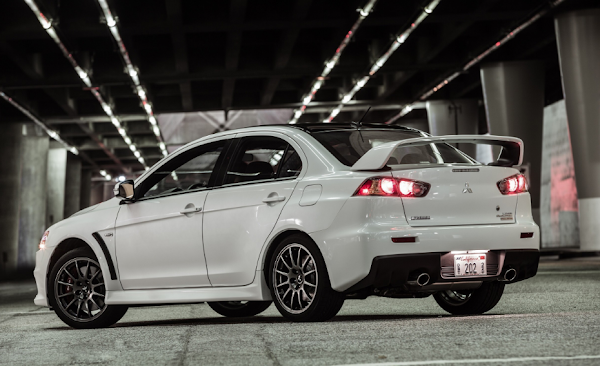
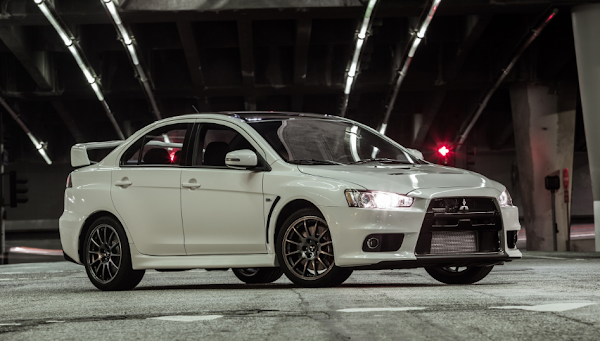
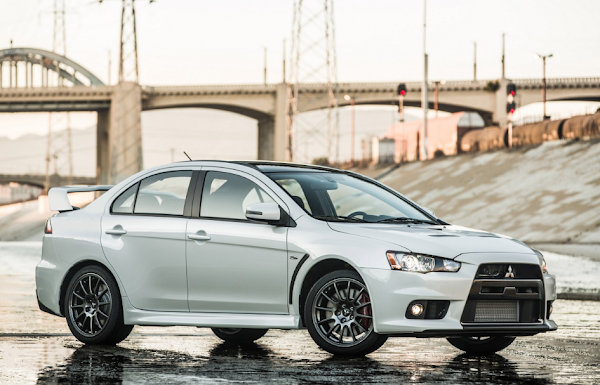
The Mitsubishi Lancer Evolution XI is rumored to be the successor to the previous model. This latest variant of the Lancer will experience significant and impressive changes. Previously, you could find several renderings of this car with an attractive and sporty shape, a refinement of the Generation X design.

However, recently there has been a rendering that has attracted the attention of the public because it is considered a realistic work.

Mitsubishi "Lancer Evolution XI" 5
To display a sportier shape, the bumper has an additional spoiler with a sharp design, a wide hood scoop on the bonnet, and 20-inch black cross-shaped alloy wheels that look attractive. Apart from that, the brake calipers are painted red to make it look even sportier.

From the middle to the back, there are sharp lines and curves as its characteristics. Looking at the stern, the Lancer Evolution XI has a rear spoiler with a wide appearance which has the main function of improving driving aerodynamics. Below it, you can see that the stop lamp adopts an inverted L shape which is tapered and equipped with LED technology inside.


Mitsubishi "Lancer Evolution XI" 4
Looking at the front appearance, the shape still adopts the dynamic shield grill as its characteristic. The style adopted by the grill adopts a spindle design with seven LED lights on the fog lamp.

Even though it is considered very sporty, the design it adopts looks like a concept car. On the other hand, Enoch Gozales also created an illustration of the Lancer Evolution
Mitsubishi "Lancer Evolution XI" 3
Another rendering of the Lancer Evolution XI comes from Rain Prisk. A visual artist made the Mitsubishi sports car look very aggressive by applying the Madder Red color, with sharp shapes in almost every curve.

The fascia also adopts a dynamic shield shape with a combination of black accents which further emphasizes the aura of a sports sedan.

Talking about the pacemaker, until now no one has explained what engine the Mitsubishi Lancer Evolution XI will use. Will this Mitsubishi sports sedan be offered with a hybrid engine?
Mitsubishi "Lancer Evolution XI" 2
This image illustration created by Russian media outlet Kolesa.ru depicts various elements that have been mass-produced and released so far. Because the rendering has been considered appropriate and attractive, many global media have reviewed it.

On the front view, the rendering of the Mitsubishi Lancer Evolution Right under the bonnet itself are embedded LED DRL lights with a flat and tapered shape which looks very attractive.

Talking about the main lights, one of the most important parts of this car is placed right under the LED DRL, which is a stylistic design language that has been widely used in several of its current products.
Mitsubishi "Lancer Evolution XI" 1Looking at the bumper, this part of the car looks gambol thanks to the multi-level model where both sides have quite large muffler holes, as well as a diffuser with a sporty appearance.


Share:

Popular Posts

Followers